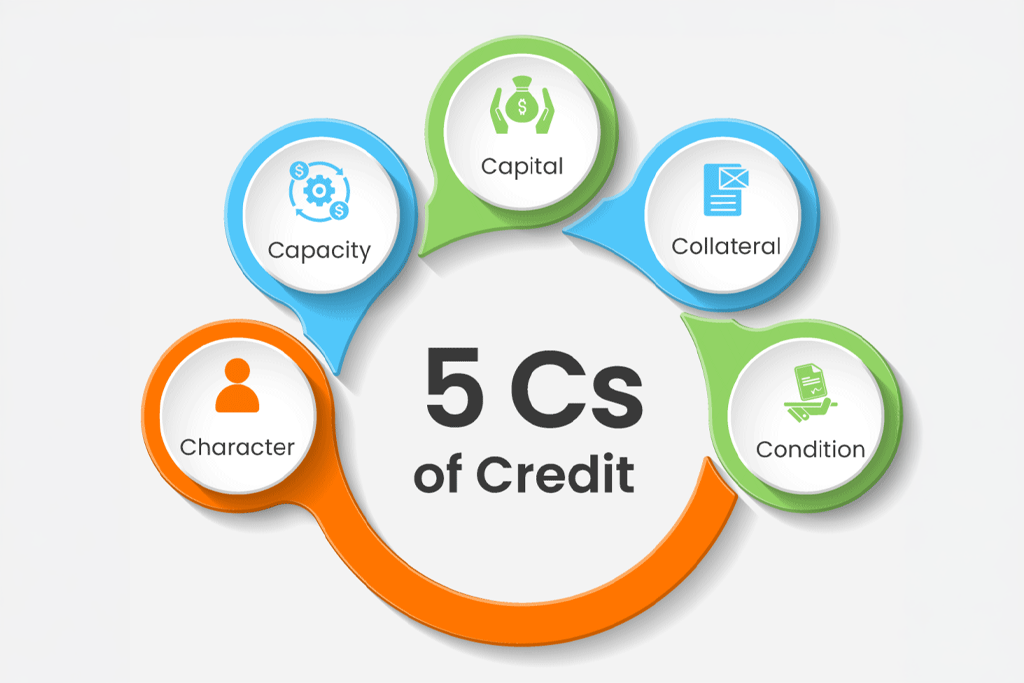
Whenever you apply for a loan or credit card, lenders don’t just look at your income. They evaluate your overall financial profile to determine whether you can repay the borrowed amount responsibly. One of the most common frameworks used by banks and financial institutions is known as the “5 Cs of Credit.”
The 5 Cs of Credit help lenders assess the risk involved in lending money to a borrower. Understanding these factors can also help borrowers improve their chances of getting loan approvals and better interest rates.
In this blog, we’ll understand what the 5 Cs of Credit are, how lenders use them, and which factor matters the most.
What Are the 5 Cs of Credit?
The 5 Cs of Credit are five important factors lenders use to evaluate a borrower’s creditworthiness.
These include:
- Character
- Capacity
- Capital
- Collateral
- Conditions
Together, these factors help lenders decide:
- Whether to approve a loan
- How much loan amount to offer
- What interest rate to charge
- The repayment terms
1. Character
Character refers to a borrower’s financial reputation and repayment history. It helps lenders understand whether the borrower is trustworthy and likely to repay the loan on time.
Lenders usually evaluate:
- Credit score
- Past loan repayment history
- Credit card payment behavior
- Loan defaults or settlements
- Financial discipline
A strong repayment history and a healthy credit score improve your credibility in the eyes of lenders.
Why Character Matters
If a borrower has consistently paid EMIs and bills on time, lenders consider them lower-risk borrowers.
2. Capacity
Capacity refers to the borrower’s ability to repay the loan based on their income and existing financial obligations.
Lenders assess:
- Monthly income
- Employment stability
- Existing EMIs
- Debt-to-income ratio
- Other financial liabilities
Example
| Monthly Income | Existing EMIs | Loan Approval Chances |
| ₹80,000 | ₹10,000 | Higher |
| ₹40,000 | ₹25,000 | Lower |
A lower debt burden generally improves loan eligibility because lenders prefer borrowers who can comfortably manage repayments.
3. Capital
Capital represents the borrower’s personal financial contribution or savings.
It reflects:
- Savings
- Investments
- Assets
- Financial reserves
Borrowers with higher capital are considered financially stable because they have their own resources to handle emergencies or repayment difficulties.
For example, while applying for a home loan, lenders prefer borrowers who can make a higher down payment because it reduces lending risk.
4. Collateral
Collateral refers to assets pledged by the borrower as security against the loan.
Common examples include:
- Property
- Gold
- Vehicles
- Fixed deposits
If the borrower fails to repay the loan, the lender may recover losses by selling the collateral.
Secured loans generally have:
- Lower interest rates
- Higher loan amounts
- Easier approvals
because the lender’s risk is reduced.
Examples of Secured Loans
| Loan Type | Collateral Required |
| Home Loan | Property |
| Gold Loan | Gold |
| Car Loan | Vehicle |
Unsecured loans like personal loans usually do not require collateral, but they may carry higher interest rates.
5. Conditions
Conditions refer to external factors that may affect the borrower’s repayment ability or the loan itself.
Lenders consider:
- Economic conditions
- Inflation
- Employment trends
- Industry performance
- Purpose of the loan
For example, during economic uncertainty, lenders may become stricter while approving loans because repayment risks increase.
Similarly, the purpose of the loan also matters. A business expansion loan may be evaluated differently from a personal expense loan.
How Lenders Use the 5 Cs of Credit
Financial institutions use the 5 Cs together to create a complete financial picture of the borrower.
Here’s How They Help:
- Reduce lending risk
- Assess repayment ability
- Determine interest rates
- Set loan terms
- Decide loan approval amounts
No single factor works independently. Lenders analyze all five elements before making lending decisions.
Which Is the Most Important Among the 5 Cs?
Although all five factors are important, “Character” is often considered the most influential.
Your repayment history and credit behavior directly indicate how responsibly you manage borrowed money.
A borrower with:
- Timely EMI payments
- Good credit score
- Stable repayment history
usually has better chances of approval, even if other factors are average.
However, for larger secured loans, lenders may give more importance to:
- Capacity
- Collateral
- Capital
depending on the loan type and borrower profile.
How to Improve Your Creditworthiness
Understanding the 5 Cs of Credit can help you strengthen your financial profile and improve loan approval chances.
Follow These Tips:
- Pay EMIs and bills on time
- Maintain a healthy credit score
- Avoid multiple loan applications
- Keep credit utilization low
- Build savings and investments
- Maintain stable income sources
- Avoid unnecessary debt
Small financial habits can significantly improve your creditworthiness over time.
Final Thoughts
The 5 Cs of Credit play a major role in how lenders evaluate borrowers. These factors help financial institutions assess repayment risk and make responsible lending decisions.
Whether you are applying for a personal loan, home loan, or credit card, understanding the 5 Cs can help you prepare financially and improve your approval chances.
Maintaining good financial discipline, a healthy credit score, stable income, and responsible borrowing habits can strengthen your overall credit profile and help you access better financial opportunities in the future.
Need Instant Financial Support?
Whether you are building your credit profile or managing urgent financial needs, FatakPay offers quick and convenient short-term credit solutions with a simple application process and fast approvals. Responsible borrowing and timely repayments can help strengthen your financial health over time.
FAQs
What are the 5 Cs of Credit?
The 5 Cs of Credit are Character, Capacity, Capital, Collateral, and Conditions. These factors help lenders evaluate a borrower’s creditworthiness.
Why are the 5 Cs of Credit important?
They help lenders assess lending risk, repayment ability, and decide loan approval terms and interest rates.
Which is the most important among the 5 Cs of Credit?
Character is generally considered the most important because it reflects the borrower’s repayment history and financial discipline.
Does credit score fall under the 5 Cs of Credit?
Yes, credit score is part of “Character” and plays a major role in loan approval decisions.
What is collateral in lending?
Collateral is an asset pledged as security against a loan, such as property, gold, or vehicles.
Can I get a loan without collateral?
Yes, unsecured loans like personal loans usually do not require collateral, but they may have higher interest rates.
| Personal Loans by City | ||||
|---|---|---|---|---|
| Personal Loan Bengaluru | Personal Loan Thane | Personal Loan Mumbai | Personal Loan Hyderabad | |
| Personal Loan Pune | Personal Loan Surat | Personal Loan Coimbatore | Personal Loan Delhi | |
| Personal Loans by Amount | ₹60,000 Personal Loan | ₹3 Lakh Personal Loan | ₹5 Lakh Personal Loan |
|---|
Explore our latest Credit Score blogs for expert insights, financial tips, and guidance to help you make informed borrowing decisions.