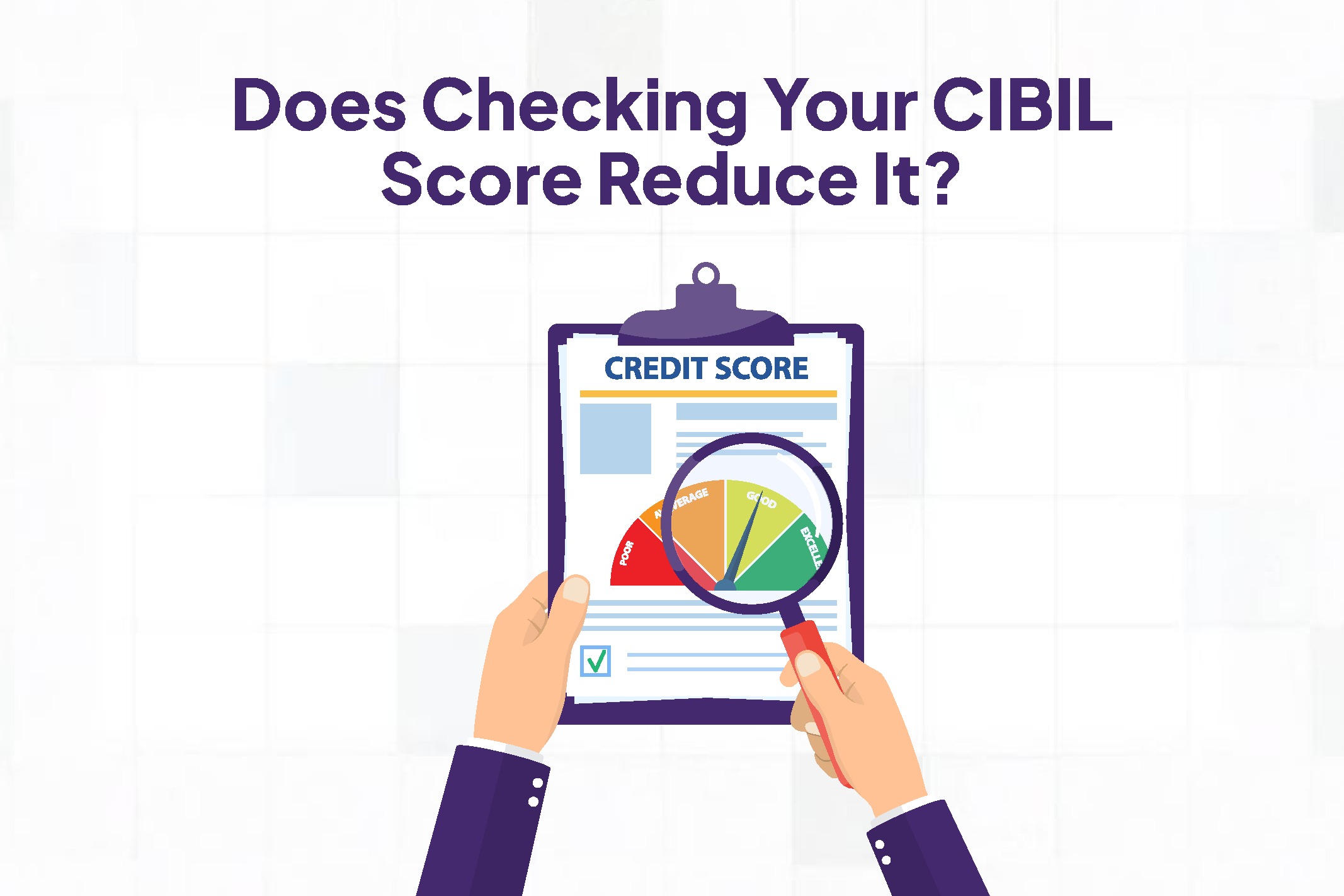
Many people avoid checking their credit score because they believe it might lower it. This is one of the most common credit myths in India. If you have ever wondered whether checking your CIBIL score will reduce score, the answer is much simpler than most people think.
FALSE, checking your own CIBIL score is a soft inquiry with zero impact. Only hard inquiries, which happen when a lender checks your credit report after you apply for a loan or credit card, can reduce your score by 5-10 points per inquiry. You can check your score as many times as you want without any negative effect.
In fact, regularly checking your CIBIL score can be beneficial because it helps you monitor your credit health, identify errors in your credit report, and detect any unauthorized activity at an early stage. Staying informed about your score allows you to take corrective actions before applying for a loan or credit card, improving your chances of approval and better interest rates.
The short answer
No, checking your own CIBIL score does not reduce it. When you access your score through the CIBIL website, a bank app, or a fintech platform, it is classified as a soft inquiry. A soft inquiry is visible only to you and has no impact on your credit score.
Many borrowers ask whether checking CIBIL score affects CIBIL score or whether checking CIBIL score will reduce score. The answer remains the same. Your self-initiated checks are completely safe and do not affect your borrowing profile in any way. For those wondering, “does checking CIBIL score affect CIBIL score?”, self-checks are classified as soft inquiries and do not influence your credit profile.
As per TransUnion CIBIL’s official guidelines, self-initiated score checks are classified as promotional enquiries. These enquiries appear on your own report but are invisible to lenders and carry no risk weight in CIBIL’s scoring algorithm.
Soft inquiry vs hard inquiry: The key difference
The confusion usually comes from not understanding the difference between a soft inquiry and a hard inquiry.
| Feature | Soft Inquiry | Hard Inquiry |
| Who triggers it? | You checking your own score | Lender checking after a loan or credit card application |
| Impact on score | Zero | May reduce score by 5-10 points |
| Visible to lenders | No | Yes |
| How long does it stay? | Visible only to you | Usually remains for up to two years |
| Examples | CIBIL website, bank apps, fintech apps | Personal loan, credit card, home loan applications |
| Frequency limit | Unlimited | Avoid multiple applications in a short period |
Understanding soft vs hard credit enquiry India is important because only hard inquiries are considered by lenders while assessing your credit behavior.
How many points does a hard inquiry reduce your CIBIL score?
A hard inquiry can reduce your credit score by approximately 5–10 points, depending on your existing credit profile.
For example, if you apply for:
- Multiple personal loans within a few weeks
- Several credit cards simultaneously
- Different loans across multiple lenders
Each lender may perform a hard inquiry. Too many hard inquiries within a short period may signal credit hunger and increase risk perception among lenders.
Many borrowers ask, “does credit check reduce credit score?” The answer depends on who performs the check. Self-initiated checks do not affect your score, while lender-initiated hard inquiries may cause a small temporary reduction.
How to spot unauthorized hard inquiries on your CIBIL report
Sometimes borrowers notice inquiries they do not recognize. This could happen due to unauthorized applications, data errors, or identity misuse.
To check for unauthorized hard inquiry CIBIL records:
Step 1: Download your latest CIBIL report.
Step 2: Navigate to the “Enquiry Information” section.
Step 3: Review all recent lender inquiries.
Step 4: Look for institutions you never approached for credit.
Step 5: Raise a dispute with CIBIL immediately if you find suspicious entries and learn how to correct errors in your CIBIL report before they affect your credit profile.
The CIBIL enquiry information section helps you track which lenders have accessed your report and when those checks occurred.
How often should you check your CIBIL score?
Most financial experts recommend checking your credit score at least once every month. Regular monitoring helps you detect reporting errors early, identify unauthorized inquiries, track score improvements, prepare for future loan applications, and maintain healthy credit habits. If you have ever wondered, “is checking CIBIL score bad?” the answer is no. In fact, regularly reviewing your credit score is considered a smart financial habit that helps you stay informed about your credit health. Checking your score monthly is completely safe because it is treated as a soft inquiry and has no impact on your credit profile. Check your CIBIL score free at FatakPay, it’s a soft inquiry with zero impact on your score and takes just 30 seconds.
Regularly monitoring your score through tools like Fatak Udaan can help you build your credit, track improvements, and identify issues before they impact your loan eligibility.
FAQs on checking CIBIL score impact
Does checking CIBIL score reduce it — true or false?
False. Checking your own CIBIL score is a soft inquiry and does not reduce your credit score.
How many points does a hard inquiry reduce CIBIL score?
A hard inquiry can reduce your score by around 5–10 points depending on your credit profile and the number of recent inquiries.
Is it safe to check CIBIL score on third-party apps?
Yes. Reputed fintech apps, banks, and credit monitoring platforms perform soft inquiries that do not affect your score.
How do I know if a lender checked my CIBIL without permission?
You can review the Enquiry Information section of your CIBIL report to identify all recent lender inquiries and raise a dispute if you notice unauthorized entries.
How often should I check my CIBIL score?
Checking your score once every month is generally recommended to monitor your credit health and identify issues early.
The next time someone tells you that checking CIBIL score affects it, remember the distinction between a soft inquiry and a hard inquiry. Monitoring your own credit score is completely safe and can help you stay in control of your financial health.
| Instant Loans by Amount | |||
|---|---|---|---|
| ₹1500 Instant Loan | ₹2500 Instant Loan | ₹5000 Instant Loan | ₹10000 Instant Loan |
| ₹12500 Instant Loan | ₹15000 Instant Loan | ₹17500 Instant Loan | ₹20000 Instant Loan |