Key aspects of an outstanding loan amount include understanding that it is the total amount you still owe on your loan, including the remaining principal, accrued interest, and any applicable charges. This amount gradually reduces over time as you continue paying your EMIs regularly. Borrowers can check their outstanding loan amount through their lender’s mobile app, monthly loan statements, internet banking portal, or even their CIBIL report.
The outstanding amount may also include unpaid interest and overdue charges if there have been delayed payments. Knowing your outstanding loan amount is important because it directly affects your loan eligibility, FOIR, and overall CIBIL profile. If you want to reduce the amount faster, you can do so through part-prepayment or by foreclosing the loan early.
Outstanding loan amount is the total amount you still owe on a loan, including unpaid principal, accrued interest, and any applicable charges. It reduces with every EMI payment and can be checked through your lender’s app, monthly loan statement, or CIBIL report. Understanding your outstanding loan amount helps you plan repayments better and avoid unnecessary debt burden.
Whether you have a personal loan, home loan, or credit line, tracking your outstanding amount regularly is important for managing your finances responsibly. Here’s everything you should know about outstanding loan amount and how it works in India.
What is outstanding loan amount?
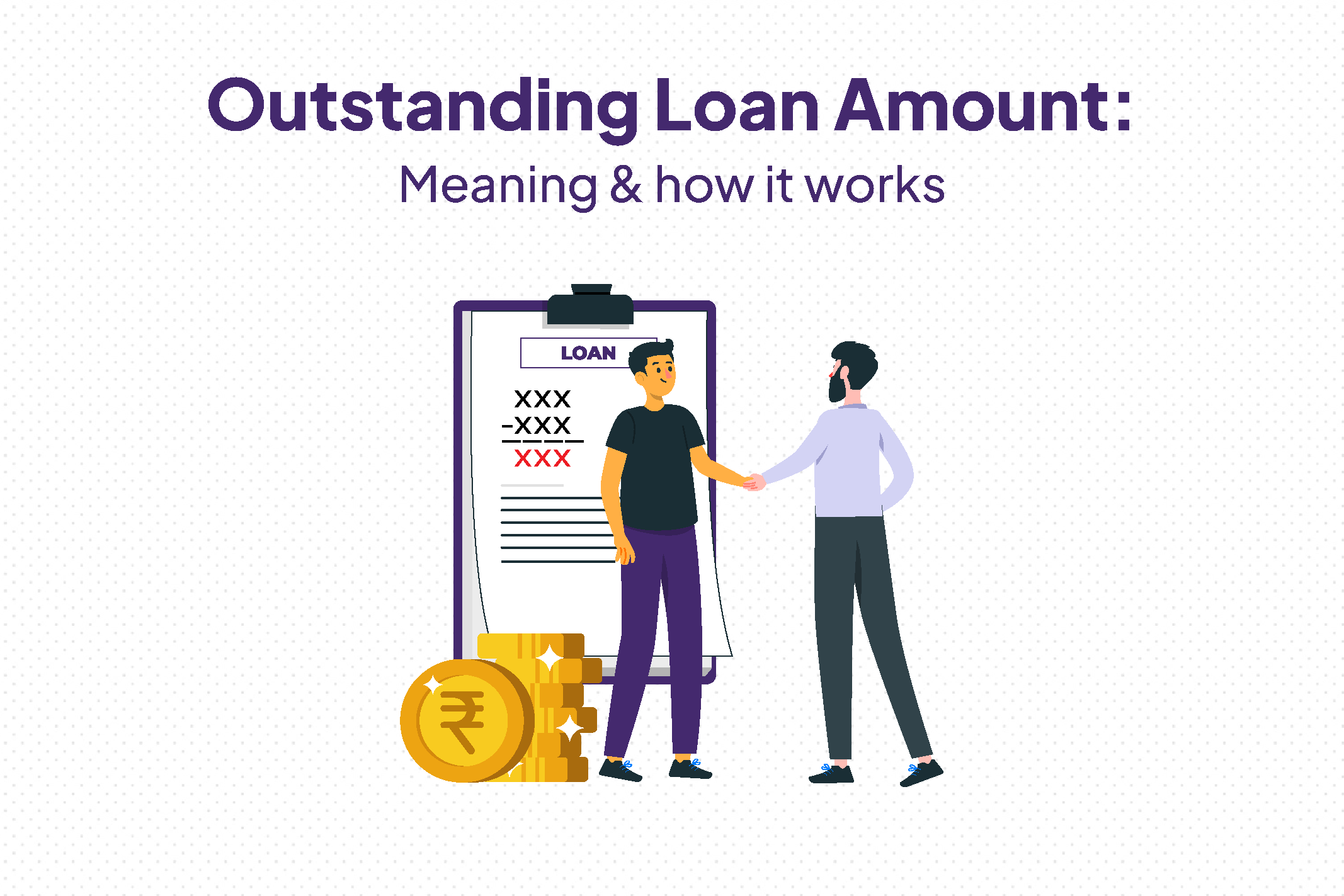
The outstanding loan amount refers to the total unpaid amount remaining on your loan at a particular point in time. It usually includes the remaining principal amount, unpaid interest, and any late payment charges or penalties applicable to the loan. In simple terms, the amount outstanding is the total amount you still need to repay to fully close your loan account.
What is outstanding amount in loan? It is the total unpaid amount you still owe to the lender, including remaining principal, unpaid interest, and applicable charges.
Many borrowers confuse the outstanding amount with the EMI or the total repayment amount, but these are different concepts. Your outstanding loan amount keeps changing every month as you continue paying your EMIs because the principal balance gradually reduces over time. Understanding the outstanding loan meaning becomes especially important when you are planning a part-payment, loan foreclosure, balance transfer, or applying for a new loan.
What makes up your outstanding loan amount?
Your outstanding amount is made up of multiple components, not just the remaining principal.
| Component | Meaning |
| Principal outstanding | Remaining original loan amount |
| Accrued interest | Interest accumulated but not yet paid |
| Late fees | Penalty for delayed EMI payments |
| Other charges | Processing or bounce charges, if applicable |
For example, if your remaining principal is ₹80,000, accrued interest is ₹3,000, and late fees are ₹500, your total outstanding loan amount becomes ₹83,500.
Understanding these components helps borrowers avoid surprises while checking foreclosure or settlement amounts.
Outstanding loan amount vs loan balance vs total due
These terms are often used interchangeably, but they have different meanings.
Outstanding loan amount
This is the total amount you currently owe, including unpaid principal, interest, and charges.
Loan balance
Loan balance usually refers only to the remaining principal amount without additional interest or penalties.
Total due
Total due includes your outstanding amount plus any overdue EMIs, penalties, or unpaid charges.
For example:
- Loan balance: ₹1 lakh
- Interest + penalties: ₹8,000
- Total outstanding amount: ₹1.08 lakhs
- Overdue EMI: ₹12,000
- Total due: ₹1.2 lakhs
Understanding the difference between outstanding amount and loan balance helps borrowers avoid confusion while checking repayment statements.
How is outstanding loan amount calculated?
Your outstanding loan amount depends on:
- Original loan amount
- Interest rate
- Loan tenure
- Number of EMIs paid
- Any missed or delayed payments
In most loans, lenders use the reducing balance method outstanding calculation system. Under this method, interest is charged only on the remaining principal after every EMI payment.
Formula:
Outstanding amount = Remaining principal + unpaid interest + applicable charges
Example:
Suppose you take a personal loan of ₹2 lakhs for three years at 14% interest.
After paying EMIs for one year:
- Remaining principal: ₹1.45 lakhs
- Unpaid interest: ₹4,000
- Charges: ₹1,000
Your outstanding loan amount becomes ₹1.5 lakhs.
If you make a part-prepayment, your outstanding amount reduces immediately, which may also lower future interest costs.
How to check your outstanding loan amount
If you are wondering how to check outstanding loan amount, there are several simple methods available.
Through your lender app
Most banks and NBFCs show your outstanding amount directly inside the mobile app or customer dashboard.
Through monthly loan statements
Your loan statement outstanding amount is usually mentioned clearly in the monthly repayment statement sent by lenders.
Through internet banking
You can log in to your net banking portal and check active loan details under the loan section.
Through customer care
Borrowers can also contact lender support and request the latest outstanding amount manually.
Through your CIBIL report
Your CIBIL report shows the outstanding balance for all active loans, and lenders update this data monthly. A high outstanding balance on multiple loans can increase your FOIR and reduce your chances of getting a new loan approved.
Knowing how to check outstanding personal loan amount online helps borrowers track repayment progress more efficiently.
What to do when you know your outstanding amount?
Once you know your outstanding loan amount, you can use a personal loan EMI calculator to make smarter repayment decisions.
Here are a few useful actions:
- Make part-prepayments if you have surplus funds
- Avoid missed EMIs and penalty charges
- Compare charges before opting for personal loan foreclosure
- Reduce high-interest loans faster
- Improve your FOIR before applying for another loan
The part prepayment impact outstanding balance can be significant, especially in long-tenure loans. Even small extra payments are among the smart ways to manage personal loan EMI and reduce future interest costs considerably.
Know your FatakPay loan outstanding anytime through the app. With zero prepayment charges, you can reduce your amount outstanding whenever you have surplus funds.
FAQs on outstanding loan amount
What is the difference between outstanding amount and EMI?
EMI is the fixed monthly installment you pay, while the outstanding amount is the total unpaid loan amount remaining at a specific time.
How do I check my outstanding personal loan amount online?
You can check your outstanding amount through your lender’s app, internet banking portal, monthly loan statement, or CIBIL report.
Does outstanding loan amount include interest?
Yes. The outstanding amount usually includes unpaid principal, accrued interest, and applicable charges or penalties.
Can I reduce my outstanding loan amount by making part-payment?
Yes. Part-prepayments directly reduce your outstanding amount and may also lower your future interest burden.
How does outstanding loan amount affect my CIBIL score?
A very high outstanding balance across multiple loans may increase your credit utilization and FOIR, which can negatively affect loan approval chances and your overall credit profile.
Regularly monitoring your outstanding loan amount helps you stay financially disciplined and avoid repayment stress later. Understanding your loan obligations clearly can also help improve long-term financial planning and borrowing decisions.
| Personal Loans by City | ||||
|---|---|---|---|---|
| Personal Loan Bengaluru | Personal Loan Thane | Personal Loan Mumbai | Personal Loan Hyderabad | |
| Personal Loan Pune | Personal Loan Surat | Personal Loan Coimbatore | Personal Loan Delhi | |
| Personal Loans by Amount | ₹60,000 Personal Loan | ₹3 Lakh Personal Loan | ₹5 Lakh Personal Loan |
|---|
Explore our latest Personal Loan blogs for expert insights, financial tips, and guidance to help you make informed borrowing decisions.