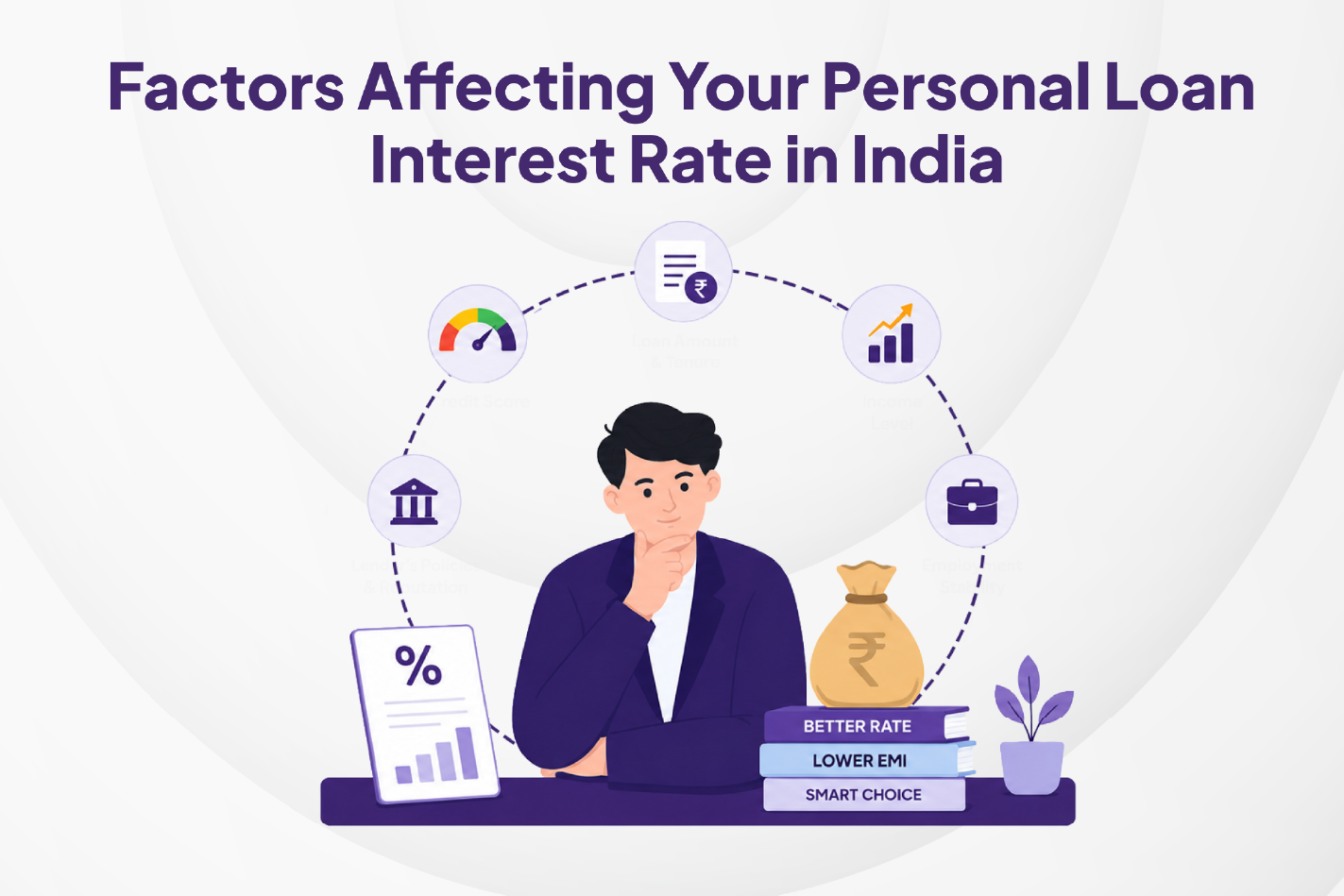
Personal loan interest rates in India usually range between 12% and 36% p.a., depending on your financial profile and lender policies. Several factors influence the final rate you receive, including your CIBIL score, income, employer type, existing EMIs, and broader economic conditions. Understanding these factors can help you borrow smarter, calculate personal loan EMI more effectively, and reduce your overall repayment burden.
Why Two People Get Different Rates for the Same Loan Amount
Many borrowers assume everyone receives the same interest rate for a personal loan. However, lenders follow a system called risk-based pricing. This means your interest rate depends on how risky or reliable you appear as a borrower.
Lenders evaluate multiple signals before approving a loan, including your repayment history, monthly income, employer category, current EMIs, and credit utilisation. A borrower with stable income and disciplined repayment habits is usually offered a lower rate than someone with irregular finances. This is why two people applying for the same ₹3 lakh personal loan may receive very different offers.
Before applying, many borrowers also use a personal loan calculator or personal loan eligibility calculator to understand affordability and repayment comfort.
Factors That Directly Affect Your Personal Loan Interest Rate
1. CIBIL Score: The Biggest Interest Rate Factor
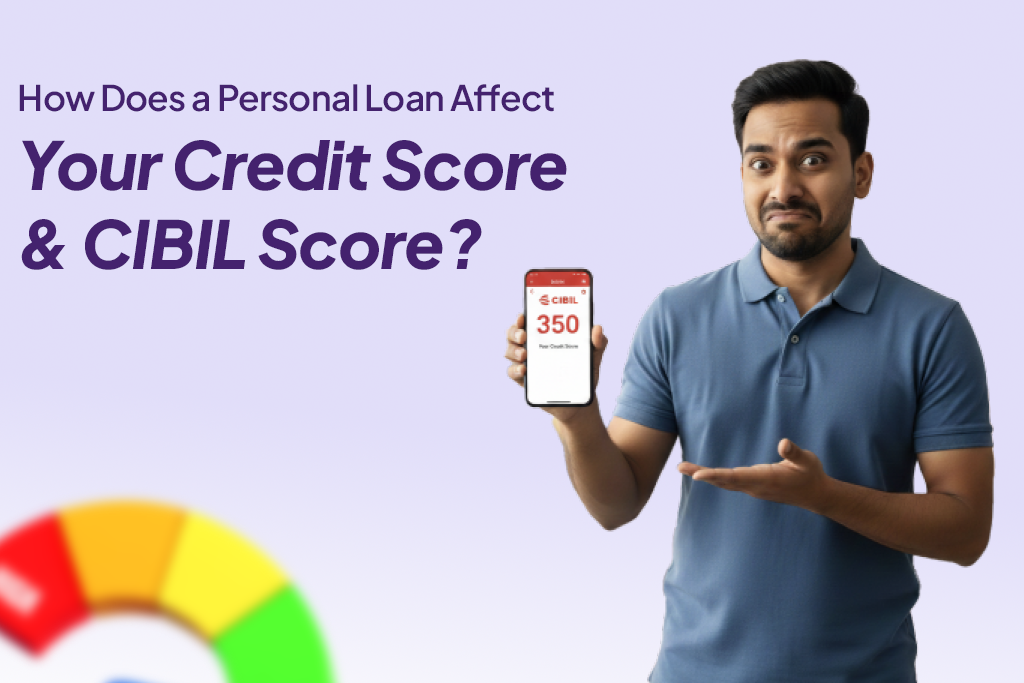
A strong CIBIL score can significantly improve your chances of getting a lower personal loan interest rate. Borrowers with scores above 750 are usually considered financially reliable and may receive rates that are 3-5% lower than applicants with weaker credit profiles.
In India:
- 750+ CIBIL scores often qualify for rates between 10-13% p.a.
- 700-749 scores may receive rates between 14-18% p.a.
- Scores below 700 may attract higher rates from banks and NBFCs
Among all the factors influencing interest rates, your credit score remains the most important.
If your score is low or you have no credit history, using a structured credit builder programme like Fatak Udaan can help build your credit profile gradually through disciplined repayment behaviour.
2. Monthly Income Level: Higher Income Builds Lender Confidence
Your income level directly impacts how lenders assess repayment capacity. A borrower earning ₹1 lakh per month is generally seen as less risky than someone earning ₹25,000 per month.
Higher income often improves:
- Loan eligibility
- Approval chances
- Access to better interest rates
Stable monthly earnings also reassure lenders that EMIs can be paid consistently, especially during financial emergencies.
Many lenders also use a personal loan eligibility calculator to assess how much you can borrow based on your salary and existing obligations.
3. Employer Category: Stable Jobs Often Get Better Rates
Your employer profile can also influence your loan pricing. Government employees, PSU workers, and professionals working with reputed MNCs often receive better loan offers because lenders view their jobs as more secure.
In many cases, borrowers from stable employer categories may enjoy a 1-3% rate advantage compared to applicants with irregular or unpredictable income sources.
This is one of the lesser-known factors affecting interest rates, but it can make a noticeable difference in the final loan offer.
4. FOIR: Existing EMIs Affect Your Borrowing Capacity
FOIR, or Fixed Obligation to Income Ratio, measures how much of your income is already being used to repay existing loans and credit card bills.
For example:
- Monthly income: ₹50,000
- Existing EMIs: ₹20,000
- FOIR: 40%
A higher FOIR signals financial pressure, which may lead to:
- Higher interest rates
- Reduced loan eligibility
- Lower approved amounts
Most lenders prefer borrowers with FOIR below 40-50%.
Before applying, it is helpful to calculate your personal loan eligibility and understand how much EMI your monthly income can comfortably support.
5. Loan Tenure: Shorter Tenure Usually Costs Less Overall
Loan tenure affects both your EMI and total interest payout.
A shorter tenure generally means:
- Higher EMI
- Lower total interest paid
A longer tenure usually means:
- Lower EMI
- Higher total borrowing cost
Lenders may offer slightly better pricing for shorter repayment periods because the risk duration is lower. Many borrowers use a personal loan calculator to compare tenure options and calculate personal loan EMI before making a decision.
6. Existing Relationship with the Lender
Banks and NBFCs often reward existing customers with better offers. If you already hold a salary account, fixed deposit, or previous loan with the lender, you may receive:
- Pre-approved offers
- Lower processing fees
- Faster approval
- Preferential interest rates
Auto-debit repayment setups can also improve lender confidence and sometimes help borrowers access better terms.
Having your personal loan documents and repayment history organised can further improve approval chances.
7. Loan Amount: Bigger Loans May Receive Better Pricing
In some cases, larger loan amounts may attract slightly lower interest rates for financially strong borrowers.
This usually happens because lenders prefer high-value customers with stable repayment capacity. However, loan amount alone does not determine pricing. Your credit profile still carries more weight than the size of the loan itself.
External Factors You Cannot Control (But Should Monitor)
Some factors affecting your personal loan interest rates are outside your control but still influence borrowing costs.
One major factor is the RBI repo rate. When the Reserve Bank of India reduces the repo rate, banks and NBFCs usually lower lending rates within one to three months. Floating-rate borrowers benefit first, while fixed-rate borrowers generally continue with the same rate unless they refinance.
Economic conditions also matter. During uncertain market cycles or recessions, lenders become more cautious and may increase personal loan interest rates even for good borrowers.
Fixed vs Floating Rate: Which Is Better Right Now?
If interest rates are expected to decline, floating-rate loans are usually the better option. If rates are rising, fixed-rate loans offer more stability and predictable EMIs.
| Rate Type | Best For | Advantage | Limitation |
| Fixed Rate | Rising rate environment | Stable EMI throughout tenure | Slightly higher starting rate |
| Floating Rate | Falling rate cycle | Lower starting rate | EMI may change over time |
When RBI cuts rates, floating-rate borrowers typically benefit faster because lenders revise these rates sooner.
FAQs
How does my CIBIL score affect my personal loan interest rate?
A higher CIBIL score improves lender confidence and increases your chances of securing lower interest rates.
Does employer type really affect personal loan rates?
Yes. Borrowers working in government departments, PSUs, and reputed MNCs are often offered better rates because of higher job stability.
What is considered a good personal loan interest rate in India?
For borrowers with strong financial profiles, rates between 10% and 14% p.a. are generally considered competitive in 2025.
What personal loan documents are usually required for loan approval?
Most lenders ask for basic personal loan documents such as PAN card, Aadhaar card, address proof, income proof, and recent bank statements during the verification process.
Can I negotiate my personal loan interest rate after approval?
Yes. Borrowers with strong credit scores, stable income, or competing loan offers may be able to negotiate better terms.
When should I choose a floating interest rate?
Floating rates are usually better when RBI is expected to reduce repo rates or when the market enters a rate-cut cycle.
The Fatak Advantage
FatakPay simplifies borrowing with a quick and fully digital process designed for real financial needs. You can explore personal loan options, calculate your personal loan eligibility, and complete your application with minimal paperwork.
If you are trying to build your credit profile before applying, Fatak Udaan Credit Builder helps users create disciplined repayment habits and establish stronger credit history over time.
Conclusion
Understanding the key factors affecting your personal loan interest rates can help you make better borrowing decisions. From your CIBIL score and income to RBI policy changes and repayment obligations, multiple elements influence the final rate you receive.
Before applying for a personal loan, take a few minutes to understand what affects your interest rate. Check your eligibility, compare repayment options, and make informed borrowing decisions with FatakPay.
Looking to strengthen your credit profile first? Explore Fatak Udaan Credit Builder and start building a stronger financial future today.
| Personal Loans by City | ||||
|---|---|---|---|---|
| Personal Loan Bengaluru | Personal Loan Thane | Personal Loan Mumbai | Personal Loan Hyderabad | |
| Personal Loan Pune | Personal Loan Surat | Personal Loan Coimbatore | Personal Loan Delhi | |
| Personal Loans by Amount | ₹60,000 Personal Loan | ₹3 Lakh Personal Loan | ₹5 Lakh Personal Loan |
|---|