Gold recycling is the process of recovering gold from old jewellery, coins, industrial scrap, and electronic waste so it can be refined and used again. Because gold does not lose its purity when recycled, it remains just as valuable as newly mined gold. Recycling helps meet global demand for gold while reducing the environmental impact of mining.
What Is Gold Recycling?
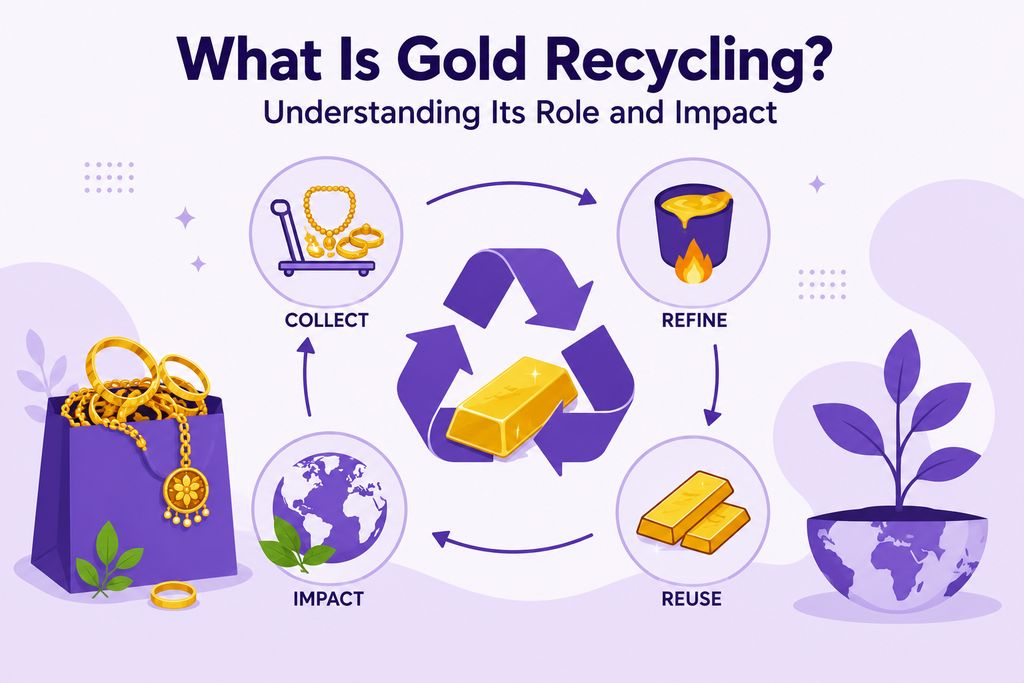
Gold recycling is the process of collecting gold from old jewellery, coins, and electronic waste, removing impurities through refining, and using it to create new gold products. Unlike many other materials, gold can be recycled repeatedly without losing its purity or quality. Whether it is turned into jewellery, bullion, or investment products, recycled gold offers the same characteristics as newly mined gold.
How Does the Gold Recycling Process Work?
The gold recycling process follows a series of steps that transform unused gold into refined metal ready for manufacturing or investment:
- Collection and sorting: Old jewellery, scrap gold, coins, and electronic components containing gold are collected and sorted based on their estimated purity.
- Purity testing: Refiners test the material to determine how much precious metal it contains before processing begins.
- Melting: The collected gold is melted to separate it from other metals and impurities.
- Refining: The melted gold is further purified until it reaches a high level of purity suitable for reuse.
- Casting and hallmarking: The refined gold is cast into bars, coins, or other forms. Where applicable, BIS hallmarking certifies its purity and weight.
Why Gold Recycling Matters
Gold is a finite natural resource, and mining it requires significant amounts of land, water, and energy. Recycling allows existing gold to remain in circulation instead of extracting more from the earth.
Here is why gold recycling matters:
- Reducing dependence on mining: Recycling helps lower the demand for new mining activities, which can have a significant environmental impact.
- Supporting a circular economy: Gold can be reused repeatedly without losing its quality, allowing valuable resources to stay in use for much longer.
- Encouraging sustainable gold sourcing: Many consumers and jewellers now prefer responsibly sourced gold that places less pressure on natural resources.
If you want to understand the broader importance of the metal, exploring the different uses of gold explains why recycled gold remains valuable across industries.
Environmental and Economic Benefits
The gold recycling impact extends beyond reducing waste. It also supports resource conservation and helps maintain a reliable supply of precious metals:
| Benefit Type | Impact |
| Environmental | Reduces land disturbance, water pollution, and greenhouse gas emissions associated with gold mining |
| Economic | Helps maintain a steady supply of gold and reduces dependence on imported precious metals |
| Resource | Preserves finite natural resources while recovering valuable metals through e-waste gold recovery |
If you are deciding between different investment methods, comparing digital gold vs physical gold can help you choose the option that suits your needs.
Final Thoughts
Gold recycling gives existing gold a new life without compromising its purity or quality. By keeping valuable resources in circulation, it reduces pressure on mining and supports more sustainable use of precious metals. Whether you are buying jewellery or investing in gold, understanding how recycled gold works can help you make more informed financial decisions.
Looking for a simple way to invest in gold? Start your digital gold investment with FatakPay from just ₹10. You can buy 24K certified digital gold, track its value anytime, and gradually build your investment portfolio at your own pace.
FAQs
What is gold recycling?
It is the process of collecting, refining, and reusing gold recovered from old jewellery, coins, scrap, and electronic waste. The refined gold can then be used to create new jewellery, bullion, or investment products.
Is recycled gold as pure as newly mined gold?
Yes. Once refined, recycled gold can achieve the same level of purity as newly mined gold. Since gold does not lose its chemical properties during recycling, both have the same quality when refined to the same standard.
Can I sell my old jewellery as scrap gold?
Yes. You can sell old or damaged gold jewellery to authorised jewellers or refiners, who assess its value based on weight and purity. If you prefer investing digitally, understanding how to sell digital gold can help you liquidate your holdings online when needed.
How is scrap gold valued compared to new gold?
Scrap gold is valued according to its pure gold content and the prevailing market price. Unlike new jewellery, it does not include making charges or design costs.
Can broken or damaged jewellery be recycled?
Yes. Broken, worn, or damaged gold jewellery can be completely recycled. During refining, impurities are removed and the gold is restored to a high level of purity, making it suitable for reuse.
Related Posts
| Instant Loans by Amount | |||
|---|---|---|---|
| ₹1500 Instant Loan | ₹2500 Instant Loan | ₹5000 Instant Loan | ₹10000 Instant Loan |
| ₹12500 Instant Loan | ₹15000 Instant Loan | ₹17500 Instant Loan | ₹20000 Instant Loan |