Collateral is a valuable asset pledged to a lender as security for a loan. It protects the lender from default and helps borrowers access larger loan amounts at lower interest rates. Common examples include property, gold, fixed deposits, and vehicles. However, not all loans require collateral as many personal loans are available without pledging any asset.
What Is Collateral? Simple Definition
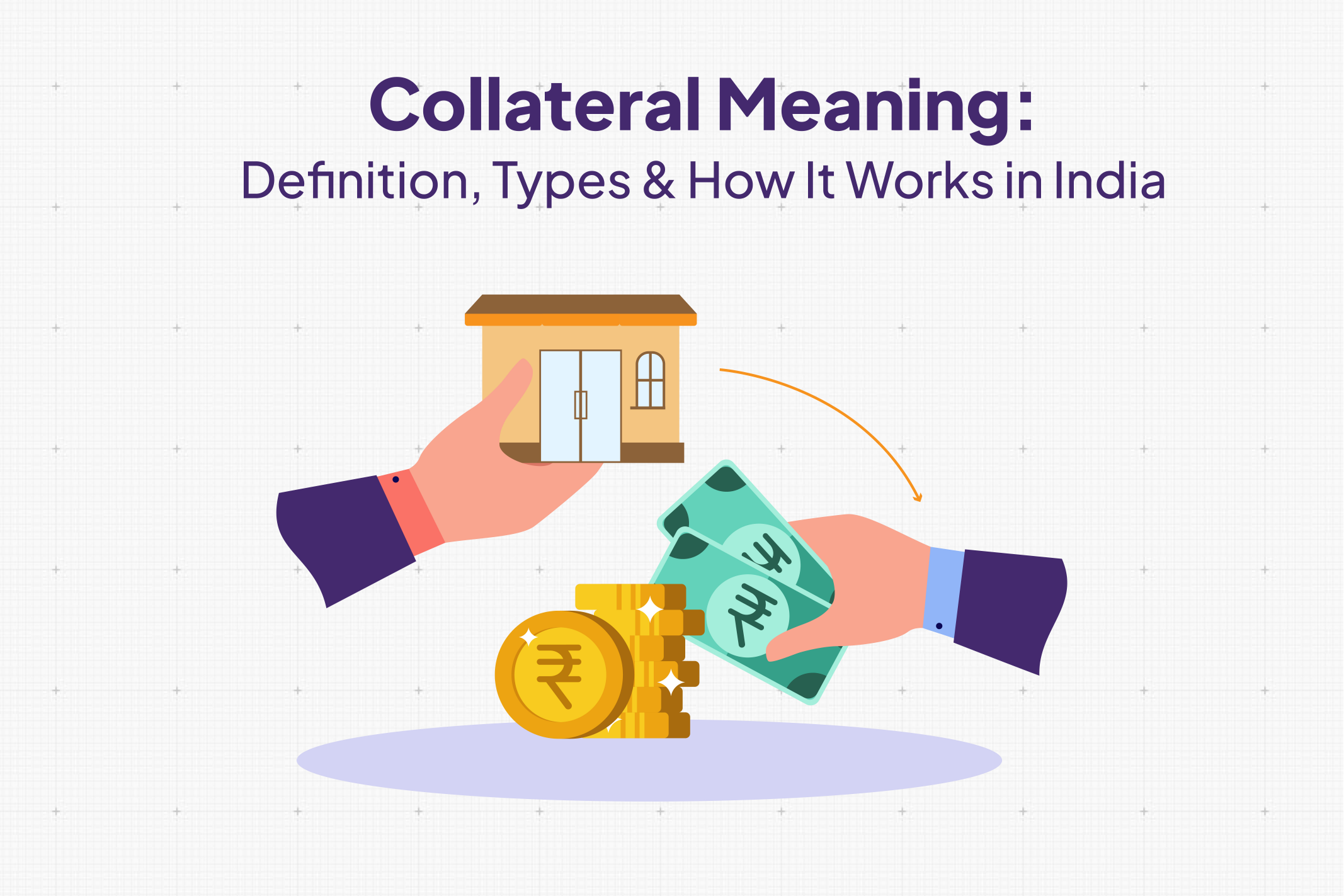
Collateral is an asset that a borrower offers to a lender as security against a loan. If the borrower fails to repay the loan as agreed, the lender has the legal right to recover dues by selling or taking possession of the collateral asset.
In simple terms, collateral meaning refers to a financial safety net for the lender. Since the lender’s risk is lower, borrowers may receive better interest rates, higher loan amounts, and longer repayment tenures. Common collateral assets include real estate, gold, fixed deposits, and investment securities.
Types of Collateral Accepted by Indian Lenders
Understanding the different types of collateral for loans can help borrowers choose the most suitable financing option based on the assets they own.
1. Real Estate (Most Common)
Real estate collateral includes residential property, land, commercial buildings, or plots. Property is one of the most widely accepted forms of collateral for home loans, loans against property (LAP), and business loans.
2. Gold & Jewellery
Gold collateral refers to gold jewellery, coins, or ornaments pledged to a bank or NBFC in exchange for a loan. Gold loans are popular because they offer quick approval and lower interest rates.
RBI mandates a maximum LTV (Loan-to-Value) ratio of 75% for gold loans. This means gold worth ₹1 lakh can typically fetch a maximum loan of ₹75,000.
3. Fixed Deposits & Bonds
Fixed deposits and certain government or corporate bonds can be used as collateral. In such cases, the lender places a lien on the FD or bond until the loan is repaid.
4. Vehicles
Cars, commercial vehicles, and two-wheelers can serve as collateral for specific secured loans. The lender may hold ownership rights or registration details until the loan is fully repaid.
5. Shares & Mutual Funds
Investors can pledge shares, mutual funds, sovereign gold bonds (SGBs), and certain securities to obtain loans without liquidating their investments.
6. Life Insurance Policies
Some life insurance policies with surrender value can be assigned to lenders as collateral. The lender receives rights over the policy if the borrower defaults.
The different types of collateral accepted by lenders vary depending on the loan product, lender policy, and the market value of the asset being pledged.
How Does Collateral Work in a Loan?
Step 1: Borrower Applies for a Loan
The borrower submits a loan application and offers an eligible asset as collateral security.
Step 2: Lender Evaluates the Asset
The lender assesses the value, ownership, and legal status of the collateral asset.
Step 3: Loan Amount Is Determined
Based on the asset value and applicable LTV ratio, the lender decides the maximum loan amount.
Step 4: Loan Is Disbursed
Once verification is completed, the loan is approved and funds are released to the borrower.
Step 5: Asset Remains Pledged
The collateral remains pledged with the lender until the loan is fully repaid.
Step 6: Asset Is Released or Recovered
If the borrower repays the loan successfully, the collateral is released. If the borrower defaults, the lender may take possession of or sell the asset to recover dues.
Collateral vs No Collateral: Key Differences
Understanding the difference between a secured loan vs unsecured loan helps borrowers choose the right financing option based on their needs and available assets.
| Feature | Secured Loan (With Collateral) | Unsecured Loan (No Collateral) |
| Security Requirement | Asset must be pledged | No asset required |
| Interest Rate | Usually lower | Usually higher |
| Loan Amount | Higher eligibility | Relatively lower |
| Approval Speed | May take longer due to valuation | Generally faster |
| Credit Score Requirement | Often more flexible | Usually stricter |
| Risk to Borrower | Asset may be seized on default | No asset risk |
When Do You Need Collateral for a Loan in India?
Whether collateral is required often depends on the types of loans in India, as larger secured loans generally require additional protection against default.
Loans that typically require collateral include:
- Home loans
- Gold loans
- Loans against property (LAP)
- Certain business loans
- Loans against securities
On the other hand, many unsecured products such as personal loans, small-ticket education loans, and consumer loans may not require collateral. Approval for these loans depends primarily on income, credit score, and repayment capacity.
Get a Personal Loan Without Any Collateral
Not every borrowing need requires you to pledge an asset. If you need quick funds for emergencies, travel, medical expenses, or personal requirements, unsecured personal loans can provide a convenient alternative.
FatakPay offers a personal loan up to ₹5 lakh, with no asset pledging, no branch visit, and disbursal in a few minutes through its RBI-registered NBFC partners.
FAQs
What is collateral in a personal loan?
Collateral in a loan is an asset pledged to the lender as security. However, most personal loans in India are unsecured and do not require collateral.
What are the types of collateral accepted by Indian banks?
Common types of collateral include property, gold, fixed deposits, vehicles, shares, mutual funds, bonds, and life insurance policies.
Can I get a personal loan without collateral in India?
Yes. Many lenders, including digital lending platforms, offer unsecured personal loans based on income, creditworthiness, and repayment capacity.
What happens to my collateral if I default on a loan?
If you default and fail to repay the loan, the lender may legally seize, auction, or sell the collateral asset to recover outstanding dues.
What is LTV ratio in collateral-based loans?
LTV (Loan-to-Value) ratio represents the percentage of an asset’s value that a lender is willing to finance. For example, under RBI guidelines, gold loans generally have a maximum LTV ratio of 75%.
| Personal Loans by City | ||||
|---|---|---|---|---|
| Personal Loan Bengaluru | Personal Loan Thane | Personal Loan Mumbai | Personal Loan Hyderabad | |
| Personal Loan Pune | Personal Loan Surat | Personal Loan Coimbatore | Personal Loan Delhi | |
| Personal Loans by Amount | ₹60,000 Personal Loan | ₹3 Lakh Personal Loan | ₹5 Lakh Personal Loan |
|---|