Peer to peer lending has emerged as an alternative borrowing and investing option in India. Instead of relying on traditional banks, borrowers and lenders connect directly through regulated online platforms. For borrowers, it can offer easier access to funds, while lenders may earn potentially higher returns than traditional savings products.
P2P lending in India connects borrowers and lenders directly through RBI-registered NBFC-P2P platforms. Borrowers can access loans up to ₹10 lakh, while lenders may earn returns in the range of 8–12%. However, lenders must understand that borrower default risk remains and returns are not guaranteed.
What Is Peer to Peer (P2P) Lending?
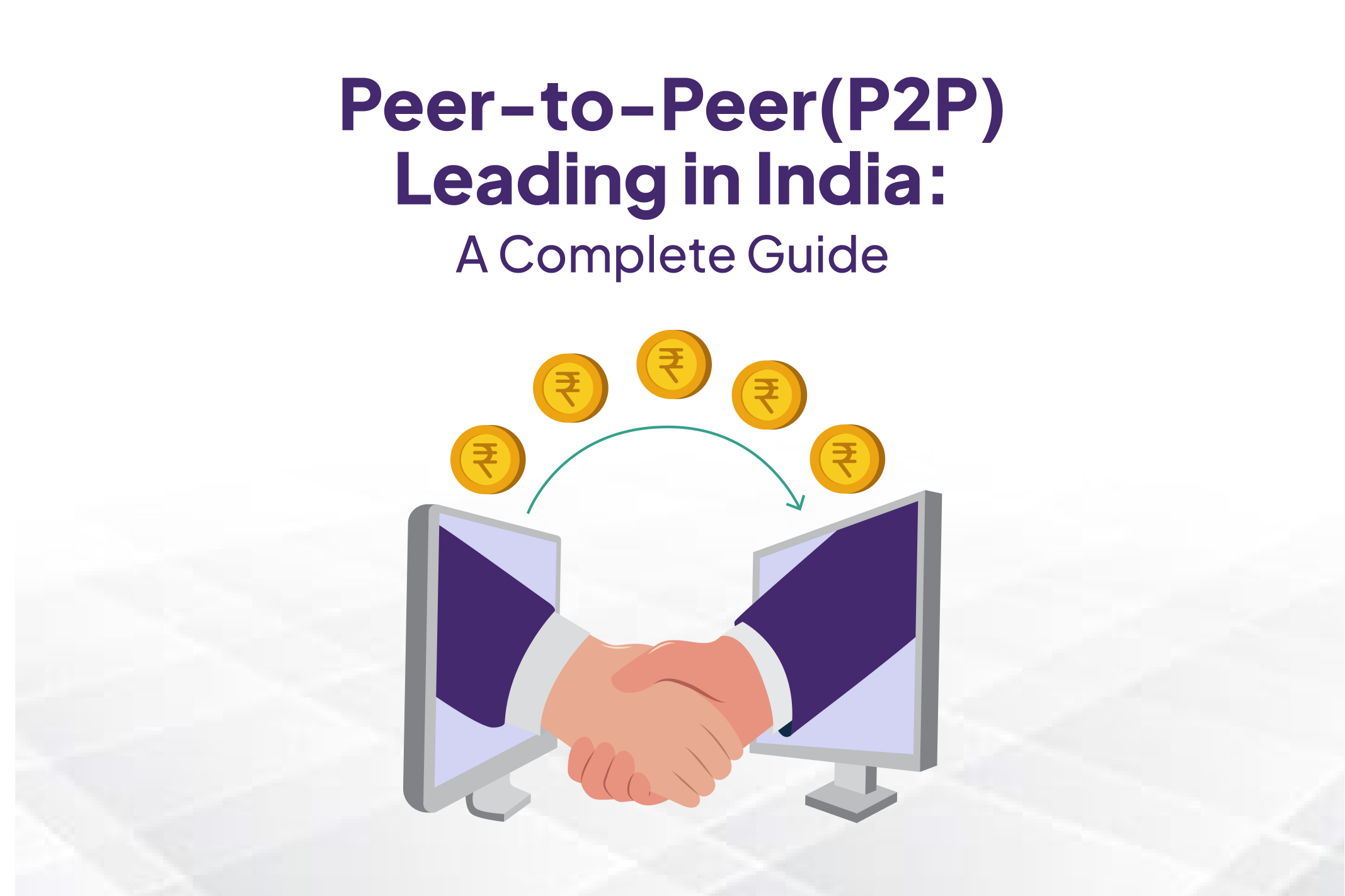
P2P lending is an online platform-based system where individuals lend money directly to borrowers, bypassing traditional banks and financial institutions. These platforms act as intermediaries by matching borrowers with lenders, conducting KYC checks, assessing creditworthiness, and facilitating repayments.
So, What is peer to peer lending? It is a borrowing and investing model where individuals connect through an online platform to lend and borrow money without relying on traditional banks.
Peer to peer lending platforms in India operate under RBI regulations and must obtain an NBFC-P2P license. Popular examples include Faircent and LenDenClub. The model benefits borrowers seeking quick access to funds and lenders looking for potentially higher returns.
How Does Peer to Peer Lending Work?
The process is relatively simple and fully digital. To understand the peer to peer lending meaning better, it helps to look at the step-by-step process through which borrowers and lenders interact on a P2P platform.
Step 1: Borrower registers on an RBI-licensed P2P platform
The borrower creates an account and submits personal, income, and identification details.
Step 2: Platform conducts KYC and risk assessment
The platform performs verification, credit evaluation, and risk grading to determine the borrower’s credit profile.
Step 3: Lenders review borrower profiles
Registered lenders browse loan requests and decide which borrowers they want to fund. Investments are usually made in small portions, often starting from ₹500–₹1,000.
Step 4: Loan gets funded and disbursed
Once enough lenders contribute to the requested amount, the loan is disbursed to the borrower.
Step 5: Borrower repays EMIs
The borrower pays monthly EMIs to the platform, which then distributes repayments proportionately to participating lenders.
Step 6: Collections are managed by the platform
If repayment issues arise, the platform handles follow-ups and collection efforts according to regulatory guidelines.
Understanding how P2P lending works helps both borrowers and lenders evaluate whether the model aligns with their financial goals.
P2P Lending vs Traditional Loans
| Feature | P2P Lending | Traditional Bank Loan |
| Lender | Individual investors | Banks and NBFCs |
| Approval Process | Platform-based | Bank-based |
| Documentation | Generally digital | May involve more paperwork |
| Interest Rate | Risk-based pricing | Fixed lender pricing |
| Loan Processing | Often faster | May take longer |
| Investor Opportunity | Available | Not applicable |
| Regulatory Oversight | RBI-regulated NBFC-P2P | RBI-regulated banks/NBFCs |
When comparing a personal loan vs P2P lending, traditional bank or NBFC loans often provide stronger institutional backing, while P2P platforms may offer greater flexibility for certain borrowers.
Benefits of P2P Lending – For Borrowers & Lenders
Benefits for Borrowers
- Easier access to credit compared to some traditional channels
- Fully digital application process
- Competitive interest rates for eligible borrowers
- No branch visits required
- Faster approvals in many cases
Most P2P loans are unsecured, making it important to understand the difference between a secured loan vs unsecured loan, especially when comparing them with gold loans or home loans that require collateral.
Benefits for Lenders
- Potentially higher returns than fixed deposits
- Diversification across multiple borrowers
- Transparent borrower information and risk grading
- Flexibility to invest smaller amounts across various loans
The benefits of P2P lending depend largely on the quality of borrowers, platform standards, and individual risk tolerance.
Risks and Limitations of P2P Lending
While P2P lending offers opportunities, it also comes with risks.
Some important risks include:
- Borrower default risk
- No deposit insurance protection
- Economic downturns affecting repayment behavior
- Limited liquidity compared to traditional investments
- Platform operational risks
Unlike bank deposits, investments made through P2P lending are not protected by deposit insurance schemes. Investors should diversify across multiple borrowers to reduce concentration risk.
How Is P2P Lending Regulated in India?
The Reserve Bank of India regulates peer to peer lending platforms through the NBFC-P2P framework.
All P2P platforms must:
- Obtain an RBI-issued NBFC-P2P license
- Follow KYC and anti-money laundering norms
- Maintain transparency in borrower and lender information
- Comply with lending and exposure limits prescribed by RBI
The regulatory framework aims to protect participants while supporting innovation in digital lending.
Is P2P Lending Safe in India?
Many first-time investors ask what P2P lending is and where it fits among the various types of loans in India, including personal loans, gold loans, and other borrowing options. The answer depends on the platform’s regulatory compliance and the borrower’s ability to repay.
Yes, P2P lending is legal and regulated in India when conducted through RBI-registered NBFC-P2P platforms. However, legal status does not eliminate investment risk.
Borrowers benefit from a structured and regulated lending process, while lenders should diversify investments and assess borrower quality carefully. RBI regulations do not allow P2P platforms to offer guaranteed returns, so lenders must bear the credit risk involved.
FAQs on P2P Lending
Is P2P lending legal in India?
Yes. P2P lending is legal in India through RBI-registered NBFC-P2P platforms that comply with regulatory requirements.
What is the maximum amount I can borrow on a P2P platform in India?
Borrowing limits are governed by RBI regulations and platform-specific policies. Many platforms allow borrowing up to ₹10 lakh, subject to eligibility and credit assessment.
What are the best P2P lending platforms in India?
Some well-known peer to peer lending
platforms India include Faircent and LenDenClub. Users should verify RBI registration before participating.
Is P2P lending risky for lenders?
Yes. Borrower default is the primary risk. Unlike bank deposits, P2P investments do not carry deposit insurance protection.
What interest rates do borrowers get on P2P loans?
Interest rates on P2P loans depend on factors such as credit profile, risk grade, and platform policies. While P2P lending offers flexible borrowing and investment opportunities, participants should understand the risks and choose RBI-regulated platforms.
| Personal Loans by City | ||||
|---|---|---|---|---|
| Personal Loan Bengaluru | Personal Loan Thane | Personal Loan Mumbai | Personal Loan Hyderabad | |
| Personal Loan Pune | Personal Loan Surat | Personal Loan Coimbatore | Personal Loan Delhi | |
| Personal Loans by Amount | ₹60,000 Personal Loan | ₹3 Lakh Personal Loan | ₹5 Lakh Personal Loan |
|---|