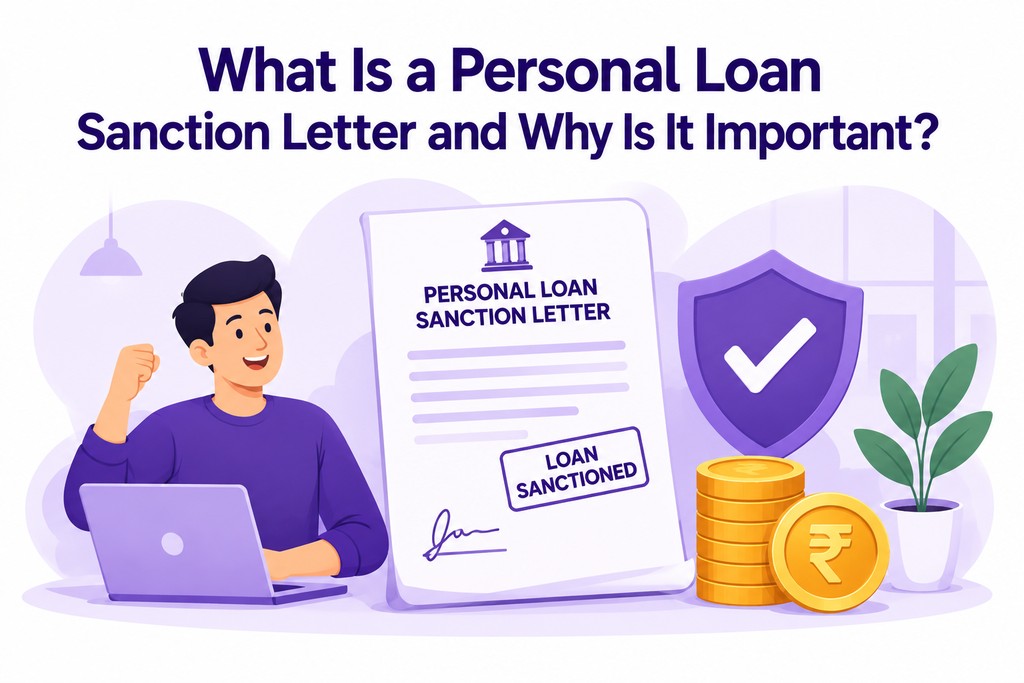
A personal loan sanction letter is a formal document issued by a bank or non-banking financial company (NBFC) after reviewing your loan application. It confirms that your application has met the lender’s initial eligibility requirements and specifies the conditions under which the loan can be disbursed.
What is a Personal Loan Sanction Letter?
Applying for a loan involves several steps, and one of the most important is receiving a personal loan sanction letter. This document tells you that your application has been approved in principle and clearly states the terms offered by the lender, including the loan amount, interest rate, repayment tenure, and equated monthly instalment (EMI). Reading it carefully before moving ahead helps you understand your financial commitment and avoid surprises later.
The personal loan sanction is not the final loan disbursement. Instead, it is an official approval that comes before signing the loan agreement and completing the remaining formalities.
Features of a Personal Loan Sanction Letter
Here are the features of a personal loan sanction letter you should look out for:
- The sanctioned loan amount, based on your income and credit profile
- The applicable interest rate, whether fixed or floating
- The loan tenure, or the period over which you will repay the loan
- The EMI amount and the date it will be deducted each month
- The processing fee and any other charges applicable to the loan
- Prepayment or foreclosure charges, if you choose to repay early
- The validity period within which you must accept the offer
- The terms and conditions that will govern the final loan agreement
Documents Required to Get a Sanction Letter
Lenders usually ask for a standard set of documents before they issue this letter. Keeping these ready in advance can help avoid delays:
- PAN card and Aadhaar card for identity and address verification
- Recent salary slips, or income tax returns if you are self-employed
- Bank statements for the last three to six months
- A recent photograph and a sample signature
- A healthy credit score improves your approval odds, so it helps to check your CIBIL score before you apply
Importance of the Sanction Letter
The importance of the sanction letter goes beyond confirming your approval. Here is why it matters:
- Legal proof of approval: It serves as documented evidence that the lender has agreed to fund your loan on specific terms.
- Helps with budgeting: Knowing the exact EMI and tenure in advance lets you plan your monthly finances accordingly.
- A required step before the agreement: You cannot move to the loan agreement stage without first reviewing and accepting this letter.
- Protects both sides: It sets clear expectations for the borrower and the lender, reducing the chance of disputes later.
Validity of a Personal Loan Sanction Letter
It usually stays valid for around six months from the date it is issued. Within this window, you need to accept the terms and complete the required formalities, or the offer may lapse and you will have to reapply. This validity period gives you time to plan your loan repayment schedule and compare the sanctioned terms against other offers before you commit.
How to Get a Personal Loan Sanction Letter
Here is how the process usually works:
- Submit your personal loan application online or through the lender’s app, along with basic Know Your Customer (KYC) documents.
- Upload the required documents, including income proof and bank statements.
- The lender carries out loan underwriting to assess your income, credit score and repayment capacity.
- Once approved, the lender issues your sanction letter with the sanctioned terms.
- Review the letter carefully and accept the terms within the validity period.
- The loan amount is disbursed to your bank account after you accept the terms and conditions.
Final Thoughts
A personal loan sanction letter gives you a clear picture of your borrowing terms before you commit to a loan. Taking a few minutes to review the approved amount, interest rate, repayment tenure, charges, and conditions can help you avoid misunderstandings later. Once you are satisfied with the terms, you can confidently complete the remaining formalities and move towards loan disbursement.
FatakPay offers personal loans of up to ₹5 lakh through a straightforward, digital process from application to approval. Check your personal loan sanction letter details instantly with FatakPay’s digital loan approval process.
FAQs
What is a personal loan sanction letter?
It is a formal document a lender issues after approving your loan application, stating the sanctioned amount, interest rate, tenure and EMI.
What is the validity of a personal loan sanction letter?
Most sanction letters remain valid for about six months from the date of issue. You need to accept the terms and complete the formalities within this period, or the sanction may lapse.
What is the difference between a sanction letter and a disbursement letter?
A sanction letter confirms that your loan has been approved and states the terms. A loan disbursement letter, issued later, confirms that the approved amount has actually been credited to your account.
What documents are needed to get a personal loan sanctioned?
Lenders generally ask for PAN and Aadhaar for identity verification, recent salary slips or income tax returns, bank statements for the last three to six months, and a photograph with a signature sample.
Can loan terms change after the sanction letter is issued?
Terms can change in rare cases, such as when new information affects your eligibility or when you request a modification before accepting the offer. Once you accept and sign the loan agreement, the terms are generally fixed.
Is a sanction letter a guarantee of loan disbursement?
Not entirely. A sanction letter reflects the lender’s approval based on the information available at that point, but disbursement still depends on you accepting the terms and completing any pending formalities or verifications.
Related Posts
| Personal Loans by City | ||||
|---|---|---|---|---|
| Personal Loan Bengaluru | Personal Loan Thane | Personal Loan Mumbai | Personal Loan Hyderabad | |
| Personal Loan Pune | Personal Loan Surat | Personal Loan Coimbatore | Personal Loan Delhi | |
| Personal Loans by Amount | ₹60,000 Personal Loan | ₹3 Lakh Personal Loan | ₹5 Lakh Personal Loan |
|---|
Explore our latest Personal Loan blogs for expert insights, financial tips, and guidance to help you make informed borrowing decisions.