Your CIBIL score range determines whether you get approved for a loan, what interest rate you pay, and how fast funds reach you. But what counts as a good score? And how does the credit score range differ across bureaus? This guide covers everything in one place.
Quick Answer: A good CIBIL score in India is 700 and above. A score of 750–900 is considered excellent and gives you the best loan approval rates, lowest interest rates, and fastest processing. Scores below 650 are considered risky by most banks.
What Is a Credit Score?
A credit score is a 3-digit number generated by RBI-licensed credit bureaus based on your repayment history, credit utilisation, credit mix, and inquiry behaviour. It tells lenders how likely you are to repay borrowed money on time. What is a good credit score in India? The answer depends on the bureau, each has its own credit score range, but for TransUnion CIBIL, 750 and above is universally considered strong.
CIBIL Score Range Chart
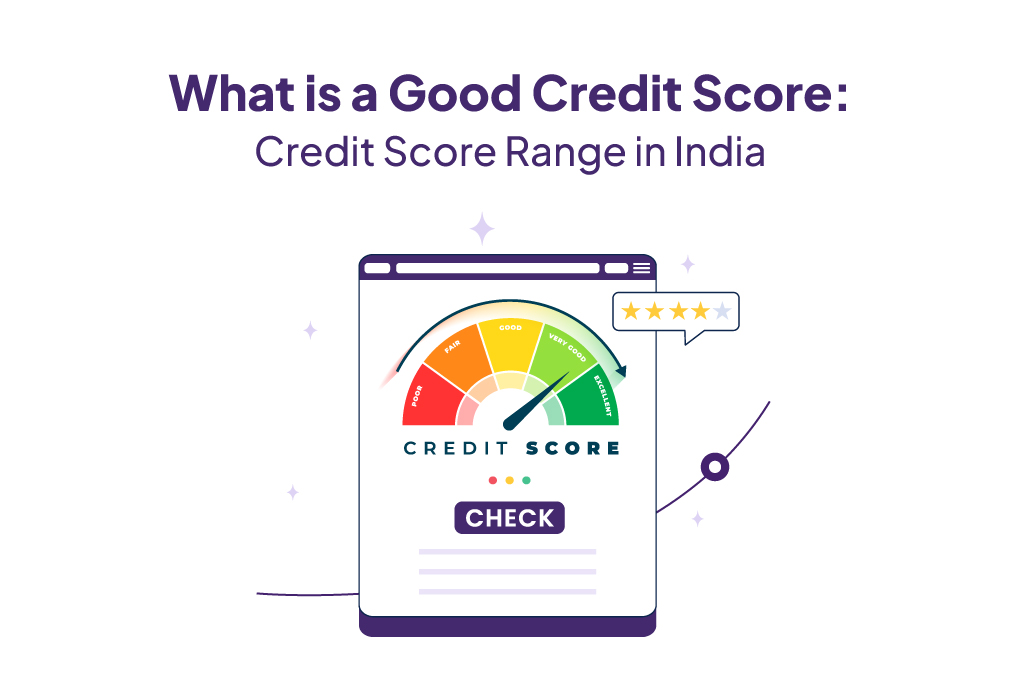
The CIBIL score range runs from 300 to 900. Here’s what each band means for your loan eligibility:
| CIBIL Score Range | Rating | What It Means for Borrowers |
| 300–549 | Poor | High rejection risk; most loan applications declined |
| 550–649 | Below Average | Loans possible at high interest rates from select NBFCs |
| 650–699 | Average | Limited options; stricter terms and lower loan amounts |
| 700–749 | Good | Most banks and NBFCs approve; competitive interest rates |
| 750–900 | Excellent | Best rates, fastest approvals, highest loan amounts |
300–549: Poor
High Risk, Most Loans Rejected
A CIBIL score range of 300–549 signals a history of missed payments, defaults, or settlements. Most lenders, banks and NBFCs alike, decline applications in this band. Priority: address overdue payments and dispute any report errors before applying.
550–649: Below Average
Loans Possible at High Interest Rates
The 550–649 CIBIL score range makes you eligible at select NBFCs, though interest rates and terms reflect the elevated risk perception. Each clean repayment in this band steadily rebuilds your profile.
650–699: Average
Limited Options, Strict Terms
At 650–699, you are within the approvable CIBIL score range for digital NBFCs like FatakPay, which approves personal loans at 650+, no salary slip, disbursed in 7 minutes.
700–749: Good
Most Banks & NBFCs Approve
A CIBIL score range of 700–749 opens the majority of loan products in India at competitive rates. This is where the benefits of disciplined credit behaviour become tangible.
750–900: Excellent
Best Rates, Fastest Approvals
The 750–900 CIBIL score range represents the top tier, pre-approved offers, lowest interest rates, and instant processing across virtually all lenders in India.
Credit Score Range Across Bureaus in India
Each of India’s four RBI-licensed bureaus uses a different credit score range. Knowing this prevents confusion when scores differ:
| Bureau | Score Range | Notes |
| TransUnion CIBIL | 300–900 | Most widely used by Indian banks |
| Experian | 300–850 | Used by many NBFCs and fintechs |
| Equifax | 1–999 | Broader range; scoring model differs |
| CRIF High Mark | 300–900 | Common among MFIs and co-operative banks |
As per RBI guidelines, every individual is entitled to one free credit report per year from each of the four licensed bureaus; CIBIL, Experian, Equifax, and CRIF High Mark.
What Happens If You Have No Credit Score (0 or -1)?
A score of 0 means you have had at least one credit account but insufficient recent data for a score. A score of -1 means no credit history exists at all, you are classified as New to Credit (NTC). Neither is the same as a bad score. FatakPay assesses NTC borrowers using alternative data and approves eligible applicants on PAN + Aadhaar alone. The good CIBIL score range you’re aiming for (750+) is reachable within 12-18 months of consistent, on-time repayment on your first loan.
Factors That Affect Your Credit Score
Understanding how each factor impacts your CIBIL score helps you pull the right levers to improve it.
- Payment history (30%) single biggest factor; one missed EMI drops your score 50-100 points
- Credit utilisation (25%) keep outstanding balance below 30% of your total credit limit
- Credit mix & duration (25%) longer history and a mix of secured and unsecured credit strengthens your profile
- Hard inquiries (20%) each loan application triggers a 5-10 point temporary drop; space applications out
Benefits of Having a Good Credit Score
A score in the good credit score range (700+) unlocks:
- Lower interest rates; typically 2–6% lower than sub-700 borrowers on the same loan
- Higher loan amounts; lenders extend larger credit lines to lower-risk profiles
- Faster approvals; many lenders offer pre-approved or instant approval to 750+ borrowers
- Better credit card offers; premium cards with higher limits, lower fees, and better rewards
- Stronger negotiating position; you can compare offers and choose the best terms
Loan Type Minimum Scores (India):
| Loan Type | Minimum Score | FatakPay |
| Personal Loan | 650-700 (NBFCs); 700–750 (banks) | 650+, 7 mins, no salary slip |
| Home Loan | 700-750 | 700+ recommended |
| Credit Card | 700+ | — |
| Car Loan | 680-700 | — |
How to Check Your Credit Score for Free in India
- Visit the FatakPay app or official TransUnion CIBIL website
- Enter your PAN card number and personal details
- Verify identity via OTP on your Aadhaar-linked mobile number
- View your full CIBIL score range position and credit report instantly, soft inquiry, zero score impact
FAQs
What Is a Good CIBIL Score in India?
What is a good CIBIL score? A score of 700+ is considered good; 750–900 is excellent. The good CIBIL score range of 750 and above gives you access to the best interest rates, highest loan amounts, and fastest approvals across banks and NBFCs in India.
Is 700 a Good Credit Score in India?
Yes, 700 places you in the “Good” band of the CIBIL score range and qualifies you for most loan products from banks and NBFCs. It is not the best possible score, but it is well above the rejection threshold and will typically get you competitive terms.
What Credit Score Is Needed for a Home Loan in India?
Most banks require a minimum CIBIL score of 700-750 for home loan approval. A score within the 750-900 CIBIL score range gets you the lowest home loan interest rates and fastest sanctions. Scores below 700 may face higher down payment requirements or outright rejection.
How Often Does the CIBIL Score Change?
TransUnion CIBIL updates credit data every 15 days as per the RBI 2024 mandate. This means improvements, like clearing an overdue EMI or reducing credit card outstanding, reflect in your CIBIL score range position within two to four weeks of the lender submitting updated data.
Can I Get a Credit Card With a 650 CIBIL Score?
Possibly, some NBFCs and fintech issuers offer secured credit cards (backed by a fixed deposit) to borrowers in the 650-699 credit score range. Traditional banks typically require 700+ for unsecured credit cards. A secured card is a useful tool to build your credit score into the 700+ range within 6-12 months.
What Is the Difference Between a Credit Score of 0 and -1?
A score of 0 means you have at least one credit account on record but insufficient activity for a full score calculation. A score of -1 means no credit history exists at all, you are classified as New to Credit (NTC). Neither is a bad score; both simply reflect limited data rather than poor credit behaviour.
Does Late Payment Affect My CIBIL Score?
Yes, significantly. A single late payment can drop your score by 50-100 points, pushing you down the CIBIL score range from Good to Average or below in one update cycle. The impact is greater for borrowers with otherwise clean profiles. Late payments remain visible on your CIBIL report for up to 7 years, though their weight decreases as clean repayment history accumulates.
Check your CIBIL score free on FatakPay, soft inquiry, zero score impact. Score 650+? Apply for an instant personal loan in 7 minutes, no salary slip required.
Related Posts


| Personal Loans by City | ||||
|---|---|---|---|---|
| Personal Loan Bengaluru | Personal Loan Thane | Personal Loan Mumbai | Personal Loan Hyderabad | |
| Personal Loan Pune | Personal Loan Surat | Personal Loan Coimbatore | Personal Loan Delhi | |
| Personal Loans by Amount | ₹60,000 Personal Loan | ₹3 Lakh Personal Loan | ₹5 Lakh Personal Loan |
|---|
Explore our latest Credit Score blogs for expert insights, financial tips, and guidance to help you make informed borrowing decisions.