Gold and silver have long been considered valuable assets for wealth preservation and portfolio diversification, making them popular choices among investors across generations. These precious metals have historically served as stores of value during periods of economic instability, currency depreciation, and market uncertainty. Both gold and silver can help protect purchasing power against inflation, as their prices often rise when the value of paper currencies declines. They also provide diversification benefits because their performance may differ from traditional asset classes such as equities and fixed-income investments.
Despite these similarities, gold and silver have distinct characteristics that influence their investment appeal. Gold is generally viewed as a safer and more stable asset, often attracting investors seeking capital preservation and protection during financial crises. Silver, on the other hand, tends to be more volatile because its price is influenced not only by investment demand but also by industrial usage in sectors such as electronics, solar energy, and electric vehicles. As a result, silver can experience larger price swings and may offer higher growth potential during favorable market conditions.
The two metals also differ in terms of liquidity, affordability, and long-term demand drivers, which can affect their role within an investment portfolio. Understanding these key differences can help investors evaluate their financial goals, risk tolerance, and investment horizon, ultimately deciding whether gold, silver, or a combination of both deserves priority in their portfolio.
Gold vs Silver: Key Differences as Investment Assets
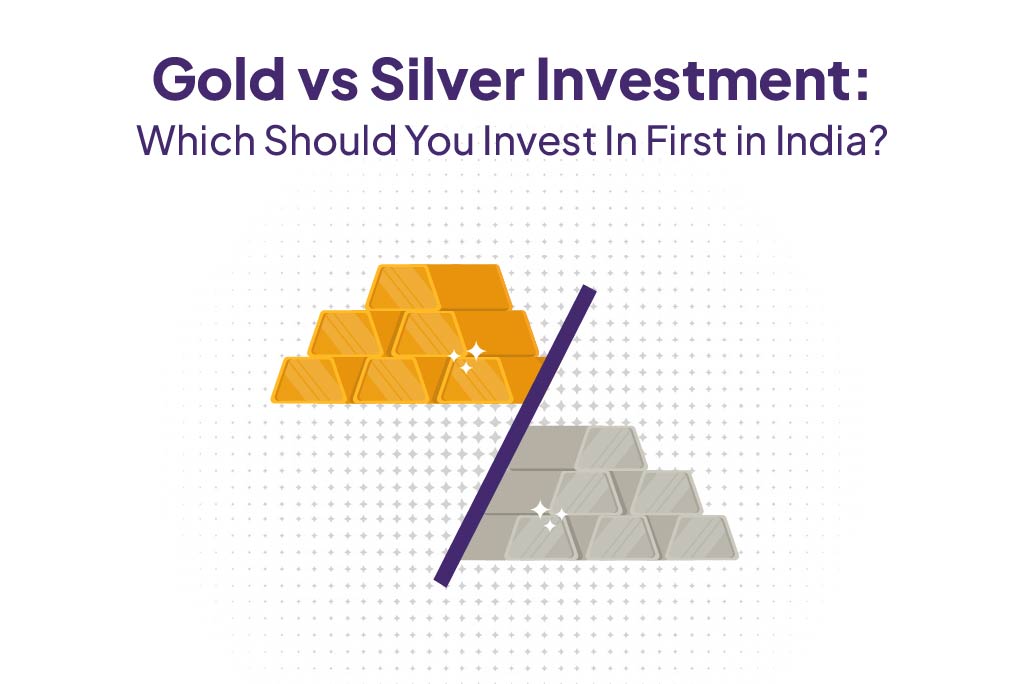
When evaluating precious metals as investment options, it is important to understand that gold and silver serve different roles within a portfolio. While both assets are widely used as hedges against inflation and economic uncertainty, they differ in terms of price behavior, market demand, liquidity, and growth potential. Gold is often favored for its stability and wealth-preservation qualities, whereas silver tends to attract investors seeking higher upside driven by industrial demand. A proper gold vs silver investment comparison therefore requires evaluating factors such as stability, liquidity, returns, volatility, and long-term demand trends.
| Feature | Gold | Silver |
| Price Stability | More stable (lower volatility) | More volatile (2–3× gold moves) |
| Historical Return (10Y CAGR India) | ~13–15% | ~10–14% (variable) |
| Industrial Demand | ~10% of demand | ~55% of demand (solar, electronics, EVs) |
| Inflation Hedge | Excellent | Good but more commodity-linked |
| Liquidity | Very high (globally traded) | Lower (more niche buyers) |
| Portfolio Role | Core holding | Satellite/tactical holding |
| GST (Digital) | 3% on purchase | 3% on purchase |
| Minimum Investment (Digital) | ₹10 | ₹10 |
When comparing gold and silver, gold is generally viewed as a wealth-preservation asset, while silver offers greater growth potential but comes with higher price fluctuations. This distinction is central to the ongoing gold vs silver debate among investors. Gold tends to perform well during periods of economic uncertainty and market stress, making it a preferred choice for conservative investors. Silver, on the other hand, often benefits from rising industrial demand and economic expansion. As a result, investors seeking a balance between stability and growth may consider allocating funds to both metals.
Why Gold Is Considered the Safer Investment
Gold has been used as a store of value for over 5,000 years and remains an important reserve asset for central banks worldwide. During periods of economic uncertainty, geopolitical tensions, or market volatility, investors often turn to gold as a safe-haven asset.
Another reason gold is considered safer is its relatively low correlation with equity markets. This helps reduce overall portfolio volatility during market downturns. Gold also performed exceptionally well in India during 2024–25, generating returns of approximately 29%, driven by global uncertainty, central bank purchases, and movements in the US dollar. For investors prioritizing stability and long-term wealth preservation, gold often remains the preferred choice. However, before investing, it’s important to understand the advantages and disadvantages of digital gold investment, including factors such as liquidity, taxation, storage arrangements, and price volatility.
Gold also benefits from strong liquidity and widespread acceptance across financial markets. Whether held in physical form, through ETFs, sovereign gold bonds, or digital gold platforms, investors can easily buy and sell gold when needed. This accessibility further strengthens gold’s reputation as a dependable asset during both stable and uncertain economic conditions.
Why Silver Has Higher Upside Potential
Silver offers unique advantages because it functions both as a precious metal and an industrial commodity. One widely followed indicator is the gold-to-silver ratio, which historically averages around 65-75:1. When the ratio rises above 80, many analysts consider silver relatively undervalued compared to gold.
Industrial demand also plays a significant role in silver pricing. Growing adoption of solar energy, EV batteries, semiconductors, and advanced electronics continues to support long-term demand. Historically, during precious metals bull markets, silver has often outperformed gold by 30–50% due to its higher volatility and stronger sensitivity to economic growth trends.
Gold vs Silver: When to Buy Each
Buy Gold When:
✓ You want stability and wealth preservation.
✓ You prefer lower price volatility.
✓ You are investing for the long term.
✓ You want a reliable inflation hedge.
Buy Silver When:
✓ You expect strong industrial demand growth.
✓ You are comfortable with higher risk.
✓ You want additional diversification.
✓ You are seeking higher growth potential
For most investors, the best approach is not choosing one over the other but combining both. A common allocation strategy is approximately 70–80% gold and 20–30% silver within the precious metals portion of a portfolio.
Digital Gold vs Digital Silver on FatakPay
Investors interested in digital gold and silver can access both assets through FatakPay with investments starting from as little as ₹10. Beginners often start with gold because of its stability and wealth-preservation characteristics.
A practical strategy could involve investing ₹100 per week in gold and ₹50 per week in silver to create a diversified precious metals SIP. Before comparing digital silver vs digital gold, it helps to understand what is digital silver and how it differs from digital gold as an investment product. Instead of deciding between digital gold or digital silver, investors may benefit from holding both assets through a single platform without needing separate accounts.
Regular investing through small, consistent contributions can help reduce the impact of short-term price fluctuations in both metals. By following a disciplined approach and reviewing allocations periodically, investors can gradually build exposure to precious metals while aligning their investments with long-term financial goals.
Many investors choose both gold and silver to diversify their portfolios and reduce concentration risk. Gold and silver have historically played important roles in wealth preservation during uncertain economic periods. While gold and silver often move in the same direction over the long term, they can react differently to market conditions. Investing in gold and silver can provide exposure to both safe-haven demand and industrial growth opportunities. Digital platforms have made investing in gold and silver more accessible than ever before. Some investors allocate a larger portion to gold and silver as part of their inflation-hedging strategy. Gold and silver are commonly viewed as complementary assets rather than competing investments. A balanced portfolio containing gold and silver may help improve diversification. During periods of economic uncertainty, demand for gold and silver often increases. Long-term investors frequently include gold and silver in their asset allocation plans. The performance of gold and silver can be influenced by global economic trends and interest rates. Many financial experts recommend holding gold and silver as part of a diversified investment strategy. Digital investing has simplified access to gold and silver for retail investors. Whether you prefer stability or growth, gold and silver can serve different purposes within a portfolio. Understanding the role of gold and silver can help investors make better long-term financial decisions.
Ready to start? You can invest in digital gold and digital silver on FatakPay with small amounts and build a diversified precious metals portfolio over time.
FAQs on Gold vs Silver Investment
Which is a better investment in India: gold or silver?
Gold is generally considered better for stability and wealth preservation, while silver may offer higher growth potential due to its industrial demand. The ideal choice depends on your investment objectives and risk tolerance.
Why is silver more volatile than gold?
Silver has a smaller market size and higher industrial demand exposure, causing prices to react more sharply to economic and market developments.
What is the gold-to-silver ratio and what does it mean?
The gold-to-silver ratio measures how many ounces of silver are required to buy one ounce of gold. Investors often use it to assess whether silver appears undervalued or overvalued relative to gold.
Should I invest in digital gold or digital silver?
Digital gold may suit conservative investors seeking stability, while digital silver may appeal to those willing to accept higher volatility for potentially higher returns.
How much of my portfolio should be in gold vs silver?
Many financial experts recommend maintaining approximately 70–80% gold and 20–30% silver within the precious metals allocation of a diversified investment portfolio.
| Instant Loans by Amount | |||
|---|---|---|---|
| ₹1500 Instant Loan | ₹2500 Instant Loan | ₹5000 Instant Loan | ₹10000 Instant Loan |
| ₹12500 Instant Loan | ₹15000 Instant Loan | ₹17500 Instant Loan | ₹20000 Instant Loan |