Debt can be a useful financial tool when managed responsibly, but excessive borrowing can create serious financial difficulties. Many people find themselves trapped in a cycle where new loans are used to repay old ones, making debt increasingly difficult to manage. Understanding debt trap meaning, its causes, and warning signs can help borrowers avoid long-term financial stress.
What Is a Debt Trap?
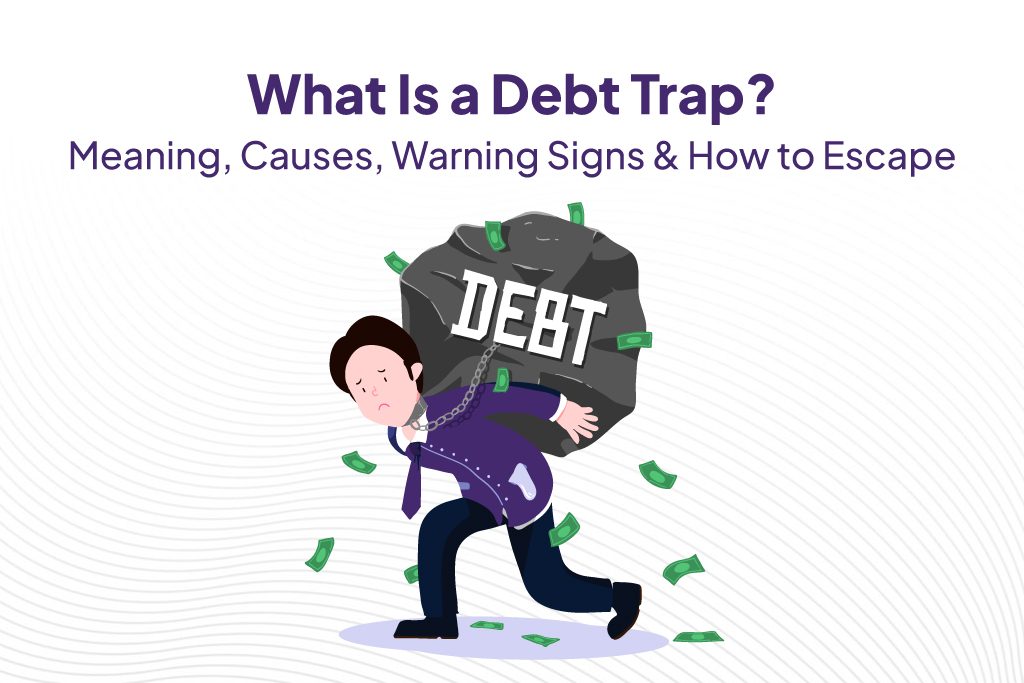
A debt trap is a situation where a borrower is unable to repay existing debts and is forced to take on new loans just to service old ones, creating a cycle that becomes increasingly difficult to escape. Each new loan adds more interest, deepening the financial hole.
If you are wondering what is debt trap, it occurs when repayments consume a large portion of income, leaving little money for daily expenses or savings. Simply put, debt trap means being stuck in a cycle of borrowing and repayment with no clear path to becoming debt-free. Understanding the debt trap is the first step toward preventing financial distress.
How Does a Debt Trap Work?
Understanding how does a debt trap work is important for recognizing financial danger early. A borrower may initially take a loan for a genuine need such as education, medical expenses, or emergencies. If repayments become difficult due to income loss, overspending, or unexpected expenses, the borrower may take another loan or use credit cards to cover existing EMIs.
Over time, multiple debts accumulate, increasing monthly obligations and interest costs. As more income goes toward servicing debt, the borrower may need additional borrowing to meet everyday expenses. This cycle continues until debt repayments become unsustainable, resulting in defaults, credit score damage, recovery actions, and severe financial stress.
Common Causes of a Debt Trap
Excessive Borrowing
Taking multiple loans simultaneously without evaluating repayment capacity is one of the most common causes of debt trap situations.
Credit Card Dependency
Relying heavily on credit cards and paying only minimum dues can cause outstanding balances to grow rapidly due to high interest rates.
Medical Emergencies
Unexpected healthcare expenses often force borrowers to take loans without adequate financial planning.
Job Loss or Income Reduction
A sudden drop in income can make existing EMIs difficult to manage, leading to additional borrowing.
Poor Financial Planning
Lack of budgeting, emergency savings, and debt management can increase the risk of falling into a debt trap.
Predatory Lending
High-interest loans, hidden charges, and aggressive lending practices can make repayment difficult and worsen financial stress.
Lifestyle Inflation
Increasing expenses as income rises without corresponding savings can leave borrowers vulnerable during financial setbacks.
Warning Signs You Are in a Debt Trap
Use this checklist to determine whether you may be at risk:
✓ Taking new loans to repay existing loans.
✓ Using credit cards to pay EMIs or monthly bills.
✓ Paying only minimum credit card dues regularly.
✓ Missing or delaying EMI payments.
✓ Having little or no emergency savings.
✓ More than 40–50% of monthly income going toward debt repayments. If this applies to you, understand FOIR and how to reduce it, as a high FOIR is one of the clearest indicators of financial stress.
✓ Frequently borrowing from friends or family to meet obligations.
✓ Feeling constant financial stress due to debt commitments.
Recognizing these warning signs early can help prevent a full-fledged debt trap.
Debt Trap Self-Assessment: Are You at Risk?
Ask yourself the following questions:
- Are you using one loan to repay another?
- Do your EMIs exceed 40% of your monthly income?
- Are you struggling to save money every month?
- Have you missed loan or credit card payments recently?
- Are you relying on credit for routine expenses?
If you answered “yes” to multiple questions, you may be at increased risk of falling into a debt trap and should consider taking corrective action immediately.
Ways to Avoid Falling Into a Debt Trap
Create a Budget
Track income and expenses carefully to ensure spending remains within your financial capacity.
Build an Emergency Fund
Maintain savings covering at least three to six months of expenses to handle unexpected situations.
Borrow Responsibly
Only take loans that you can comfortably repay without straining your monthly budget.
Limit Credit Card Usage
Avoid carrying high revolving balances and pay outstanding dues in full whenever possible.
Avoid Multiple Concurrent Loans
Managing too many loans simultaneously increases repayment pressure and financial risk.
Review Debt Regularly
Monitor your outstanding obligations and repayment schedules to identify problems early.
Seek Help Early
If debt becomes difficult to manage, discuss restructuring or repayment options with lenders before defaults occur. If you have already missed payments or defaulted, focus on understanding how to improve CIBIL score after loan default while rebuilding healthy repayment habits.
These strategies can significantly reduce the likelihood of entering a debt trap.
Consolidate High-Interest Debt into One Payment
Managing multiple EMIs and credit card dues can become overwhelming. In some situations, a personal loan for debt consolidation may help combine multiple high-interest debts into a single repayment, making debt management more structured and easier to track.
FAQs on Debt Trap
What is debt trap meaning?
Debt trap meaning refers to a situation where a borrower continuously takes new debt to repay existing debt, making it increasingly difficult to become debt-free.
What are the warning signs of a debt trap?
Common warning signs include borrowing to repay loans, paying only minimum credit card dues, missing EMIs, and spending a large portion of income on debt repayments.
How to get out of a debt trap in India?
Create a repayment plan, reduce unnecessary expenses, avoid taking new loans, prioritize high-interest debt, and explore restructuring options with lenders if necessary.
What causes a debt trap?
The major causes of debt trap include excessive borrowing, high-interest debt, medical emergencies, job loss, poor financial planning, and predatory lending practices.
Is using a personal loan to pay credit card debt a debt trap?
Not necessarily. If used strategically to consolidate high-interest debt into a lower-interest loan, it may help. However, taking additional debt without a repayment plan can worsen financial problems.
What is predatory lending and how does it cause debt traps?
Predatory lending refers to unfair lending practices involving excessive interest rates, hidden fees, or misleading terms. Such loans can increase repayment burdens and contribute to debt traps.
| Personal Loans by City | ||||
|---|---|---|---|---|
| Personal Loan Bengaluru | Personal Loan Thane | Personal Loan Mumbai | Personal Loan Hyderabad | |
| Personal Loan Pune | Personal Loan Surat | Personal Loan Coimbatore | Personal Loan Delhi | |
| Personal Loans by Amount | ₹60,000 Personal Loan | ₹3 Lakh Personal Loan | ₹5 Lakh Personal Loan |
|---|
Explore our latest Personal Loan blogs for expert insights, financial tips, and guidance to help you make informed borrowing decisions.