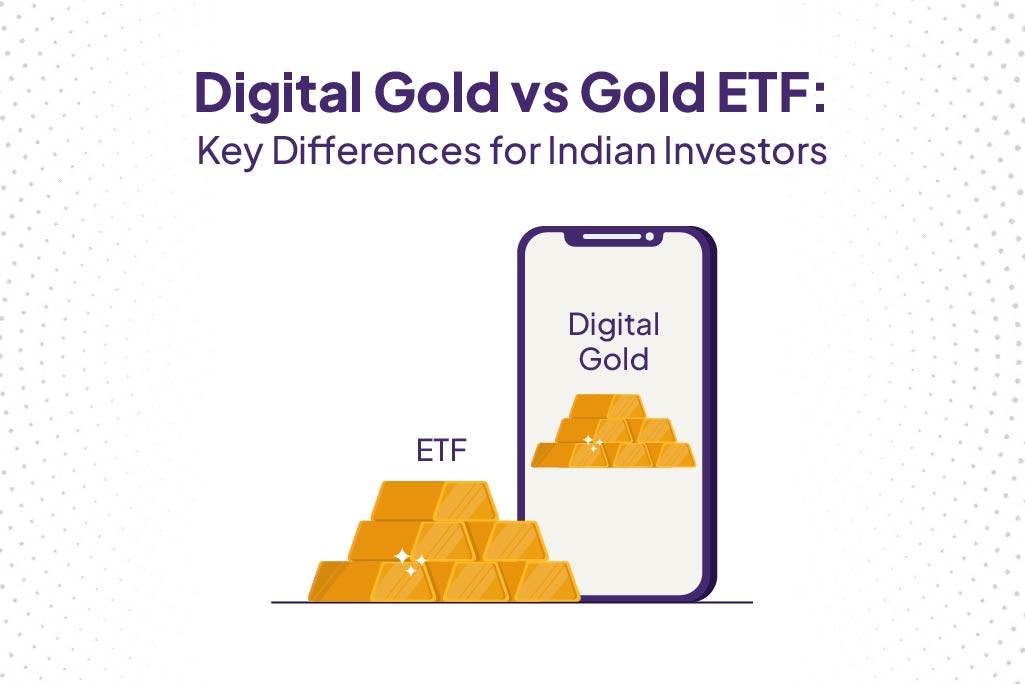
Digital gold can be purchased from as little as ₹10 without a Demat account, making it accessible for first-time investors. However, it attracts 3% GST and is not regulated by SEBI. Gold ETFs are SEBI-regulated investment products that do not attract GST at purchase but require a Demat and trading account. Following tax changes introduced through the Finance Act 2023, both digital gold and Gold ETFs now qualify for long-term capital gains treatment after a 24-month holding period.
What Is Digital Gold?
Digital gold allows you to buy and own 24K gold online in small denominations, starting from as little as ₹10. The gold purchased is stored in insured vaults by service providers on your behalf. It does not require a Demat account, making it accessible for first-time investors. However, digital gold is not regulated by SEBI or RBI. Investors also pay 3% GST at the time of purchase. Most platforms offer instant liquidity through mobile apps, allowing you to buy or sell at any time.
One of the biggest practical differences in the digital gold and Gold ETF difference is the Demat account requirement. Many new investors prefer digital gold because it eliminates the need to open and maintain Demat and trading accounts, reducing paperwork and account-related charges.
What Is a Gold ETF?
A Gold ETF (Exchange-Traded Fund) is a mutual fund that tracks the domestic price of gold. These funds are regulated by SEBI and traded on stock exchanges such as NSE and BSE. Gold ETFs generally invest in high-purity gold and aim to mirror its market value. Investors need a Demat and trading account to buy or sell ETF units. Unlike digital gold, there is no GST on purchase, though fund management charges are applied through an expense ratio.
For investors who do not already have a Demat account, the account-opening process may be an additional consideration when evaluating the difference between digital gold and Gold ETF investments.
Gold ETF vs Digital Gold — Complete Comparison Table
| Parameter | Digital Gold | Gold ETF |
| Regulation | Not regulated by SEBI | Regulated by SEBI |
| Investment Amount | Starts from ₹10 | Depends on ETF unit price |
| Demat Account | Not required | Mandatory |
| Trading Platform | Apps and fintech platforms | NSE/BSE through brokers |
| Gold Ownership | Direct ownership of gold stored in vaults | Ownership of ETF units linked to gold |
| GST | 3% GST applicable on purchase | No GST on purchase |
| Liquidity | Can be sold through the issuing platform | Traded during market hours |
| Expense Ratio | Usually none, but spread costs may apply | Annual expense ratio applicable |
| Physical Delivery | Available with many providers | Generally not available |
| Investment Horizon | Suitable for short- to medium-term accumulation | Suitable for long-term investing |
| Regulatory Protection | Unregulated | Higher regulatory oversight |
| Transparency | Varies by provider | High disclosure standards |
Gold vs ETF becomes important when evaluating costs, regulation and long-term suitability. Investors comparing gold ETFs vs. digital gold should also consider whether they already have a Demat account and their preferred investment horizon.
Taxation of Digital Gold and Gold ETFs
For Gold ETFs, gains are classified based on the holding period. If ETF units are sold within 12 months of purchase, any profit is treated as a short-term capital gain and taxed according to the investor’s applicable income tax slab rate. If the units are held for more than 12 months, the gains qualify as long-term capital gains (LTCG) and are taxed at 12.5% without indexation benefits.
As a result, physical gold, digital gold and Gold ETFs now follow similar long-term capital gains treatment, reducing the tax-related distinction between these investment options. Investors should always verify the latest tax provisions before investing because tax rules may change over time.
When to Choose Digital Gold Over Gold ETF
You may consider digital gold if:
- You do not have a Demat or trading account.
- You want to start investing with very small amounts such as ₹10 to ₹500.
- You prefer the convenience of buying gold 24×7 through an app.
- You may want physical gold delivery in the future.
- You are looking for a simple way to accumulate gold gradually.
- You want quick access without opening additional investment accounts.
For many first-time investors, the difference between a gold ETF and digital gold often comes down to ease of access and minimum investment requirements.
When to Choose Gold ETF Over Digital Gold
A Gold ETF may be more suitable if:
- You already maintain a Demat and trading account.
- You are investing for long-term wealth creation.
- You prefer SEBI-regulated investment products.
- You want to avoid the GST impact associated with digital gold purchases.
- You plan to invest regularly through a systematic approach.
- You value transparency and regulatory oversight.
Among the key differences between digital gold and gold ETFs, regulation and tax efficiency often make gold ETFs attractive for disciplined long-term investors.
Investors who are still evaluating whether digital gold suits their needs can also explore our detailed guide on advantages and disadvantages of digital gold investment.
Conclusion
Both options provide exposure to gold without the challenges of storing physical metal. In the digital gold vs gold ETF debate, the better choice depends on your investment goals, account setup and preferred level of regulatory protection. Evaluate costs, convenience and investment horizon before deciding where to allocate your money.
If you are looking to start investing in gold, you can invest in digital gold on FatakPay from as little as ₹10 without opening a Demat account. The gold is backed by 24K physical gold stored in secure vaults, allowing investors to gradually build their gold holdings with small investments.
FAQs
What is the difference between digital gold and gold ETFs?
Digital gold represents actual gold stored in insured vaults and can be purchased without a Demat account. Gold ETFs are SEBI-regulated funds traded on stock exchanges and require a Demat account.
Is digital gold vs gold ETFs better for investment?
There is no single answer. Digital gold offers convenience and low entry amounts, while Gold ETFs provide regulatory oversight and may be more suitable for long-term investing.
Do I need a Demat account to buy digital gold?
No. Digital gold can be purchased directly through participating apps and platforms without opening a Demat account.
Is there GST on gold ETF purchases?
No. Gold ETFs are not subject to GST at the time of purchase. However, investors should consider brokerage and fund expense ratios.
How is digital gold taxed in India?
Digital gold is generally taxed similarly to physical gold. Capital gains tax treatment depends on the holding period and prevailing tax regulations at the time of sale.
Which is safer: digital gold or a gold ETF?
From a regulatory perspective, Gold ETFs offer stronger investor protection because they are regulated by SEBI. This is one of the major factors considered in the digital gold vs gold ETFs comparison.
What if I want to compare digital gold with other gold investment options?
Besides ETFs, investors may also consider Sovereign Gold Bonds depending on their goals and investment horizon. For a detailed comparison, read our guide on digital gold vs sovereign gold bond.
| Instant Loans by Amount | |||
|---|---|---|---|
| ₹1500 Instant Loan | ₹2500 Instant Loan | ₹5000 Instant Loan | ₹10000 Instant Loan |
| ₹12500 Instant Loan | ₹15000 Instant Loan | ₹17500 Instant Loan | ₹20000 Instant Loan |