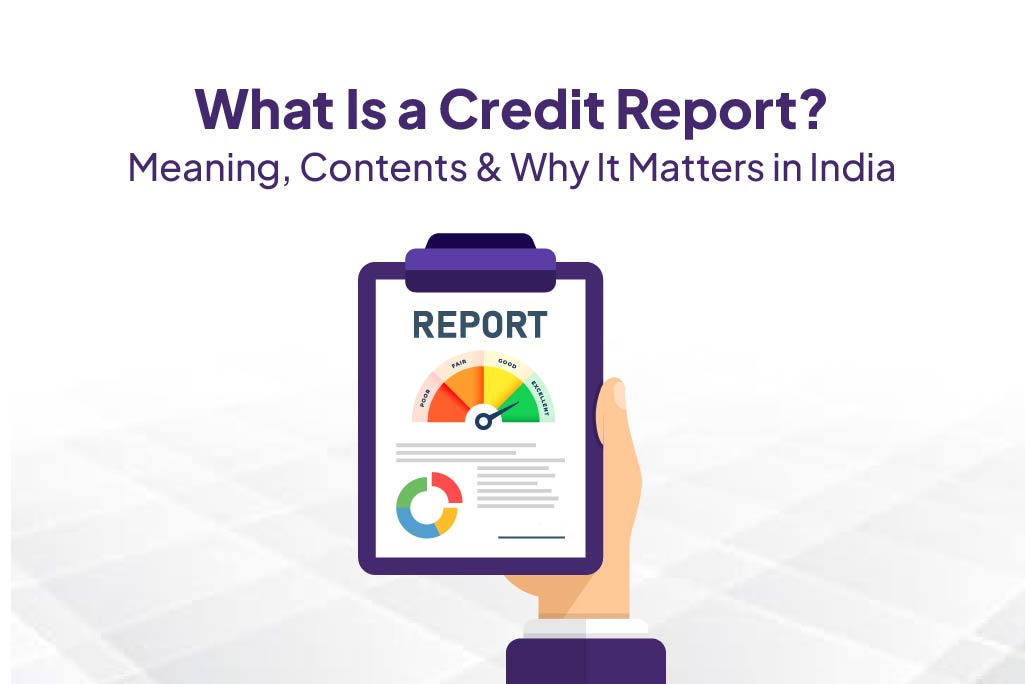
A credit report is a detailed record of your borrowing and repayment history maintained by credit bureaus. It contains information about your loans, credit cards, payment behaviour, credit inquiries and credit score. Understanding what a credit report is important because lenders use it to evaluate your creditworthiness before approving loans, credit cards and other forms of credit in India.
Credit Report Meaning
The credit report meaning refers to a detailed record of your borrowing and repayment history. It includes information about loans, credit cards, repayment behaviour, defaults and lender inquiries made against your profile over the years.
In India, credit reports are generated by four RBI-licensed credit bureaus: TransUnion CIBIL, Experian, Equifax and CRIF High Mark. Financial institutions use these reports to evaluate your creditworthiness before approving a loan, credit card or other credit product.
Credit Report vs CIBIL Report: Are They the Same?
Many people use the terms “credit report” and “CIBIL report” interchangeably. However, there is a technical difference.
A credit report can be issued by any of India’s four licensed credit bureaus. A CIBIL report specifically refers to the report generated by TransUnion CIBIL. While the reports may come from different bureaus, they generally contain the same core information about your credit history, outstanding debts, repayment records and credit inquiries. Minor variations may occur due to reporting timelines or bureau-specific data processing methods.
What Information Is in a Credit Report?
Learning how to read your CIBIL report can help you understand each section and identify inaccuracies that may affect your credit profile.
1. Personal Information
This section contains identification and contact details, including:
- Full name
- Date of birth
- PAN details
- Aadhaar details, where available
- Current and previous addresses
- Mobile number and email address
These details help bureaus match credit records to the correct individual.
2. Credit Score
A credit report generally includes a three-digit credit score ranging from 300 to 900. The score summarises your credit behaviour and repayment history. Higher scores generally indicate lower credit risk and may improve your chances of loan approval.
The credit score shown in your report is only one part of your overall credit profile. If you want a deeper understanding of what a CIBIL score is, including how it is calculated and why lenders pay close attention to it, explore our detailed guide.
3. Account Information
This section provides details of active and closed credit accounts reported during the past seven years.
Information typically includes:
- Lender name
- Loan or credit card type
- Sanctioned amount or credit limit
- Outstanding balance
- Account status
- Days Past Due (DPD)
This is often the most detailed section of the report.
4. Payment History
The payment history records your monthly repayment behaviour, usually for the previous 36 months.
Lenders review this section carefully because it shows whether payments were made on time. DPD values indicate repayment delays and can affect your credit profile.
5. Enquiry Information
Whenever you apply for a loan or credit card, the lender may perform a hard inquiry.
The report records:
- Name of the lender
- Date of inquiry
- Type of credit requested
These inquiries are generally retained for up to two years.
6. Employment Information
Some reports may also contain employment-related information submitted by lenders, such as:
- Occupation type
- Employment category
- Income details reported during credit applications
How Is a Credit Report Created?
Banks, NBFCs and other lenders submit customer credit data to credit bureaus every month. This information includes loan balances, repayment status, defaults and account updates.
The credit bureau collects and processes this data, compiles it into a comprehensive report and calculates a credit score using proprietary algorithms.
Why Is Your Credit Report Important?
If you are wondering why your credit report is important, consider the following:
- It influences loan approval and rejection decisions.
- It can affect the interest rate offered by lenders.
- It impacts credit card approval and credit limits.
- Some employers and landlords may review credit history during assessments.
- It helps identify potential identity theft or unauthorised accounts.
Regularly reviewing your report can help you maintain good financial standing and correct errors promptly.
How to Get Your Credit Report for Free in India
You can access your credit report without paying a fee through several channels.
- Visit the official website of a credit bureau.
- Complete identity verification using the required details.
- Request your free annual credit report.
- Download or view the report online.
As per regulatory requirements, all four credit bureaus provide one free credit report annually:
- TransUnion CIBIL
- Experian India
- Equifax India
- CRIF High Mark
You can also check your report through financial platforms such as FatakPay, which generally use soft inquiries that do not affect your credit score.
Monitor Your Credit Health Regularly
Checking your credit report periodically can help you track borrowing activity, identify reporting errors and stay informed about your financial standing. With FatakPay, you can check your credit report free through a soft inquiry that does not impact your credit score, making it easier to monitor your profile whenever needed.
FAQs
What is a credit report and why is it important?
A credit report is a document that records your borrowing and repayment history. Lenders use it to assess creditworthiness, determine loan eligibility and evaluate lending risk.
Is a credit report the same as a CIBIL report in India?
Not exactly. A CIBIL report is a type of credit report issued by TransUnion CIBIL. Credit reports can also be generated by Experian, Equifax and CRIF High Mark.
What information is found in a credit report?
A credit report typically contains personal details, credit score, loan and credit card accounts, repayment history, inquiry records and certain employment-related information.
How is a credit report created or generated?
Lenders submit customer credit data to credit bureaus regularly. The bureaus compile this information, verify records and generate a report along with a credit score.
How often is a credit report updated?
Most credit reports are updated when lenders submit fresh information, usually every 30 to 45 days.
How can I get my credit report for free in India?
You can obtain one free annual report directly from each RBI-licensed credit bureau or access it through eligible financial platforms that provide credit monitoring services.
| Personal Loans by City | ||||
|---|---|---|---|---|
| Personal Loan Bengaluru | Personal Loan Thane | Personal Loan Mumbai | Personal Loan Hyderabad | |
| Personal Loan Pune | Personal Loan Surat | Personal Loan Coimbatore | Personal Loan Delhi | |
| Personal Loans by Amount | ₹60,000 Personal Loan | ₹3 Lakh Personal Loan | ₹5 Lakh Personal Loan |
|---|
Explore our latest Credit Score blogs for expert insights, financial tips, and guidance to help you make informed borrowing decisions.