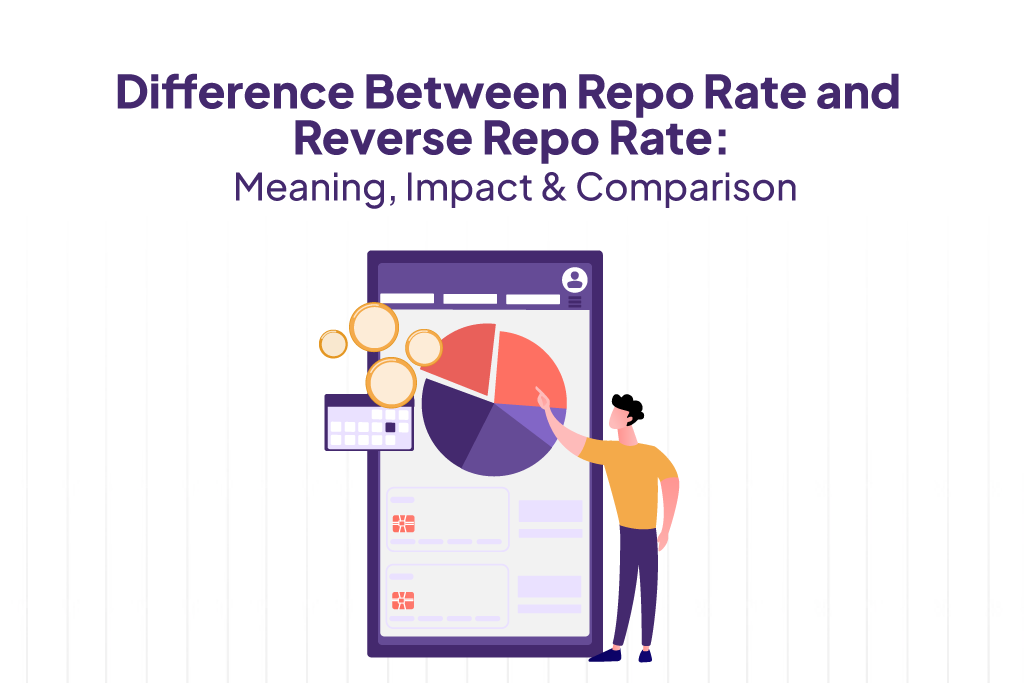
The repo rate is the rate at which banks borrow from the RBI; the reverse repo rate is the rate at which the RBI borrows from banks. Repo injects liquidity and is higher; reverse repo absorbs liquidity and is lower. Together, these two rates form the RBI’s monetary policy corridor and directly influence what you pay on a personal loan or EMI.
What is the repo rate?
The repo rate is the interest rate at which commercial banks borrow short-term funds from the RBI by pledging government securities as collateral. The term “repo” comes from a repurchase agreement, where banks sell securities to the RBI and agree to buy them back at a fixed price on a specified date.
A lower repo rate reduces banks’ borrowing costs, allowing them to offer loans at lower interest rates. When the RBI increases the repo rate, banks’ funding costs generally rise, and lending rates often increase as well.
What is the reverse repo rate?
The reverse repo rate is the interest rate at which the RBI borrows funds from commercial banks. It is the rate banks earn when they deposit surplus funds with the RBI. This tool helps absorb excess liquidity from the financial system.
When banks have more cash than they can lend or invest profitably, they can deposit it with the RBI and earn a guaranteed return. A higher reverse repo rate encourages banks to place more funds with the RBI, which can reduce the money available for lending and tighten liquidity in the economy.
Repo rate vs reverse repo rate
| Parameter | Repo rate | Reverse repo rate |
| Who borrows | Banks borrow from the RBI | RBI borrows from banks |
| Purpose | Injects liquidity into the economy | Absorbs excess liquidity |
| Direction of funds | RBI → Banks | Banks → RBI |
| Which is higher | Higher (5.25%) | Lower (3.35%) |
| Effect on you | Influences your loan rate / EMI | Influences how much banks choose to lend vs park with the RBI |
| Collateral | Government securities pledged by banks | Banks place excess funds with the RBI without transferring securities |
The difference between the repo rate and the reverse repo rate is deliberately maintained; a wider corridor gives the RBI more room to manage liquidity; a narrower one signals tighter control.
How repo rate affects your personal loan EMI
When the RBI cuts the repo rate, banks’ borrowing costs fall and personal loan interest rates often decrease as well, resulting in lower EMIs. When the RBI raises the repo rate, EMIs generally increase.
Repo rate is one of several factors affecting personal loan interest rate, including your credit score, income, loan tenure, and the lender’s own margin.
Loans linked to the External Benchmark Lending Rate (EBLR) or Repo Linked Lending Rate (RLLR) adjust automatically and relatively quickly when the repo rate or reverse repo rate changes, often within a billing cycle. Loans linked to the older Marginal Cost of Funds Based Lending Rate (MCLR) system generally take longer to reflect these changes.
Why does the RBI change these rates?
The RBI’s Monetary Policy Committee (MPC) reviews the repo rate and reverse repo rate every two months. The key reasons for a rate change include:
- Inflation control: When inflation rises, the RBI hikes the repo rate to make borrowing costlier, reducing money supply and demand.
- Economic growth: When growth slows, the RBI cuts rates to encourage borrowing, spending, and investment.
- Liquidity management: The RBI uses the repo-reverse repo corridor to keep short-term interest rates within a target band.
- Global conditions: Exchange rate pressures, crude oil prices, and capital flows influence the MPC’s decisions.
- Money supply: Excess liquidity is absorbed via the reverse repo rate (or SDF); shortfalls are addressed via repo lending.
Current repo and reverse repo rate
As per the RBI’s Monetary Policy Committee announcement on 5 June 2026:
- Repo rate: 5.25%
- Reverse repo rate: 3.35%
Use a personal loan EMI calculator to model how a future rate change could shift your monthly outgo based on your loan amount and tenure.
Conclusion
The repo rate and reverse repo rate are two key tools in the RBI’s liquidity management framework. The repo rate determines the cost at which banks can borrow from the RBI, while the reverse repo rate determines the return banks receive when they deposit surplus funds with the RBI. Understanding the difference between these rates is particularly important when planning a loan.
A declining repo rate environment can make borrowing more affordable, while rising rates may require more careful EMI planning. When interest rates soften, checking your eligibility for a personal loan on FatakPay using your PAN and Aadhaar takes only a few minutes and provides a clear view of your borrowing options and potential costs.
Frequently asked questions
1. What is the difference between repo rate and reverse repo rate?
The repo rate is charged when banks borrow from the RBI, while the reverse repo rate applies to surplus deposits.
2. Why is the repo rate higher than the reverse repo rate?
The repo rate is higher than the reverse repo rate to encourage lending and discourage banks from parking excess funds.
3. How does the repo rate affect my personal loan EMI?
If your personal loan is linked to the EBLR or RLLR, a cut in the repo rate directly reduces your interest rate and EMI, often within the same billing cycle.
4. What happens to loans when the RBI cuts the repo rate?
When the RBI cuts the repo rate, banks’ cost of borrowing from the RBI falls. Banks typically pass this on by reducing their lending rates on repo-linked loans.
5. What is the reverse repo rate used for?
The reverse repo rate is used to absorb excess liquidity from the banking system. When banks have more cash than they need, they park it with the RBI at this rate and earn a return. By adjusting the reverse repo rate, the RBI influences how much money banks choose to lend versus hold.
6. What is a repo-linked lending rate (RLLR)?
A repo-linked lending rate (RLLR), also called the external benchmark lending rate (EBLR), is a loan interest rate directly tied to the RBI’s repo rate. When the repo rate changes, RLLR-linked loans adjust automatically
Checking the minimum CIBIL score needed for personal loan eligibility is a useful first step before applying for any RLLR-linked product.
| Personal Loans by City | ||||
|---|---|---|---|---|
| Personal Loan Bengaluru | Personal Loan Thane | Personal Loan Mumbai | Personal Loan Hyderabad | |
| Personal Loan Pune | Personal Loan Surat | Personal Loan Coimbatore | Personal Loan Delhi | |
| Personal Loans by Amount | ₹60,000 Personal Loan | ₹3 Lakh Personal Loan | ₹5 Lakh Personal Loan |
|---|
Explore our latest Personal Loan blogs for expert insights, financial tips, and guidance to help you make informed borrowing decisions.