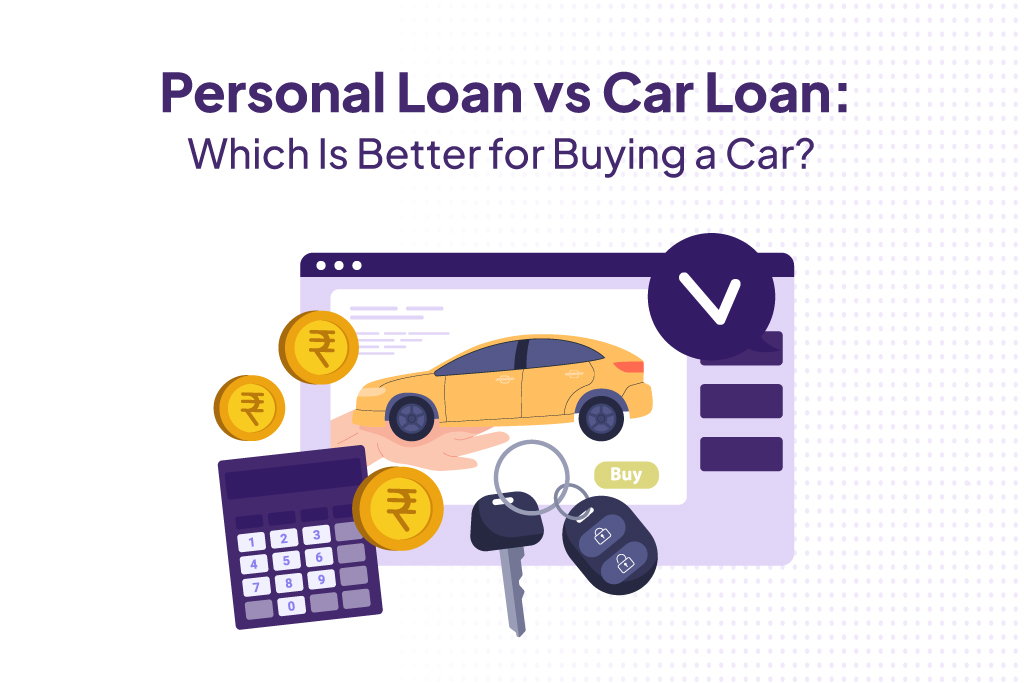
Buying a car often involves choosing the right financing option. While many buyers automatically opt for a car loan, a personal loan can also be a practical alternative in certain situations. Understanding personal loan vs car loan helps you compare costs, flexibility, ownership, and repayment options before making an informed decision. Additionally, factors such as your credit score, income stability, and existing financial commitments can influence which loan option is more suitable for you, making it important to evaluate your overall financial health before applying.
What Is a Car Loan?
A car loan is a secured loan where the vehicle itself acts as collateral. Because the lender has the right to repossess the car if the borrower defaults, car loans generally offer lower interest rates and longer repayment tenures than unsecured loans. The lender places a hypothecation (lien) on the vehicle until the loan is fully repaid, after which full ownership transfers to the borrower.
In addition, car loans often come with structured repayment options such as fixed or floating interest rates, and some lenders may offer special schemes like zero down payment or festive discounts. Borrowers may also benefit from prepayment or foreclosure options, although these can sometimes involve additional charges depending on the lender’s terms.
What Is a Personal Loan?
A personal loan is an unsecured loan, meaning no collateral is required. The loan amount can be used for any purpose, including purchasing a new or used car. Since the lender has no security against the loan, personal loans generally carry higher interest rates than car loans. However, they provide greater flexibility because the funds can cover not only the car’s cost but also insurance, registration, accessories, and other related expenses.
Personal Loan vs Car Loan – Comparison Table
| Feature | Personal Loan | Car Loan |
| Collateral | None (Unsecured) | Vehicle acts as collateral (Secured) |
| Interest Rate | Generally higher | Usually lower (starting around 10.49% p.a. at some lenders) |
| Loan Tenure | 1–7 years | Up to 7–10 years |
| Loan Coverage | Can cover car price, insurance, registration, accessories, and modifications | Usually finances the car’s ex-showroom or on-road price |
| Ownership During Loan | Full ownership remains with borrower | Lender holds hypothecation until loan closure |
| Best Suited For | Used cars, additional expenses, flexibility | New cars, lower borrowing cost |
The difference between car loan and personal loan primarily lies in collateral requirements, interest rates, and flexibility.
When a Personal Loan Makes More Sense Than a Car Loan
A personal loan may be the better option when:
- You are purchasing a used or older car that some car loan providers may not finance.
- You want financing for the complete purchase, including insurance, registration, accessories, modifications, or repairs.
- You prefer your vehicle registration certificate (RC) to remain free from lender hypothecation from the very beginning.
- You require faster loan approval with simpler documentation.
- You want complete flexibility in how you use the borrowed funds. If you need funds only for a short period instead of a full loan, understanding what is an overdraft facility can help you compare another flexible borrowing option before making a decision.
- You are purchasing a vehicle directly from an individual seller rather than an authorised dealer.
For these situations, many borrowers prefer personal loans because of the additional financial flexibility offered by them.
When a Car Loan Makes More Sense
A car loan is usually the better option if
- You are buying a brand-new vehicle.
- You want the lowest possible interest rate.
- You are comfortable with the lender holding hypothecation until repayment is complete.
- You prefer a longer repayment tenure with lower monthly EMIs.
- You only require financing for the vehicle purchase itself.
- You qualify for attractive dealer or manufacturer financing offers.
Interest Rate and Cost Comparison
One of the biggest differences between personal vs car loan financing is the interest rate. Since personal loans are unsecured, they generally carry interest rates several percentage points higher than secured car loans. Over a repayment period of five to seven years, this difference can significantly increase the total interest paid. Therefore, instead of comparing only the monthly EMI, borrowers should calculate the total repayment amount, including interest and applicable fees, before selecting between a personal loan and car loan.
Conclusion
Choosing between a personal loan and car loan depends on your financial priorities. If your goal is to minimise borrowing costs and you are purchasing a new vehicle, a car loan is often the better choice due to its lower interest rates. However, if you need flexibility, faster approval, or financing beyond the vehicle price, you can apply for a personal loan for a used car or a new vehicle to cover not only the purchase cost but also related expenses such as insurance and registration. Carefully compare the total borrowing cost, loan features, and repayment terms before making your final decision.
FAQs on Personal Loan vs Car Loan
Is a personal loan or car loan better for buying a car?
It depends on your requirements. Car loans usually offer lower interest rates, while personal loans provide greater flexibility and can finance additional expenses beyond the vehicle cost.
Can I use a personal loan to buy a used car?
Yes. Personal loans can be used to purchase both new and used cars, regardless of the seller.
Why are car loan interest rates lower than personal loan rates?
Car loans are secured by the vehicle itself, reducing the lender’s risk. Personal loans are unsecured, so they generally carry higher interest rates.
Does a car loan cover insurance and accessories too?
Some lenders finance insurance, registration, and accessories, but many primarily finance the vehicle’s purchase price. Loan coverage varies by lender.
Which loan has a longer repayment tenure: personal loan or car loan?
Car loans generally offer longer repayment tenures, often extending up to 7–10 years, whereas personal loans usually have tenures of 1–7 years.
Is a personal loan unsecured even when used to buy a car?
Yes. Even if you use the loan amount to purchase a vehicle, a personal loan remains unsecured because the lender does not take the car as collateral.
| Personal Loans by City | ||||
|---|---|---|---|---|
| Personal Loan Bengaluru | Personal Loan Thane | Personal Loan Mumbai | Personal Loan Hyderabad | |
| Personal Loan Pune | Personal Loan Surat | Personal Loan Coimbatore | Personal Loan Delhi | |
| Personal Loans by Amount | ₹60,000 Personal Loan | ₹3 Lakh Personal Loan | ₹5 Lakh Personal Loan |
|---|
Explore our latest Personal Loan blogs for expert insights, financial tips, and guidance to help you make informed borrowing decisions.