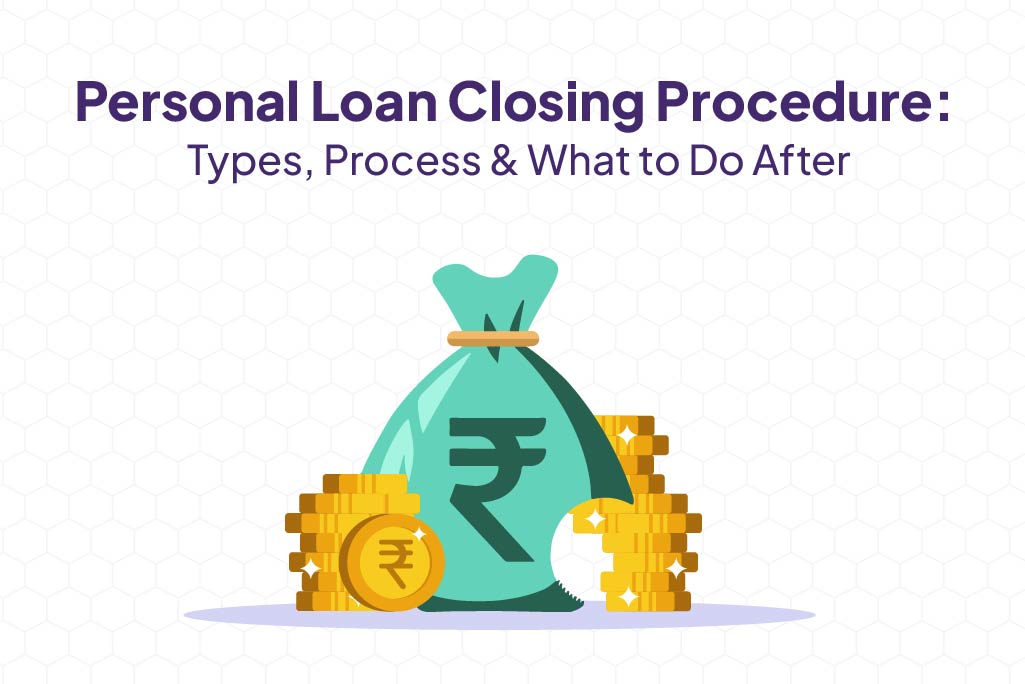
Closing a personal loan is an important financial milestone that marks the successful repayment of your borrowing obligations. However, the process involves more than just making the final payment. Understanding the personal loan closing procedure helps ensure your loan is officially closed, your credit records are updated correctly, and you avoid future complications.
What Does Closing a Personal Loan Mean?
Closing a personal loan means fully settling what you owe so the loan account is marked “Closed” by both the lender and the credit bureaus. It can happen at the natural end of the loan tenure or earlier if you repay the outstanding balance in advance. Knowing how to close a personal loan correctly ensures there are no pending dues and helps maintain a healthy credit history.
Types of Personal Loan Closure
Regular Closure
This is the most common method of loan closing. The borrower pays all scheduled EMIs throughout the loan tenure until the outstanding balance becomes zero. Once the final EMI is paid, the lender marks the account as “Closed” and issues a No Due Certificate or NOC. This type of closure reflects positively on your credit history.
Pre-Closure / Foreclosure
If you wish to close a personal loan before the scheduled tenure ends, you can opt for loan foreclosure or pre-closure by paying the entire outstanding balance in one lump sum. Borrowers researching how to close personal loan early should first check whether the lender imposes foreclosure charges, lock-in periods, or other conditions before making the payment.
Closure After Part-Payment
Some borrowers reduce their outstanding balance by making one or more lump-sum part payments during the loan tenure. These payments reduce either the EMI or the remaining tenure, allowing the loan to be closed earlier than originally scheduled. This option may help lower the total interest paid over the life of the loan.
Settlement Closure
In cases of financial hardship, borrowers may negotiate a settlement with the lender by paying less than the total outstanding amount. However, the account is reported as “Settled” rather than “Closed”, which can negatively affect credit scores and future loan eligibility. Settlement should generally be considered only when repayment in full is not possible.
These are the primary types of personal loan closures available to borrowers.
Requirements for Personal Loan Closure
Before initiating the closure process, ensure you have:
- Valid loan account details.
- Sufficient funds to pay the outstanding amount.
- Identity proof, if required by the lender.
- Access to internet banking or branch services for payment.
- Outstanding loan statement or foreclosure statement.
- Any applicable foreclosure or processing charges.
Keeping these documents ready helps simplify how to close a loan efficiently.
Step-by-Step Personal Loan Closing Process
Step 1: Submit a Closure Request
Raise a loan closure or foreclosure request with your lender. Many lenders allow online requests after a minimum number of EMIs have been paid.
Step 2: Obtain the Closure Statement
The lender provides a foreclosure or loan closure statement showing the exact outstanding amount, including applicable charges.
Step 3: Pay the Outstanding Amount
Clear the outstanding principal, accrued interest, and any foreclosure charges within the validity period mentioned in the statement.
Step 4: Collect Your NOC
Obtain the No Due Certificate (NOC) or Loan Closure Certificate confirming that all dues have been cleared successfully.
Step 5: Verify Credit Report Updates
After a few weeks, check your credit report to ensure the loan account status has been updated as “Closed.”
Following these steps ensures a smooth and hassle-free personal loan closure.
Things to Keep in Mind While Closing a Personal Loan
Before proceeding with loan closure, verify whether your lender has any foreclosure restrictions, lock-in periods, or prepayment charges. Always request a detailed foreclosure statement instead of estimating the payable amount yourself. Ensure that you receive all closure documents, including the NOC and loan closure certificate, and preserve them safely for future reference.
Avoid accepting a settlement unless absolutely necessary because a “Settled” status may negatively impact your credit profile. One of the important reasons to close your personal loan properly is to ensure your credit report reflects a successful repayment history, making future borrowing easier.
What to Do After Closing Your Loan
After successfully closing your loan, follow this checklist:
✓ Collect your No Due Certificate (NOC).
✓ Obtain the Loan Closure Certificate.
✓ Keep payment receipts and closure documents safely.
✓ Check your CIBIL and other credit reports after 30–60 days.
✓ Confirm the account status shows “Closed” instead of “Settled.”
✓ Raise a dispute immediately if incorrect information appears in your credit report.
✓ Preserve all loan closure documents for future financial or legal purposes.
Conclusion
Completing the personal loan closing process correctly is essential for protecting your financial reputation. Whether your loan ends through regular repayment or early foreclosure, always obtain the required closure documents and verify that your credit report reflects the correct status. Taking these final steps ensures a clean credit history and improves your chances of obtaining future loans on better terms.
FAQs on Personal Loan Closing
What are the types of personal loan closure?
The main types are regular closure, pre-closure (foreclosure), closure after part-payment, and settlement closure.
What is the process to close a personal loan?
The process involves requesting a closure statement, paying the outstanding amount, collecting the NOC, and verifying that the loan status has been updated to “Closed” in your credit report.
What documents should I collect after closing my loan?
You should collect the No Due Certificate (NOC), Loan Closure Certificate, payment receipt, and any foreclosure confirmation issued by the lender.
What is the difference between “closed” and “settled”?
A “Closed” status means the loan has been fully repaid, whereas a “Settled” status indicates partial repayment under a negotiated settlement, which may negatively affect your credit score.
Does closing a loan early help my credit score?
Early closure itself does not automatically increase your score, but successfully repaying a loan without default reflects responsible credit behaviour and may support a healthy credit profile.
How do I confirm my loan is closed?
Check your credit report 30–60 days after closure and ensure the loan account is marked as “Closed.” If it still appears active or settled incorrectly, contact your lender and raise a dispute with the credit bureau.
| Personal Loans by City | ||||
|---|---|---|---|---|
| Personal Loan Bengaluru | Personal Loan Thane | Personal Loan Mumbai | Personal Loan Hyderabad | |
| Personal Loan Pune | Personal Loan Surat | Personal Loan Coimbatore | Personal Loan Delhi | |
| Personal Loans by Amount | ₹60,000 Personal Loan | ₹3 Lakh Personal Loan | ₹5 Lakh Personal Loan |
|---|
💡 Explore our latest Personal Loan blogs for expert insights, financial tips, and guidance to help you make informed borrowing decisions.