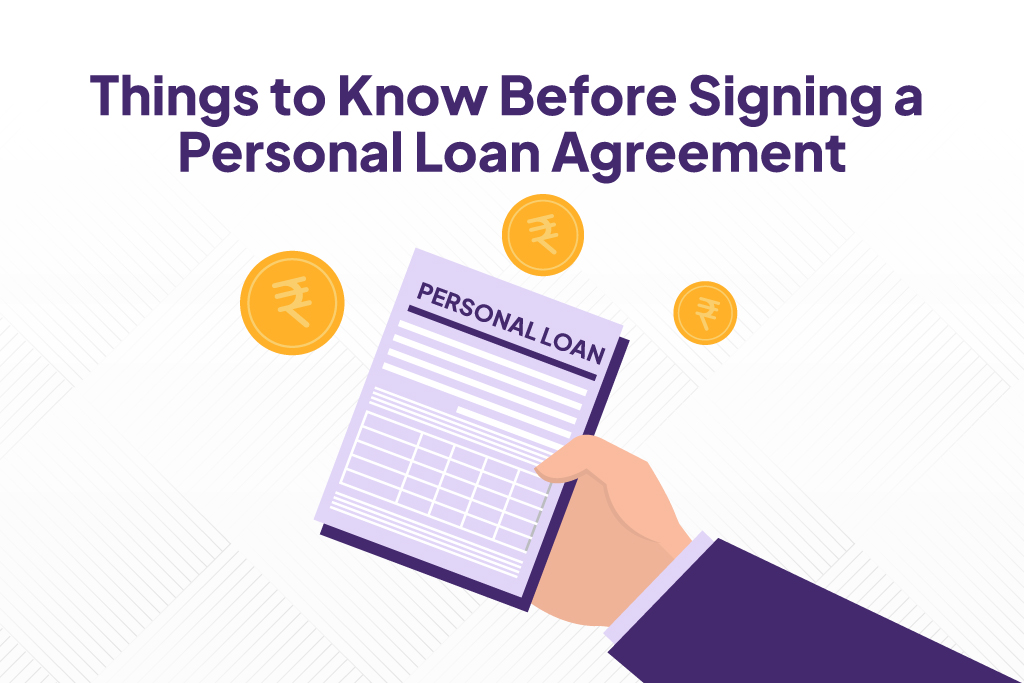
Signing a personal loan agreement is more than a formality. It confirms the terms and conditions you must follow throughout the loan tenure. Before you sign, take the time to check the interest rate, charges, repayment terms, and key clauses. A careful review can help you avoid surprises later. Using a personal loan agreement checklist can make it easier to verify every important detail and ensure you fully understand your obligations before accepting the loan.
What is a personal loan agreement?
A personal loan agreement is a legally binding contract between a borrower and a lender that records the terms and conditions of a loan. It typically includes details such as the sanctioned loan amount, interest rate, repayment schedule, loan tenure, applicable fees, prepayment terms, and default provisions. The agreement also defines the rights and responsibilities of both parties, helping reduce the risk of misunderstandings or disputes during the loan tenure.
Key clauses you must check before signing
These are the things to check in a loan agreement to understand your repayment obligations and avoid unexpected costs later.
● Loan amount & tenure
Confirm that the sanctioned loan amount, repayment tenure, EMI amount, and first EMI date match the sanction letter of the lender.
● Interest rate & APR
Check whether the interest rate is fixed or floating and understand how it is calculated. Also, review the Annual Percentage Rate (APR), if disclosed, as it reflects the overall borrowing cost by combining interest with certain applicable charges.
● Fees & charges
Review all applicable charges, including processing fees, stamp duty, late payment charges, cheque or mandate bounce charges, and prepayment or foreclosure fees.
Read the default clause to understand when a missed payment is treated as a default, the penalties that apply, and the recovery rights of the lender. Understanding what happens if your EMI bounces can also help you evaluate the financial consequences of delayed repayments before signing the agreement.
● Default clause & Grace period
Read the default clause to understand when a missed payment is treated as a default, the penalties that apply, and the recovery rights of the lender. The default grace period is commonly around 3-7 days, though this varies by lender and loan terms.
● Prepayment / Foreclosure terms
Check whether the lender allows part-prepayment or full foreclosure, whether a lock-in period applies, and whether any charges are payable. Many lenders specify a lock-in period of 6-12 months before prepayment is permitted.
Personal loan agreement checklist
Before reviewing the agreement, compare the terms offered under the FatakPay Personal Loan to ensure the repayment amount, tenure, and applicable charges fit comfortably within your monthly budget.
- Verify that your name, loan amount, and loan tenure are correct.
- Confirm whether the interest rate is fixed or floating and check the APR, if disclosed.
- Review the EMI amount, repayment schedule, and due dates.
- Check all applicable charges and the default clause, including any grace periods and penalties for missed payments.
- Review the prepayment and foreclosure terms, including any lock-in period or charges.
Common mistakes borrowers make
Even after reviewing a personal loan agreement, some borrowers overlook important details. Avoid these common mistakes before signing:
- Signing without reading the complete agreement.
- Ignoring processing fees, late payment charges, or foreclosure conditions.
- Not comparing the sanctioned loan terms with the offer received.
- Assuming verbal promises will apply even if they are not mentioned in the agreement.
- Skipping questions about clauses they do not understand.
Note: Delayed payments are reported to credit rating agencies or credit bureaus, as repeated defaults can affect your future borrowing eligibility and credit profile.
Your rights as a borrower
When reviewing a personal loan agreement, remember that you have certain rights as a borrower. These include:
- Receive clear information about the interest rate, fees, repayment schedule, and other loan terms before signing.
- Ask the lender to explain any clause that is unclear.
- Receive a copy of the signed loan agreement for your records.
- Raise complaints through the lender’s grievance redressal process or the Reserve Bank of India’s Integrated Ombudsman Scheme if your issue remains unresolved.
Questions to ask your lender before signing
If you are unsure what to check before signing a personal loan agreement, ask your lender these questions before accepting the loan:
- Is the interest rate fixed or floating, and can it change during the tenure?
- Are there any charges apart from the fees listed in the agreement?
- Is there a lock-in period for prepayment or foreclosure?
- What happens if an EMI is delayed or missed?
- Can I make part-prepayments without penalties?
- How can I access my repayment schedule and loan statements?
- When will I receive a copy of the signed agreement and repayment schedule?
Conclusion
A personal loan agreement deserves the same attention as the loan offer itself, as every clause can affect your repayment experience. Before you sign, take time to verify the terms, ask questions, and ensure you understand every condition. With FatakPay, you can review your interest rate, applicable fees, and repayment schedule upfront before accepting the loan.
FAQs
Q. What is a personal loan agreement?
A personal loan agreement is the official document that records the terms accepted by both the borrower and the lender. It contains details such as the approved loan amount, repayment period, interest rate, charges, and the responsibilities of each party.
Q. What should I check before signing a personal loan agreement?
Pay attention to the approved loan amount, EMI, repayment tenure, interest calculation method, applicable charges, prepayment conditions, and clauses related to delayed payments.
Q. What is a default clause in a loan agreement?
A default clause explains what happens if you fail to meet the terms of the loan, such as missing EMI payments. It generally specifies when a payment is considered a default, the applicable charges, and the lender’s rights to recover the outstanding amount.
Q. Can I prepay my loan after signing the agreement?
Yes, many lenders allow part-prepayment or full foreclosure after you sign the agreement. However, some may require a lock-in period before prepayment is allowed and may charge a prepayment or foreclosure fee.
Q. Are fixed or floating interest rates better?
The better option depends on your borrowing needs. A fixed rate offers stable monthly payments throughout the loan tenure, while a floating rate changes according to benchmark rates, which may increase or reduce your overall borrowing cost over time.
Q. What happens if I miss an EMI under the agreement?
A missed EMI can lead to additional charges and may eventually affect your credit history if the overdue payment is reported to a credit bureau. Contact your lender as soon as possible if you anticipate a repayment delay.
| Personal Loans by City | ||||
|---|---|---|---|---|
| Personal Loan Bengaluru | Personal Loan Thane | Personal Loan Mumbai | Personal Loan Hyderabad | |
| Personal Loan Pune | Personal Loan Surat | Personal Loan Coimbatore | Personal Loan Delhi | |
| Personal Loans by Amount | ₹60,000 Personal Loan | ₹3 Lakh Personal Loan | ₹5 Lakh Personal Loan |
|---|
💡 Explore our latest Personal Loan blogs for expert insights, financial tips, and guidance to help you make informed borrowing decisions.