An equated monthly installment (EMI) bounce is more than a missed payment. It can result in bounce charges, penal interest, credit score damage, and recovery actions if left unresolved. It can happen to anyone, whether you forget a due date, face a temporary cash shortage, or have insufficient funds in your account.
However, understanding what happens if an EMI bounces and how to avoid it can help you stay financially secure and keep your loan on track.
What is an EMI bounce?
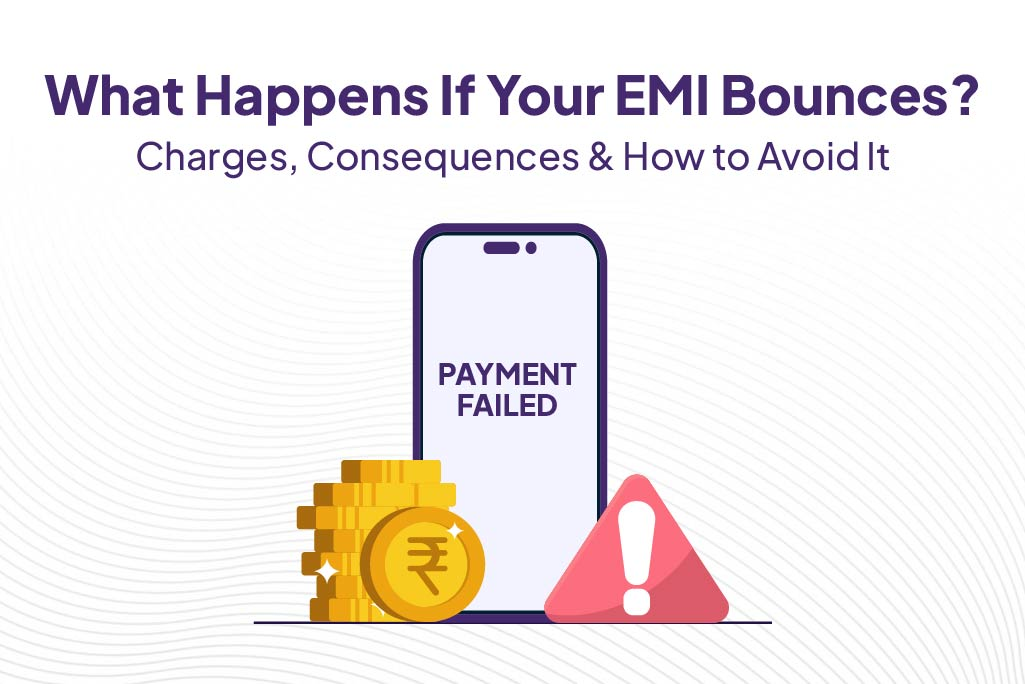
EMI bounce means your scheduled loan instalment is not successfully deducted from your bank account on the due date. In simple terms, it is the failure of an automatic EMI payment, usually because of insufficient account balance, though technical issues or mandate-related errors can also cause an EMI bounce. Once the payment fails, the lender may levy applicable charges as per the personal loan agreement.
Common causes of EMI bounce
Most cases of an EMI bounce are avoidable. Here are the most common reasons why your loan EMI may not be processed successfully:
- Insufficient account balance: The available balance is lower than the EMI amount on the due date.
- Inactive or blocked bank account: The linked account is frozen, closed, or has debit restrictions.
- Expired or cancelled NACH/ECS mandate: The auto-debit instruction is no longer valid or has been revoked.
- Technical or banking network issues: Temporary server failures or processing errors can result in an EMI bounce.
- Incorrect bank account details: Wrong account information or IFSC details may cause the transaction to fail.
- Exceeded transaction or debit limits: Daily transaction caps set by the bank can prevent the EMI from being processed.
- Salary or income delays: A delayed salary credit may leave insufficient funds, leading to a loan EMI bounce.
EMI bounce charges in India
The exact EMI bounce charges vary across lenders and loan types. However, most lenders levy a fixed penalty for each failed transaction, along with additional penal interest if the overdue amount remains unpaid. The table below shows the typical bounce charges applicable in India.
| Charge Type | Typical Amount |
| Fixed penalty per EMI bounce | ₹300-₹1,200 per failed EMI |
| Penal interest on the overdue amount | 2%–4% per month until the dues are cleared |
Note: EMI bounce charges vary by lender. It is recommended that you check the ‘Schedule of Charges’ beforehand.
What happens when your EMI bounces?
An EMI bounce can have financial and credit-related consequences beyond the immediate penalty. If the missed payment is not resolved quickly, it may affect your credit history, future borrowing ability and, in prolonged cases, result in recovery or legal action. Below are the major consequences of bouncing an EMI.
● Credit score impact
A loan EMI bounce may be reported to credit rating agencies and credit bureaus if the payment remains overdue as per the lender’s reporting cycle. Repeated missed EMIs can lower your credit score, making it harder to qualify for loans or credit cards and potentially resulting in higher interest rates from lenders.
● Future loan approvals
Lenders review your repayment history before approving new credit. Frequent EMI bounce incidents may indicate repayment risk, reducing the chances of loan approval or leading to stricter eligibility checks, lower sanctioned amounts, or additional conditions such as a co-applicant.
● Legal action
A single EMI bounce generally results in reminders, penalties, and recovery follow-ups. However, if the borrower repeatedly defaults or deliberately avoids repayment despite notices, the lender may initiate recovery proceedings.
How to avoid EMI bounce charges
Before taking a loan, using a personal loan EMI calculator can help you estimate your monthly installments and choose an EMI amount that comfortably fits your budget, reducing the chances of missed payments.
- Maintain a sufficient account balance: Keep enough funds in your bank account at least a day before the EMI due date.
- Enable auto-debit: Register a valid NACH or ECS mandate so your EMI is deducted automatically without manual intervention.
- Match the EMI date with your salary: If your lender allows it, choose a due date that falls shortly after your salary is credited.
- Set payment reminders: Use mobile banking alerts or calendar reminders to avoid missing the due date.
- Monitor your bank account regularly: Check for failed transactions, expired mandates, or debit restrictions that could trigger an EMI bounce.
- Update bank details promptly: Inform your lender if you change your bank account to avoid payment failures.
What to do if your EMI has already bounced
If an EMI bounce has already occurred, acting quickly can help limit additional charges and reduce the impact on your credit profile. Follow these steps:
- Deposit sufficient money into your bank account to cover the missed EMI and applicable EMI bounce charges.
- Contact your lender and ask whether the EMI can be represented automatically or if you need to make the payment manually.
- Clear the overdue amount as early as possible, as it can help prevent additional penal interest and further recovery action.
- Confirm the payment status by checking that the EMI has been successfully credited, and request an updated repayment status if required.
- Identify the cause, such as insufficient funds or a mandate issue, and fix it before the next due date.
Conclusion
An EMI bounce may seem like a one-time mistake, but responding quickly and building better repayment habits can help you avoid long-term financial setbacks. Staying organised with your due dates and maintaining sufficient funds are simple steps that make a real difference. If you need extra support, FatakPay can help you stay on track with timely payment reminders and flexible repayment options. It makes it easier for you to manage your loan obligations and reduce the chances of missed EMIs in the future.
FAQs
Q. What happens if my EMI bounces?
If your EMI bounces, your lender may charge a bounce penalty, apply penal interest on the overdue amount, and ask you to clear the missed payment. If the default continues, it may affect your credit score and reduce your chances of getting personal loans or credit cards in the future.
Q. What are the charges for an EMI bounce?
The exact charges depend on the lender. Typically, EMI bounce charges include a fixed penalty of around ₹300 to ₹1,200 for each failed EMI, along with penal interest of 2% to 4% per month on the overdue amount until it is repaid.
Q. Does an EMI bounce affect my credit score?
Yes. A bounced EMI may not have a significant impact if it is resolved quickly. However, repeated or prolonged missed EMI payments can be reported to credit bureaus, lowering your credit score and making future borrowing more difficult.
Q. Can I go to jail for an EMI bounce?
Generally, no. An EMI bounce itself does not result in imprisonment. Lenders usually begin with reminders, penalties, and recovery efforts. However, in certain cheque-based repayment cases or if legal obligations are violated, action may be taken under applicable laws, depending on the facts of the case.
Q. How can I avoid EMI bounce charges?
You can avoid EMI bounce charges by maintaining sufficient funds in your bank account, enabling auto-debit, choosing an EMI due date that aligns with your salary, setting payment reminders, and ensuring your NACH or ECS mandate remains active.
Q. What should I do after an EMI bounce?
If your EMI has already bounced, add sufficient funds to your account and contact your lender immediately. Clear the overdue EMI and applicable charges as soon as possible, confirm that the payment has been processed successfully, and identify the reason for the bounce to prevent it from happening again.
Related Posts
| Personal Loans by City | ||||
|---|---|---|---|---|
| Personal Loan Bengaluru | Personal Loan Thane | Personal Loan Mumbai | Personal Loan Hyderabad | |
| Personal Loan Pune | Personal Loan Surat | Personal Loan Coimbatore | Personal Loan Delhi | |
| Personal Loans by Amount | ₹60,000 Personal Loan | ₹3 Lakh Personal Loan | ₹5 Lakh Personal Loan |
|---|
Explore our latest Personal Loan blogs for expert insights, financial tips, and guidance to help you make informed borrowing decisions.