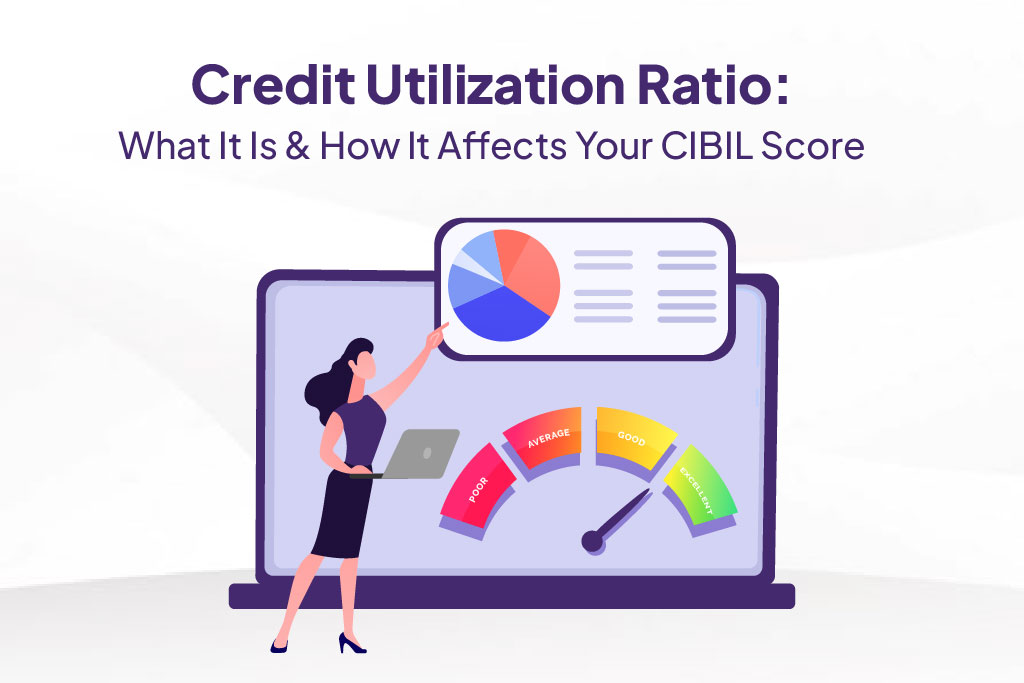
Your credit score is influenced by several factors, and one of the most important is your Credit Utilization Ratio (CUR). Even if you pay your credit card bills on time, using too much of your available credit can negatively impact your score. Understanding how CUR works can help you maintain a healthier credit profile and improve your borrowing eligibility.
What Is Credit Utilization Ratio?
It is the percentage of your total available credit limit that you are currently using across all credit cards and credit lines. It helps lenders understand how dependent you are on borrowed credit.
The formula for calculating CUR is:
CUR = (Total Outstanding Balance ÷ Total Credit Limit) × 100
For example, if your total outstanding credit card balance is ₹30,000 and your combined credit limit across all cards is ₹1,50,000, your CUR would be:
(₹30,000 ÷ ₹1,50,000) × 100 = 20%
A lower utilization ratio generally indicates responsible credit management and can positively influence your credit score.
Many borrowers ask what is a credit utilization ratio; it is the percentage of your available credit limit that is currently being used across all credit cards and revolving credit accounts.
If you are wondering what is a credit utilization rate, it is simply another term used to describe the proportion of available credit that has been utilized at a given point in time.
How Does Credit Utilization Ratio Affect Your CIBIL Score?
It accounts for approximately 25–30% of your CIBIL score, making it one of the most important factors that affect your CIBIL score. Lenders use it to evaluate whether you are managing available credit responsibly.
- Below 30%: Positive signal that indicates disciplined credit usage.
- 30–50%: Generally acceptable but may start weakening your credit profile.
- Above 50%: Signals higher dependence on credit and increases perceived risk.
- Above 75%: Can significantly damage your credit score and make recovery more difficult.
Many consumers ask how does credit utilization affect your credit scores; a higher utilization ratio can signal greater credit dependence, while a lower ratio generally reflects responsible credit management.
Maintaining a low CUR demonstrates financial discipline and improves your chances of obtaining future loans and credit cards on favorable terms.
CUR Impact on CIBIL Score
| CUR Range | CIBIL Score Impact | Lender Perception |
| 0-10% | Very Positive | Best Possible |
| 10-30% | Positive | Good |
| 30-50% | Neutral to Negative | Average Risk |
| 50-75% | Negative | High Risk |
| 75-100% | Very Negative | Maxed Out / Crisis Signal |
This table shows why most financial experts recommend keeping your utilization ratio below 30%.
How to Calculate Your Credit Utilization Ratio
Calculating your CUR is simple:
Step 1: Add All Outstanding Balances
Add the outstanding balances across all your credit cards and revolving credit accounts.
Step 2: Add All Credit Limits
Calculate the combined credit limit available across all cards.
Step 3: Apply the Formula
Divide the total outstanding balance by the total credit limit and multiply the result by 100.
To calculate credit utilization ratio accurately, you must consider the combined outstanding balances and total credit limits across all active credit cards rather than focusing on a single card.
Important: Always calculate CUR across all credit cards combined, not just the card you use most frequently. This provides a more accurate picture of your overall credit utilization.
5 Ways to Reduce Credit Utilization Ratio
Maintaining a lower CUR can improve your credit profile over time. Here are five effective strategies:
1. Pay Down Balances Before the Billing Cycle Date
Many borrowers pay only before the due date, but card issuers often report balances based on the billing cycle date. Paying earlier can help reduce the utilization reported to credit bureaus.
2. Request a Credit Limit Increase
Increasing your credit limit can instantly lower your CUR without reducing spending. Many banks allow eligible customers to request limit increases online.
3. Spread Spending Across Multiple Cards
Avoid concentrating all expenses on a single card. Distributing spending across multiple cards helps prevent any one card from exceeding the recommended 30% utilization threshold.
4. Open a New Credit Card (If Eligible)
A new card increases your total available credit limit and can lower your overall CUR. However, this strategy is generally more suitable for borrowers with strong credit profiles, as understanding how multiple loan applications affect CIBIL score is also important before applying for additional credit products.
5. Avoid Closing Old Credit Cards
Closing an old card reduces your total available credit limit, which can increase your CUR even if spending remains unchanged. Consider keeping older cards active if they do not carry high annual fees.
Quick Fix: How to Lower CUR in 24 Hours
If your CUR is currently high, the fastest solution is to reduce the balance on your highest-utilization credit card immediately. You can also request a credit limit increase, which some banks approve within minutes for eligible customers.
Although the reduction in CUR happens instantly after payment or limit enhancement, the impact on your credit score will typically appear after the lender reports updated information to credit bureaus during the next reporting cycle, which may take approximately 30–45 days. After the update, you can check your CIBIL score free to monitor the impact of the lower utilization ratio.
FAQs on Credit Utilization Ratio
What is a good credit utilization ratio for CIBIL score?
A credit utilization ratio below 30% is generally considered good, while keeping it below 10% is often viewed as ideal for maximizing credit score benefits.
How do I calculate my credit utilization ratio?
Add all outstanding balances across your credit cards, divide the total by your combined credit limits, and multiply the result by 100.
Does closing a credit card affect credit utilization ratio?
Yes. Closing a credit card reduces your total available credit limit, which can increase your credit utilization ratio if spending remains unchanged.
How quickly does credit utilization ratio change CIBIL score?
Changes in CUR may begin affecting your credit score after lenders report updated balances to credit bureaus, typically within 30-45 days.
Does credit utilization ratio apply to personal loans?
No. Credit utilization ratio primarily applies to revolving credit products such as credit cards and overdraft facilities. Personal loans are installment loans and are evaluated differently in credit scoring models.
| Personal Loans by City | ||||
|---|---|---|---|---|
| Personal Loan Bengaluru | Personal Loan Thane | Personal Loan Mumbai | Personal Loan Hyderabad | |
| Personal Loan Pune | Personal Loan Surat | Personal Loan Coimbatore | Personal Loan Delhi | |
| Personal Loans by Amount | ₹60,000 Personal Loan | ₹3 Lakh Personal Loan | ₹5 Lakh Personal Loan |
|---|
Explore our latest Credit Score blogs for expert insights, financial tips, and guidance to help you make informed borrowing decisions.