Introduction
Repaying your personal loan before the scheduled tenure can save a significant amount in interest while improving your monthly cash flow. With the right personal loan repayment strategies, you can become debt-free sooner, reduce financial stress, and strengthen your overall financial health without disrupting your long-term goals. If you’re wondering, ‘How can I pay off my personal loan faster?, increasing your EMI, making regular part-prepayments, and using bonuses to reduce the principal are some of the most effective ways to become debt-free sooner while saving on interest.
Why Pay Off Your Personal Loan Faster
- Save on interest: The sooner you repay your loan, the less interest you pay over the loan tenure.
- Reduce your debt burden: Clearing outstanding debt improves your financial flexibility and frees up income for other priorities.
- Strengthen your credit profile: Consistent repayments and lower outstanding debt create a healthier credit profile, making future borrowing easier.
- Improve monthly cash flow: Once your EMIs stop, you can redirect that money toward investments, savings, or emergency funds.
- Gain peace of mind: Becoming debt-free reduces financial pressure and gives you greater confidence in managing your finances.
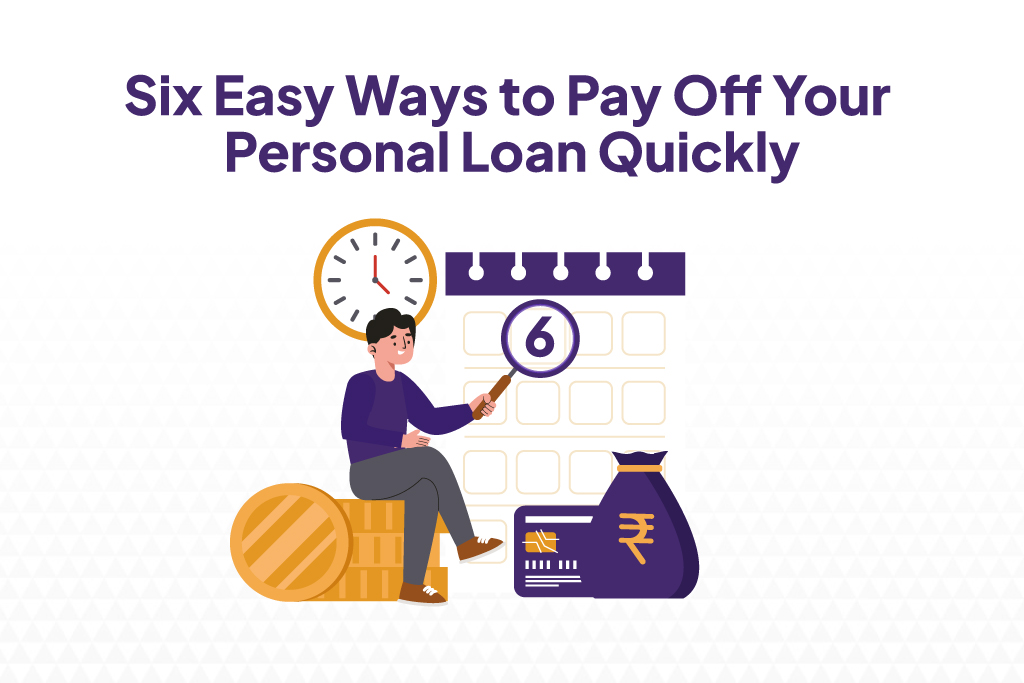
Six Easy Ways to Repay Your Personal Loan Faster
1. Pay One Extra EMI Each Year
One of the simplest ways to repay personal loan faster is by paying one additional EMI every year. This directly reduces your outstanding principal, shortens the loan tenure, and lowers your overall interest cost. Even a single extra EMI annually can save several months of repayments.
2. Increase or Round Up Your EMI
Whenever your income increases, consider increasing your EMI amount. Alternatively, round up your EMI to the nearest ₹500 or ₹1,000. These small additions may seem insignificant each month but can substantially reduce both your repayment period and total interest. This is one of the most practical tips for paying off personal loans early. Before increasing your monthly repayment, use a Personal Loan EMI Calculator to estimate how a higher EMI can reduce your loan tenure and total interest, helping you choose an amount that fits your budget.
3. Use Bonuses and Windfalls for Part-Prepayment
Annual bonuses, tax refunds, incentives, or unexpected income can be used for part-prepayment instead of additional spending. Reducing the principal early means future interest is calculated on a lower outstanding balance, helping you repay your loan much faster.
4. Opt for a Loan Balance Transfer to a Lower Rate
If another lender offers a significantly lower interest rate, consider transferring your outstanding loan balance. A lower interest rate reduces your borrowing cost and allows a larger portion of every EMI to go toward the principal. Before switching, compare processing fees and transfer charges to ensure the savings outweigh the costs.
5. Trim Your Budget and Redirect Savings
Review your monthly expenses and identify areas where spending can be reduced. Dining out less often, cancelling unused subscriptions, or limiting discretionary purchases can free up extra cash. Redirect these savings toward your loan repayment to accelerate debt reduction without affecting your lifestyle significantly.
6. Make Periodic Part-Prepayments
Instead of waiting until the end of the tenure, make periodic lump-sum part-payments whenever you have surplus funds. Many lenders allow partial prepayments after a lock-in period. Regular part-prepayments reduce the outstanding principal, helping you clear your loan earlier while saving considerable interest.
Things to Check Before Prepaying
- Read your loan agreement to understand prepayment or foreclosure charges.
- Check whether your lender has a lock-in period before prepayment is allowed.
- Ask if advance notice is required before making a part-prepayment.
- Compare the interest savings against any applicable prepayment fees.
- Maintain an emergency fund of at least 6-9 months of expenses before using surplus cash to repay your loan.
- Confirm whether your lender reduces your EMI or your tenure after part-prepayment.
Before making a lump-sum repayment, understand the pros and cons of personal loan prepayment so you can weigh interest savings against foreclosure charges, liquidity needs, and long-term financial goals.
Mistakes to Avoid While Repaying Early
- Avoid exhausting all your savings just to close the loan quickly.
- Don’t ignore prepayment or foreclosure charges, as they can reduce your overall savings.
- Never miss regular EMIs while trying to accumulate a large lump sum for prepayment.
- Don’t transfer your loan without calculating the total cost, including processing fees.
- Avoid borrowing new debt simply to repay your existing personal loan.
How Faster Repayment Helps Your Credit Score
Repaying your loan on time while reducing your outstanding debt demonstrates responsible credit behaviour. Lower debt obligations improve your financial profile, and timely repayments strengthen your payment history; the most important factor in your credit score. Although closing a loan may cause a small temporary fluctuation, responsible early repayment generally contributes to a healthier credit profile over time.
If you’re wondering does loan prepayment impact your credit score, responsible prepayment is generally beneficial over the long term, although a small temporary fluctuation may occur depending on your credit mix and account history after the loan is closed.
Conclusion
Following smart personal loan repayment strategies can help you save thousands in interest and become debt-free much sooner. Whether you choose to pay an extra EMI, make periodic part-prepayments, or opt for a balance transfer, each step brings you closer to financial freedom. Use this personal loan repayment guide to plan your repayments wisely while maintaining sufficient emergency savings.
FAQs on Paying Off a Personal Loan Faster
What is the fastest way to pay off a personal loan?
The fastest approach combines extra EMIs, periodic part-prepayments, higher monthly EMIs, and a lower-interest balance transfer where appropriate.
Does paying an extra EMI reduce tenure or EMI?
In most cases, lenders reduce the loan tenure while keeping the EMI unchanged. However, some lenders may offer the option to reduce the EMI instead.
Are there charges for paying off a loan early?
Many lenders charge prepayment or foreclosure fees, particularly on fixed-rate loans. Always review your loan agreement before making early repayments.
Is a balance transfer worth it to repay faster?
Yes, if the new lender offers a substantially lower interest rate and the savings exceed the processing and transfer costs.
Will early repayment improve my credit score?
Responsible early repayment along with timely EMIs generally supports a healthy credit profile, although your score may experience a small temporary adjustment after loan closure.
How much emergency fund should I keep before prepaying?
Financial experts generally recommend maintaining an emergency fund covering at least 6–9 months of essential living expenses before making significant loan prepayments.
Related Posts
| Personal Loans by City | ||||
|---|---|---|---|---|
| Personal Loan Bengaluru | Personal Loan Thane | Personal Loan Mumbai | Personal Loan Hyderabad | |
| Personal Loan Pune | Personal Loan Surat | Personal Loan Coimbatore | Personal Loan Delhi | |
| Personal Loans by Amount | ₹60,000 Personal Loan | ₹3 Lakh Personal Loan | ₹5 Lakh Personal Loan |
|---|
Explore our latest Personal Loan blogs for expert insights, financial tips, and guidance to help you make informed borrowing decisions.