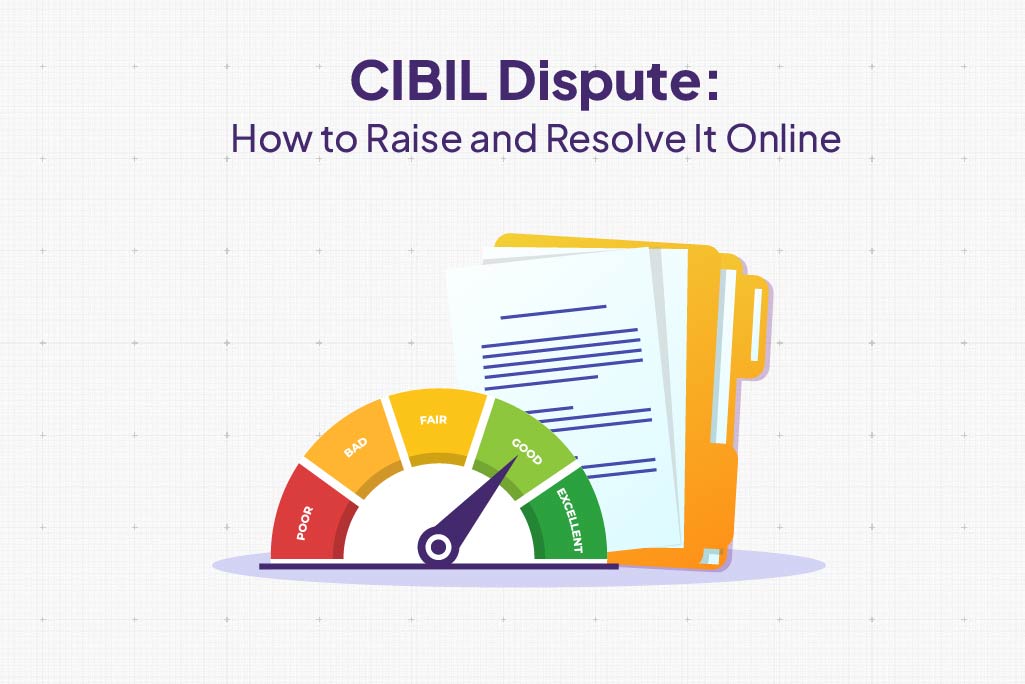
Your CIBIL report plays an important role in loan and credit card approvals. Banks and non-banking financial companies (NBFCs) use it to assess your creditworthiness before lending money. However, errors can sometimes appear in your credit report due to delayed updates, data entry mistakes, duplicate records or incorrect information reported by lenders. If you find any such discrepancy, you can raise a CIBIL dispute and request a correction.
What Is a CIBIL Dispute?
A CIBIL dispute, also known as the Consumer Dispute Resolution process, is a formal request submitted to TransUnion CIBIL to correct inaccurate information in your Credit Information Report (CIR). When a dispute is raised, CIBIL verifies the issue with the concerned lender and updates the report if the lender confirms the correction.
It is important to note that CIBIL does not independently modify credit information. The bureau can update a report only after receiving confirmation from the bank or financial institution that reported the data.
Common Types of CIBIL Disputes
You may need to raise a CIBIL dispute if your credit report contains:
- Incorrect personal details such as name, date of birth, PAN, address, or contact information
- Loan or credit card accounts that do not belong to you. If you are dealing with such errors, check our blog, CIBIL suit filed and how to remove it before raising a dispute.
- Duplicate loan or credit card entries
- Closed accounts showing as active
- Incorrect outstanding balances
- Wrong payment history or overdue status
- Unauthorised credit enquiries
- Incorrect credit limits
- Fraudulent or identity theft-related accounts
Different errors require different resolution approaches. After identifying the error category, learn how to correct errors in your CIBIL report before initiating a dispute request.
How to Raise a CIBIL Dispute Online
You can submit a CIBIL dispute online through your myCIBIL account.
Step 1: Access Your CIBIL Report
Visit the official CIBIL portal and log in to your account. If you do not have an account, register using your personal details and identity information. Obtain your latest CIBIL report and review it carefully.
It is advisable to use a recent credit report, as CIBIL generally recommends initiating disputes using a report that is not older than 60 days.
Step 2: Identify the Error
Check all sections of the report, including:
- Personal information
- Contact details
- Account information
- Credit enquiries
If you notice any inaccurate, incomplete, duplicate or unauthorised information, note the exact details before proceeding.
Step 3: Open the Dispute Section
Navigate to the Credit Report section and select the option to dispute an item or raise a dispute. This will open the online dispute form.
Step 4: Select the Disputed Information
Choose the section containing the incorrect information and specify the details that require correction. You can raise disputes for multiple fields in a single request.
Step 5: Submit the Dispute
Review the information carefully and submit the request. Once submitted, you will receive a dispute reference number that can be used to track the status of your complaint.
The disputed information may be marked as “Under Dispute” while the verification process is underway.
What Happens After You Raise a CIBIL Dispute?
Once a CIBIL dispute is submitted, CIBIL first validates the request and then forwards it to the concerned bank or financial institution for verification. The lender reviews its records and sends a response back to CIBIL. Based on the lender’s confirmation, the credit report is updated if required.
The dispute process generally follows these stages:
- Dispute submission by the consumer
- Verification by CIBIL
- Forwarding of the dispute to the lender
- Investigation by the lender
- Response submitted to CIBIL
- Report updated, if applicable
- Status communicated to the consumer
If the lender determines that the reported information is accurate, the disputed entry may remain unchanged in the credit report.
Tips for Faster CIBIL Dispute Resolution
To improve the chances of a smooth and timely CIBIL dispute resolution:
- Ensure that the disputed information is clearly identified.
- Follow up with the lender if the issue relates to a recently closed loan or updated payment.
- Check your credit report periodically to identify inaccuracies early.
- Retain your dispute reference number until the issue is fully resolved.
- Monitor your credit report after resolution to ensure the corrected information has been updated accurately.
What to Do If Your CIBIL Dispute Is Rejected?
In case your CIBIL dispute request is rejected, consider taking the below steps:
- Read the explanation provided by CIBIL or the lender. Understanding whether the dispute was rejected due to insufficient evidence, incorrect claim details, or verified lender records will help you take the right next step.
- Since lenders provide data to credit bureaus, request the lender’s grievance team to review the information. If they find an error, they can submit a correction to CIBIL.
- If you have new documents or proof, raise another dispute through the credit bureau’s portal. Clearly explain the issue and attach all relevant evidence.
- If the lender does not resolve the issue, escalate the complaint to the nodal officer or principal nodal officer designated by the financial institution.
- If the lender fails to address a genuine credit reporting error despite repeated complaints, you can escalate the matter through the RBI’s grievance redressal mechanism after exhausting the lender’s internal process.
Check Your Credit Profile After Dispute Resolution
Once your lender confirms the correction and the updated information is reflected in your report, it is important to verify that the change has been accurately recorded. You can check your updated CIBIL score after dispute resolution on FatakPay and monitor how the correction affects your overall credit profile.
FAQs
1. How long does CIBIL take to resolve a CIBIL dispute?
According to TransUnion CIBIL, CIBIL dispute resolution generally takes around 30 days. The exact timeline depends on how quickly the concerned bank or financial institution verifies and responds to the request. Simple corrections may be resolved sooner, while disputes involving multiple accounts, complex records, or additional verification can take longer.
2. How can you track your CIBIL dispute status?
You can track the status of your CIBIL dispute by logging into your myCIBIL account and checking the dispute section. Use the reference number generated when you submitted the request. CIBIL may also provide updates through your registered email address and other contact details associated with your account.
3. What should you do if your CIBIL dispute is not resolved?
If you are not satisfied with the outcome of your CIBIL dispute resolution, you can contact the concerned lender for further clarification. You may also use CIBIL’s grievance redressal and escalation channels. Supporting documents such as loan closure letters, repayment statements or No Dues Certificates can strengthen your case.
4. What are the other ways to contact CIBIL?
Apart from raising CIBIL disputes online, you can contact CIBIL through its customer support and grievance redressal channels available on the official website. These channels can help if you need additional assistance, wish to escalate an issue, seek clarification or follow up on an ongoing dispute request.
5. Can you raise a dispute for identity theft-related credit accounts?
Yes. If you notice a loan, credit card or enquiry that you did not authorise, you can raise a CIBIL dispute with CIBIL. You should also immediately inform the concerned lender and report the matter to the appropriate authorities if identity theft is suspected.
6. Is there any charge for raising a CIBIL dispute?
No. Raising a dispute with CIBIL regarding incorrect information in your credit report is free of charge. You can submit a dispute online through your CIBIL account without paying any fee.
7. Can I raise a dispute for multiple errors in one submission?
Yes, you can raise disputes for multiple errors in your CIBIL report. However, each disputed item is reviewed separately based on the lender’s verification.
8. What documents are needed to raise a CIBIL dispute?
To raise a CIBIL dispute, you may need documents supporting your claim, such as a loan closure certificate (NOC), repayment receipts, bank statements, settlement letters, account statements, or identity proof for personal information errors. The exact documents depend on the type of dispute and the evidence required to verify the correction.
| Personal Loans by City | ||||
|---|---|---|---|---|
| Personal Loan Bengaluru | Personal Loan Thane | Personal Loan Mumbai | Personal Loan Hyderabad | |
| Personal Loan Pune | Personal Loan Surat | Personal Loan Coimbatore | Personal Loan Delhi | |
| Personal Loans by Amount | ₹60,000 Personal Loan | ₹3 Lakh Personal Loan | ₹5 Lakh Personal Loan |
|---|
Explore our latest Credit Score blogs for expert insights, financial tips, and guidance to help you make informed borrowing decisions.