When applying for a personal loan, many borrowers focus only on the interest rate and EMI. However, there are other charges also that can affect the total cost of borrowing. This one-time fee is charged by lenders for evaluating your application and completing the loan approval process. Understanding how it works can help you avoid surprises and reduce your borrowing costs.
What Is a Personal Loan Processing Fee?
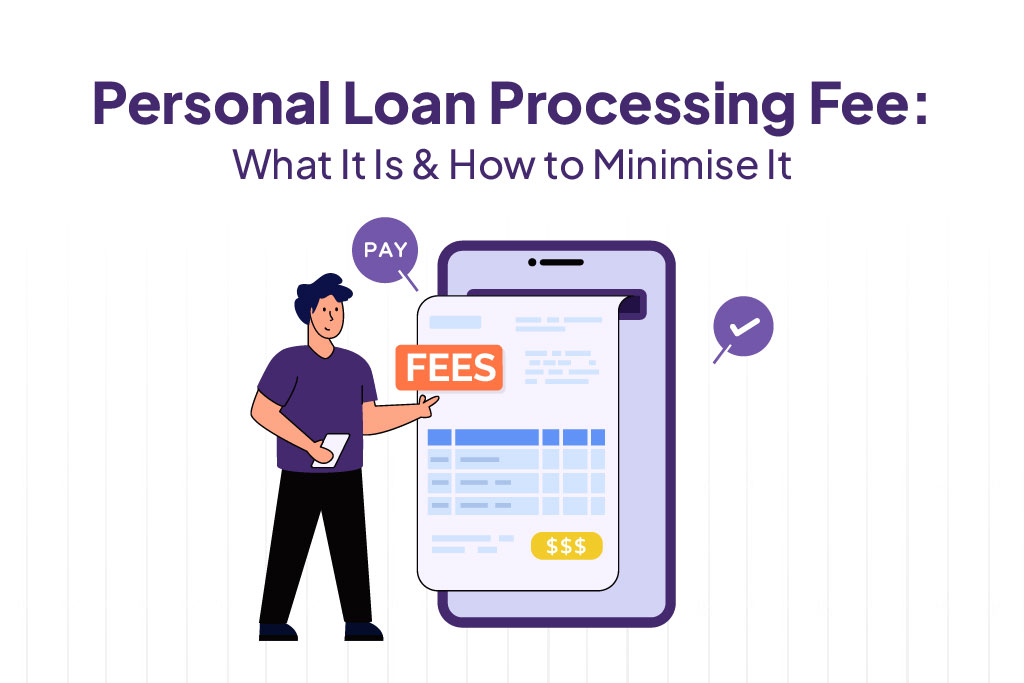
It is a one-time, usually non-refundable charge collected by the lender for processing your loan application. It covers administrative expenses such as document verification, credit assessment, underwriting, and loan account setup.
Typically, lenders charge between 0.5% and 4% of the loan amount, plus 18% GST on the fee. The processing fee for loan applications varies across lenders and is usually charged as a percentage of the sanctioned amount to cover administrative and verification costs. The processing fee may either be deducted from the sanctioned loan amount at disbursal or collected separately before disbursal. If you are wondering what is processing fee for personal loan, it is essentially the cost of evaluating and approving your loan application.
All Personal Loan Fees & Charges You Should Know
Apart from the processing fee, borrowers should understand all personal loan interest rates and charges, including various personal loan fees that may apply during the loan tenure.
| Fee Type | What It Is | Typical Range |
| Processing Fee | One-time administrative charge | 0.5%-4% + GST |
| Prepayment/Foreclosure Fee | Charge for early loan closure | 0-5% of outstanding amount |
| Late Payment Penalty | Fee for delayed EMI payment | 2-3% of EMI per month |
| Bounce/Mandate Failure Fee | Failed auto-debit or ECS payment | ₹300-₹1,000 per instance |
| Loan Cancellation Fee | Charge for cancellation after sanction | Usually nil during cooling-off period |
| Stamp Duty | State-mandated legal charge | Varies by state |
Understanding these types of personal loan fees helps borrowers estimate the true cost of borrowing and avoid unexpected charges later.
What Is APR and Why It Matters More Than Processing Fee
Many borrowers compare loans solely on interest rates, but the Annual Percentage Rate (APR) provides a more accurate picture of borrowing costs. APR includes not only the interest rate but also certain fees and charges associated with the loan.
For example, if a lender offers a loan at 14% interest with a 2% processing fee, the effective borrowing cost will be higher than the interest rate alone suggests. Comparing APR helps borrowers evaluate loan offers more accurately, understand the factors affecting personal loan interest rate, and choose the most cost-effective option. Instead of focusing only on the processing fee for personal loan, always review the APR disclosed by the lender.
As per RBI’s Key Fact Statement (KFS) guidelines, lenders must disclose the APR and all applicable charges before loan disbursal.
5 Smart Ways to Minimise Personal Loan Processing Fee
You may not always be able to avoid a processing fee completely, but there are ways to reduce it:
- Maintain a high CIBIL score: Borrowers with scores above 750 often have better negotiating power.
- Apply during festive offers: Many lenders waive or reduce fees during special promotional periods.
- Use existing banking relationships: Salary account holders and existing customers may receive discounts.
- Compare lenders carefully: Some banks, NBFCs, and fintech platforms occasionally offer zero-processing-fee promotions.
- Check pre-approved offers: Pre-approved personal loans often come with lower or waived processing charges.
Conclusion
A personal loan processing fee is a common charge that borrowers should consider before accepting a loan offer. While the fee is generally non-refundable and ranges between 0.5% and 4% of the loan amount plus GST, understanding all associated charges and comparing APR can help you make a better borrowing decision. Always review the lender’s Key Fact Statement carefully before proceeding.
Borrowers can apply for personal loan with minimal fees through FatakPay, which provides transparent fee disclosure and a clear Key Fact Statement before disbursal, helping them understand all applicable charges upfront.
FAQs on Personal Loan Processing Fee
What is the processing fee for a personal loan in India?
Most lenders charge a processing fee ranging from 0.5% to 4% of the loan amount, plus applicable GST.
Is processing fee refundable if personal loan is rejected?
Generally, no. Processing fees are usually non-refundable because they cover the cost of evaluating and processing the loan application.
Can I negotiate the processing fee on a personal loan?
Yes. Borrowers with strong credit scores, stable income, or existing relationships with the lender may be able to negotiate lower processing fees.
Is GST charged on processing fee for personal loan?
Yes. Processing fees are subject to GST, which is currently charged at 18%.
Which bank has zero processing fee for personal loans?
Some banks, NBFCs, and fintech lenders occasionally offer zero-processing-fee promotions during festive seasons or for select customer segments. Terms and availability vary by lender.
| Personal Loans by City | ||||
|---|---|---|---|---|
| Personal Loan Bengaluru | Personal Loan Thane | Personal Loan Mumbai | Personal Loan Hyderabad | |
| Personal Loan Pune | Personal Loan Surat | Personal Loan Coimbatore | Personal Loan Delhi | |
| Personal Loans by Amount | ₹60,000 Personal Loan | ₹3 Lakh Personal Loan | ₹5 Lakh Personal Loan |
|---|
Explore our latest Personal Loan blogs for expert insights, financial tips, and guidance to help you make informed borrowing decisions.