Missing an EMI or credit card payment can affect more than just your finances. It also leaves a record in your credit history through a metric called Days Past Due (DPD). Understanding what DPD is and how it appears in your credit report can help you maintain a healthy credit profile and improve your chances of future loan approval.
DPD Full Form and Meaning
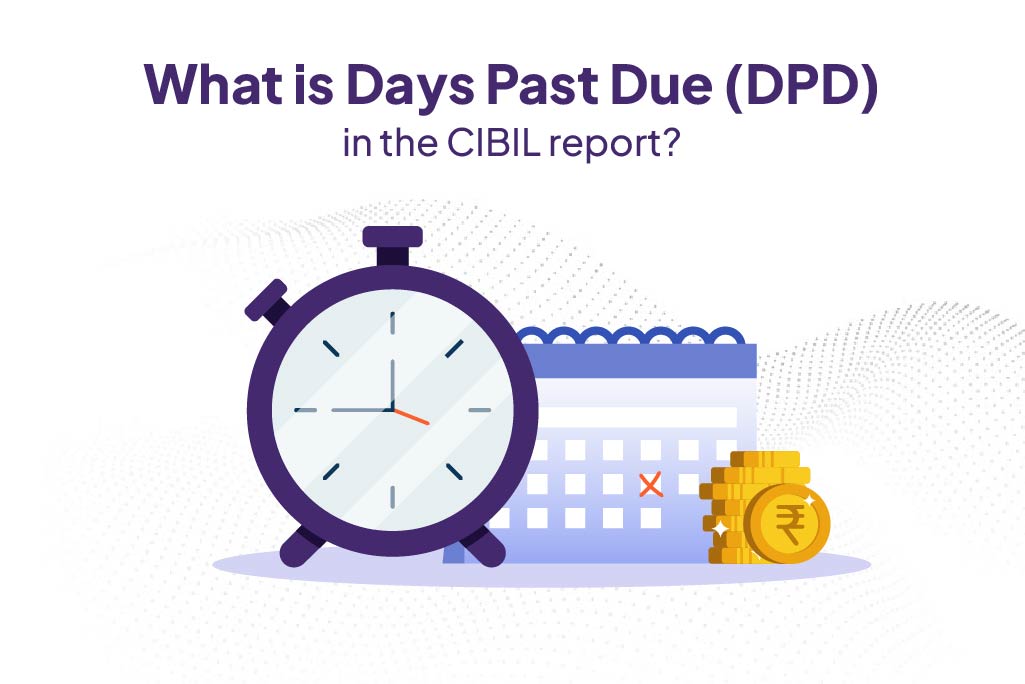
The DPD full form is Days Past Due. It refers to the number of days a borrower delays a loan EMI or credit card payment beyond the due date. In simple terms, the value shows how long a payment remained overdue before it was cleared.
When lenders report account information to credit bureaus, DPD in CIBIL is recorded in the Payment History section of the credit report. The report typically displays month-wise repayment behaviour for the past 36 months. Since lenders use this information to assess repayment discipline, understanding the DPD meaning is important for maintaining a strong credit profile.
Complete Guide to DPD Values in CIBIL Report
Here is the complete list of DPD values in CIBIL reports:
| DPD Value | Meaning |
| 0 | Payment was made on time. No delay was reported. |
| 30 | Payment was overdue by 30 days. |
| 60 | Payment was overdue by 60 days. |
| 90 | Payment was overdue by 90 days. Considered a serious delinquency. |
| 120+ | Payment remained unpaid for more than 120 days. |
| STD | Standard account with no significant repayment issues. |
| SMA | Special Mention Account showing early signs of stress. |
| SUB | Sub-standard account due to prolonged overdue payments. |
| DBT | Doubtful account with a high risk of default. |
| LSS | Loss account where recovery is considered unlikely. |
| XXX | No payment information was reported for that period. |
DPD values are recorded in the payment history section of your credit report. If you want to understand where these entries appear and how lenders interpret them, learn how to read your CIBIL report in detail.
How Is DPD Calculated? Formula + Example
The calculation is straightforward:
DPD = Actual Payment Date − Payment Due Date
For example, suppose a loan EMI was due on 5 June, and the payment was made on 25 June. The delay is 20 days.
DPD = 25 June − 5 June = 20 days
If the payment remains unpaid at the time the lender reports the account, it may be rounded and reflected as the nearest reporting category such as 030, 060 or 090. Since DPD in banking reflects repayment behaviour, even a short delay can become part of your credit history.
How Long Does DPD Stay on Your CIBIL Report?
A DPD entry generally remains visible in the Payment History section for up to 36 months from the date it was reported. Lenders reviewing your application can see both recent and older payment behaviour during this period.
While the impact of older delays gradually reduces with consistent repayment behaviour, recent overdue payments carry greater weight. If you are wondering what DPD in a CIBIL score is, it is one of the factors lenders evaluate when assessing credit risk and repayment discipline.
How to Clear or Reduce DPD Impact
Although genuine DPD entries cannot usually be removed, you can reduce their impact over time:
- Pay all overdue EMIs and credit card dues immediately to stop the DPD count from increasing.
- Set up NACH or auto-debit instructions to avoid future missed payments.
- Continue making timely repayments so new “000” entries strengthen your repayment history.
- Raise a dispute only if the reported DPD is due to a lender reporting error.
- Follow the correct process for how to clear DPD in a CIBIL report when the entry is inaccurate and requires correction.
- Wait for older entries to age out of the 36-month payment history window.
- Maintain low credit utilisation and avoid multiple loan defaults during the recovery period.
In such cases, understanding how to raise a CIBIL dispute can help you request corrections and ensure inaccurate information does not continue affecting your credit profile.
Monitor Your Credit Profile Regularly
Keeping track of your repayment history can help you identify overdue accounts early and address reporting errors before they affect future borrowing opportunities. You can check your CIBIL score free on FatakPay and review your credit report to monitor DPD entries, active accounts and overall credit health.
Frequently asked questions
What is the DPD full form in banking?
The dpd full form in banking is Days Past Due. It indicates the number of days a loan EMI or credit card payment remains overdue after the due date.
What does DPD 000 mean in a CIBIL report?
A DPD value of 000 means the payment was made on time and no overdue amount was reported for that month.
What does XXX mean in the DPD column of the CIBIL report?
XXX generally indicates that no repayment information was available or reported by the lender for that particular period.
How long does DPD stay on a CIBIL report?
DPD records usually remain visible in the payment history section for up to 36 months from the reporting date.
Can I remove DPD from my CIBIL report?
You can remove a DPD entry only if it is incorrect and results from a reporting error. Genuine payment delays cannot be deleted and will remain in the report until they age out.
How does DPD affect my CIBIL score and loan approval?
Higher DPD values indicate delayed repayments and may lower your credit score. Frequent or prolonged overdue payments can reduce the likelihood of loan approval because lenders view them as signs of increased credit risk.
| Personal Loans by City | ||||
|---|---|---|---|---|
| Personal Loan Bengaluru | Personal Loan Thane | Personal Loan Mumbai | Personal Loan Hyderabad | |
| Personal Loan Pune | Personal Loan Surat | Personal Loan Coimbatore | Personal Loan Delhi | |
| Personal Loans by Amount | ₹60,000 Personal Loan | ₹3 Lakh Personal Loan | ₹5 Lakh Personal Loan |
|---|
💡 Explore our latest Credit Score blogs for expert insights, financial tips, and guidance to help you make informed borrowing decisions..