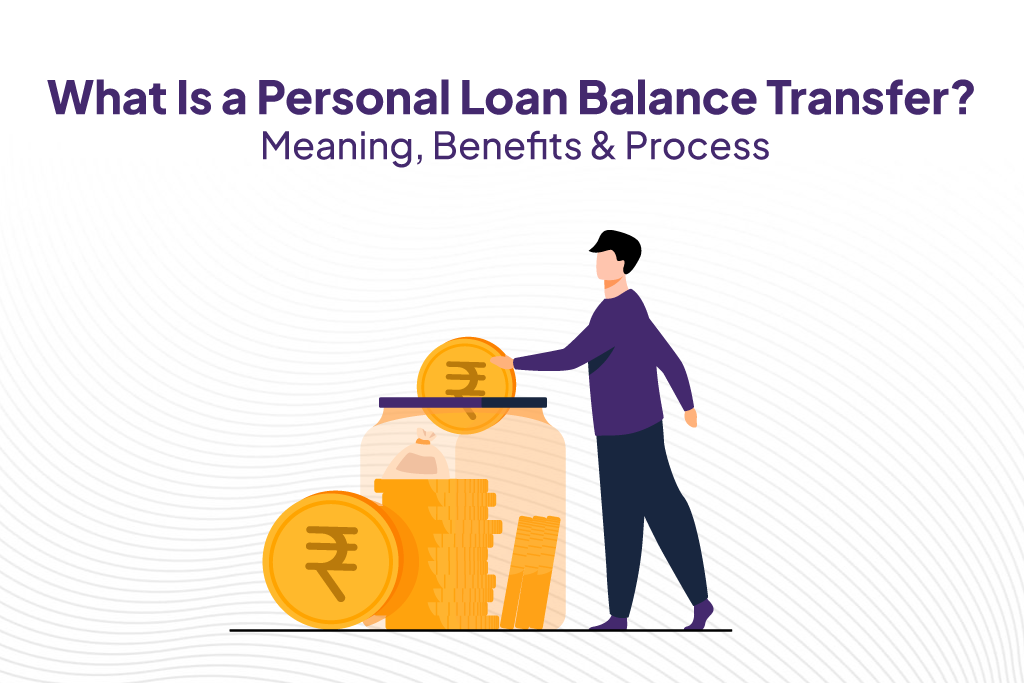
A personal loan balance transfer is a facility that allows you to transfer your existing loan from one lender to another that offers better terms. Most borrowers choose a personal loan balance transfer to reduce interest costs, lower EMIs or access additional features such as top-up funding.
Understanding how it works can help you make a more cost-effective borrowing decision.
A personal loan balance transfer moves your existing loan to a new lender offering a lower interest rate. The new lender clears your old loan and you repay them at better terms, saving the most when done early in the loan tenure.
Personal Loan Balance Transfer Meaning
The meaning of a personal loan balance transfer is simple. A personal loan balance transfer lets you move your outstanding personal loan from your current lender to a new one that offers a lower interest rate or better terms.
The new lender pays off your old loan and you continue repaying them instead, usually at a cheaper rate. If you have maintained a good repayment record, a personal loan balance transfer can help reduce borrowing costs and improve cash flow through lower monthly EMIs.
How Does a Personal Loan Balance Transfer Work?
A personal loan balance transfer follows a straightforward process:
- Check the outstanding balance on your existing loan.
- Compare lenders offering a personal loan balance transfer and evaluate their interest rates, tenure options and charges.
- Submit an application to the new lender.
- The lender reviews your profile and verifies the eligibility criteria for a loan balance transfer.
- Once approved, the new lender pays the remaining loan amount to your current lender.
- Your old loan account is closed after settlement.
- You begin repaying the transferred amount to the new lender under revised terms.
A personal loan balance transfer is most effective when done after a consistent repayment history and while a significant loan balance is still outstanding.
Benefits of a Personal Loan Balance Transfer
Lower Interest Rate
One of the major benefits of personal loan balance transfer is the opportunity to secure an interest rate that may be 2% to 4% lower than your existing loan.
Reduced EMI Burden
A personal loan balance transfer can lower your monthly EMI, improving your budget and financial flexibility.
Savings on Total Interest
Since interest forms a large portion of EMIs during the early tenure, a personal loan balance transfer can significantly reduce the total interest paid.
Access to Better Loan Features
Many lenders offer flexible repayment options, digital servicing and improved customer support with a personal loan balance transfer.
Top-Up Loan Facility
Some lenders allow borrowers to obtain additional funds alongside a personal loan balance transfer, subject to approval.
Improved Cash Flow Management
A personal loan balance transfer can make debt management easier by aligning repayment terms with your current financial situation.
Eligibility for a Balance Transfer
The personal loan balance transfer eligibility requirements vary by lender, but common conditions include:
- A CIBIL score of 750 or above.
- At least 12 EMIs paid on the existing loan.
- Consistent repayment history without major defaults.
- Stable income and employment profile.
- Minimum outstanding loan amount, often around ₹50,000.
- Satisfactory debt-to-income ratio.
- Compliance with the lender’s eligibility criteria for loan balance transfer.
Meeting these conditions improves approval chances for a personal loan balance transfer.
Documents Required
The documents required for a personal loan balance transfer generally include:
- PAN card
- Aadhaar card or address proof
- Salary slips or income proof
- Bank account statements
- Existing loan statement
- Foreclosure or outstanding balance certificate from the current lender
Keeping the documents required for personal loan balance transfer ready can speed up processing and approval.
When Does a Balance Transfer Make Sense?
A personal loan balance transfer makes the most sense when you are paying a significantly higher interest rate than what other lenders currently offer. It is especially beneficial during the early years of repayment because interest forms the largest portion of each EMI at that stage.
A personal loan balance transfer is most cost-effective in the early part of the tenure, when interest forms the largest share of each EMI. The saving is real only when interest saved exceeds the new lender’s processing fee plus the old lender’s foreclosure charge.
Before proceeding with a personal loan balance transfer, compare your current rate against the key factors affecting personal loan interest rates. If your credit profile, income or repayment history has improved since taking the loan, you may qualify for better borrowing terms.
Charges & Hidden Costs to Check First
Before choosing a personal loan balance transfer, review these costs carefully:
- Processing fees charged by the new lender.
- Foreclosure or prepayment charges imposed by the current lender.
- Documentation fees.
- Stamp duty charges where applicable.
- GST on processing and service charges.
- Late payment penalties carried forward from the existing loan.
- Top-up loan processing costs, if applicable.
A personal loan balance transfer can reduce interest costs, but savings should always be calculated after accounting for the personal loan processing fee and charges associated with both lenders.
Does a Balance Transfer Affect Your CIBIL Score?
Yes, a personal loan balance transfer can temporarily affect your credit score. The new lender usually performs a hard enquiry during the approval process, which may cause a short-term dip in your CIBIL score.
However, if you continue making timely repayments after the personal loan balance transfer, the impact is generally temporary. In many cases, responsible repayment behaviour after the transfer can strengthen your credit profile over time. Maintaining low credit utilisation and avoiding missed EMIs remain important for long-term credit health.
Conclusion
Paying a high interest rate on your existing loan can increase your overall borrowing cost. Before deciding, compare rates, fees and potential savings carefully. You can also apply for a personal loan balance transfer with FatakPay to check whether you qualify for a lower rate, reduced EMI and a seamless paperless transfer process using PAN and Aadhaar.
FAQs
What is a personal loan balance transfer?
A personal loan balance transfer allows you to move an existing personal loan to another lender offering lower interest rates or better repayment terms.
When is the best time to do a balance transfer?
The best time for a personal loan balance transfer is during the early tenure, when interest payments make up a larger portion of your EMI.
Does a balance transfer affect my CIBIL score?
Yes. A personal loan balance transfer may cause a temporary dip in your score due to a hard enquiry, but timely repayments can offset the impact.
What CIBIL score is needed for a balance transfer?
Most lenders prefer a credit score of 750 or higher to approve a personal loan balance transfer, though requirements vary.
What charges are involved in a personal loan balance transfer?
Common charges include processing fees, foreclosure charges, GST, documentation fees and other administrative expenses associated with the transfer.
Can I get a top-up loan with a balance transfer?
Yes. Many lenders offer a top-up facility along with a personal loan balance transfer, subject to eligibility and repayment history.
| Personal Loans by City | ||||
|---|---|---|---|---|
| Personal Loan Bengaluru | Personal Loan Thane | Personal Loan Mumbai | Personal Loan Hyderabad | |
| Personal Loan Pune | Personal Loan Surat | Personal Loan Coimbatore | Personal Loan Delhi | |
| Personal Loans by Amount | ₹60,000 Personal Loan | ₹3 Lakh Personal Loan | ₹5 Lakh Personal Loan |
|---|
Explore our latest Personal Loan blogs for expert insights, financial tips, and guidance to help you make informed borrowing decisions.