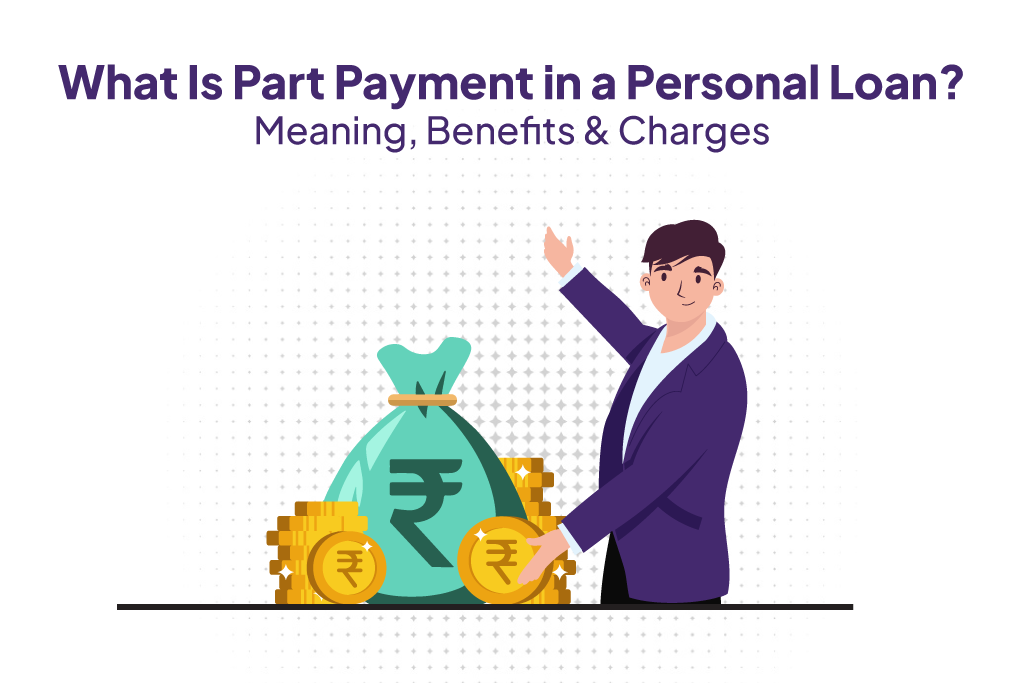
A personal loan helps meet planned and unplanned expenses, but carrying a loan for a long tenure often increases the total interest paid. One way to reduce this burden is through part payment. Understanding what a part payment in a loan can help borrowers save money, reduce debt faster, and improve financial flexibility. This guide explains the concept, benefits, charges, and whether reducing EMI or tenure makes more sense after making a part payment.
Part Payment Meaning
The part prepayment meaning is simple. It refers to paying a lump sum amount towards your personal loan principal before the scheduled repayment period ends, while continuing with the remaining loan. This payment is made in addition to regular EMIs. Since the outstanding principal reduces, the interest charged on the remaining loan amount also decreases. As a result, borrowers can either lower their EMI burden or shorten the loan tenure.
How Does Part Payment Work?
Part payment in a personal loan reduces the outstanding principal and helps lower the overall borrowing cost.
The process generally works as follows:
- Continue paying regular EMIs as per the loan agreement.
- Accumulate surplus funds from savings, bonuses, incentives, or investments.
- Make a lump sum payment towards the loan principal.
- The lender adjusts the outstanding balance after receiving the payment.
- Choose whether to reduce the EMI amount or shorten the repayment tenure, depending on lender policies.
- Future interest is calculated on the reduced principal balance.
- Continue repaying the remaining loan through scheduled EMIs.
The earlier a borrower makes a part payment on a personal loan transaction during the tenure, the greater the potential interest savings.
Part Payment vs Prepayment vs Foreclosure
Many borrowers use these terms interchangeably, but they have different meanings.
| Term | What It Means |
| Part Payment | Paying a portion of the principal early while the loan continues. |
| Prepayment | Paying ahead of schedule. It may be partial or full. |
| Foreclosure | Paying the entire outstanding loan before the tenure ends and closing the account. |
While all three options involve repaying a loan early, their impact on interest savings, loan closure, and flexibility differs. For the full pros and cons of personal loan prepayment, evaluate your repayment goals before choosing between part payment and foreclosure.
Benefits of Part Payment
Lower Total Interest
Interest on personal loans is calculated on the outstanding principal. When borrowers make a part prepayment, the principal reduces immediately. This means future interest calculations are based on a smaller balance, leading to significant savings over the remaining tenure.
Reduced EMI or Tenure
Most lenders allow borrowers to choose between lowering their EMI amount or reducing the loan tenure. This flexibility helps align repayments with changing financial goals and cash flow requirements.
Better Debt-to-Income Ratio
A lower outstanding loan balance improves the debt-to-income ratio. This metric is often considered by lenders when evaluating new loan or credit card applications. A healthier ratio may strengthen future borrowing prospects.
Faster Debt Freedom
Making periodic part payments accelerates loan repayment. Borrowers can become debt-free sooner and redirect funds towards investments, savings, or other financial priorities.
Reduce EMI or Reduce Tenure? Which to Choose
After making a part payment on a personal loan, lenders may offer two options: reducing EMI or reducing tenure.
Consider this example:
- Loan Amount: ₹5,00,000
- Interest Rate: 12% per annum
- Tenure: 5 years
- EMI: Approximately ₹11,122
Assume the borrower makes a ₹1,00,000 part payment after one year.
Option 1: Reduce EMI
The tenure remains unchanged, but the monthly EMI decreases. This improves monthly cash flow and reduces repayment pressure. It is suitable for borrowers seeking greater budget flexibility.
Option 2: Reduce Tenure
The EMI remains largely the same, but the loan is repaid earlier. This option generally generates higher interest savings because the borrower remains indebted for a shorter period.
For borrowers focused on maximising savings, reducing tenure is often the better choice. Those prioritising monthly affordability may benefit more from EMI reduction.
The right choice depends on your financial priorities. Use a personal loan EMI calculator to compare interest savings, revised EMIs, and repayment timelines before making a decision.
Part Payment Charges
Some lenders may impose conditions or fees for part payments. Before proceeding, borrowers should check the loan agreement carefully.
Common considerations include:
- Minimum amount required for part payment.
- Restrictions during the initial months of the loan.
- Limits on the number of part payments allowed annually.
- Processing fees or part prepayment charges, if applicable.
- Whether EMI reduction or tenure reduction is permitted.
Many lenders have reduced or eliminated such charges on certain loan products, but policies vary across institutions.
Does Part Payment Affect Your CIBIL Score?
Yes, making a part payment generally supports a healthy credit profile. Understanding what is part payment in a loan also involves recognising its credit impact. A reduced outstanding balance lowers overall debt exposure and demonstrates responsible repayment behaviour. Lower outstanding debt also improves your credit utilisation ratio and CIBIL score, which may strengthen your credit profile and improve eligibility for future borrowing.
Conclusion
Understanding what part payment is can help borrowers make smarter repayment decisions. By paying a portion of the principal before the loan ends, borrowers can lower interest costs, reduce financial stress, and potentially become debt-free sooner. Before opting for part payment in a personal loan, review lender policies, eligibility conditions, and applicable charges. Used strategically, part payment can be an effective way to improve financial health and reduce the overall cost of borrowing.
FAQs
What is part payment in a personal loan?
Part payment is a lump sum payment made towards the loan principal before the loan tenure ends while continuing regular EMI payments.
What is the difference between part payment and prepayment?
Part payment refers to paying a portion of the outstanding principal, whereas prepayment is a broader term that may include partial or full repayment before schedule.
Is there a charge for part payment of a personal loan?
Some lenders may charge fees depending on their policies, loan type, and timing of the payment. Always review the loan agreement.
Should I reduce my EMI or my tenure after a part payment?
Reducing tenure generally saves more interest, while reducing EMI improves monthly cash flow. The right option depends on financial goals.
What is the minimum amount for a part payment?
The minimum amount varies by lender. Most financial institutions specify a threshold amount in the loan terms and conditions.
Does part payment improve my CIBIL score?
Part payment can support a healthier credit profile by reducing outstanding debt and demonstrating responsible loan management.
Are there prepayment charges on an overdraft?
Most overdraft facilities do not impose prepayment penalties because borrowers can repay utilised amounts at any time. However, policies vary by lender.
| Personal Loans by City | ||||
|---|---|---|---|---|
| Personal Loan Bengaluru | Personal Loan Thane | Personal Loan Mumbai | Personal Loan Hyderabad | |
| Personal Loan Pune | Personal Loan Surat | Personal Loan Coimbatore | Personal Loan Delhi | |
| Personal Loans by Amount | ₹60,000 Personal Loan | ₹3 Lakh Personal Loan | ₹5 Lakh Personal Loan |
|---|
Explore our latest Personal Loan blogs for expert insights, financial tips, and guidance to help you make informed borrowing decisions.